 English
 Arabic
 Polish
 Russian

Ashwagandha KSM-66 is a root extract used in food supplements. If you are thinking of adding it to your evening routine, do not expect it to act like a sleeping pill: it is not a medicine and has no instant effect. Research is still developing. Start with the label and consider whether the ingredients suit your health circumstances.
What is ashwagandha?
Ashwagandha (Withania somnifera) is a plant used for centuries in Ayurvedic tradition. You will often see it described as an “adaptogen”. That is a traditional term, not an approved UK health claim or a promise about how you will respond to everyday pressure.
What KSM-66 means
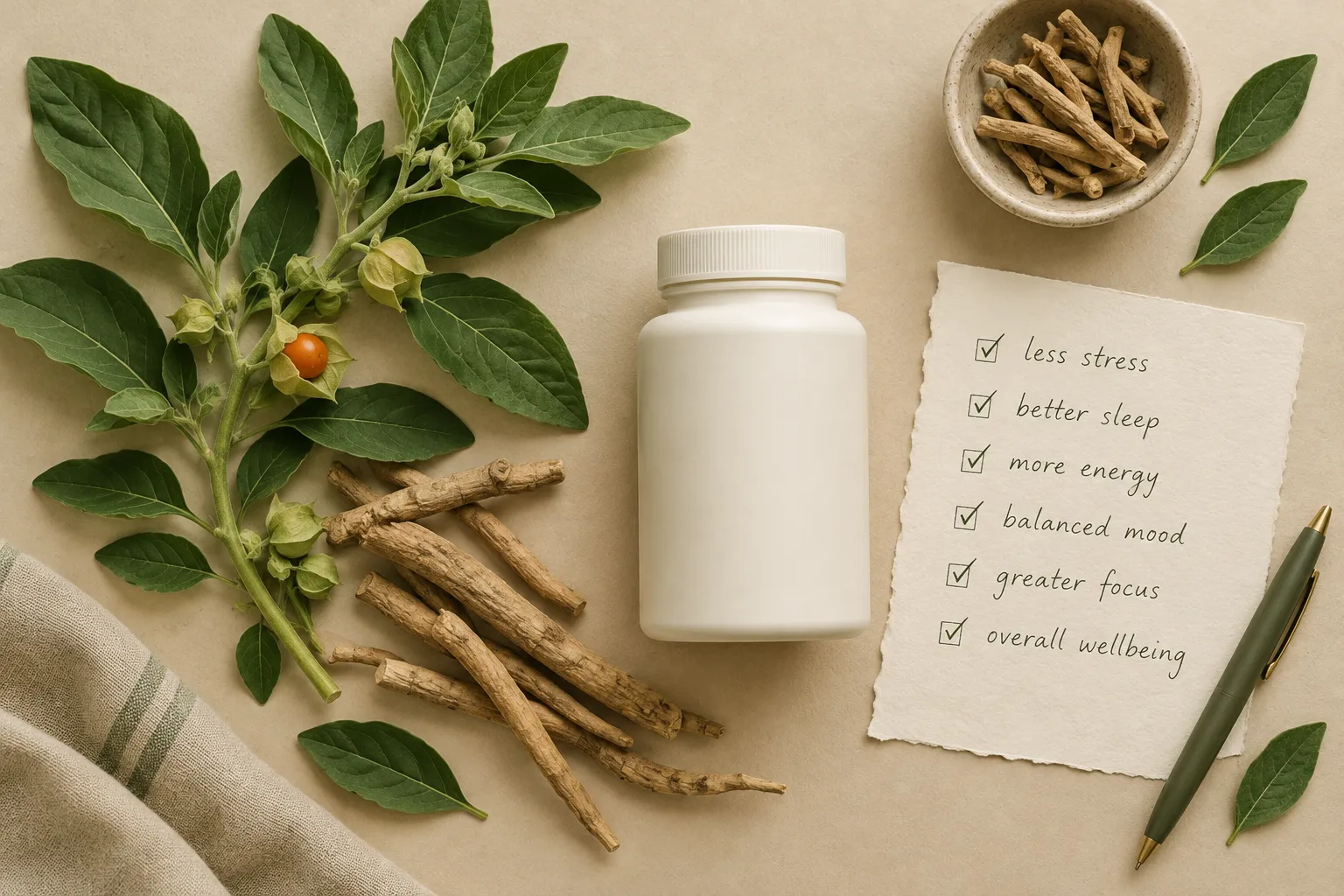
KSM-66 is a branded ashwagandha root extract. Standardisation sets a level for certain plant compounds, usually listed as withanolides. That detail is more useful when comparing labels than a “high strength” slogan. It still cannot tell you how you will feel.
Why is it so popular in the UK?
Ashwagandha appeals to people looking for a way to mark the end of a busy day. In the UK you can find capsules, powders and gummies. Some people want a named extract with a clear label; others want a supplement that fits an evening ritual. Neither choice addresses the reason you may be waking at night or feeling under pressure.
Stress and sleep: what to realistically expect
Some people include ashwagandha in the time they set aside to wind down. Its use in Ayurveda is traditional; studies of different extracts and groups of people are ongoing, and results vary. There are no authorised UK/EU health claims for ashwagandha. Claims that it reduces anxiety, lowers cortisol or treats poor sleep are therefore inappropriate. InfiniVit’s guide to UK supplement claims explains what approved wording means.
If you are considering ashwagandha for sleep, you can include it in a bedtime routine without expecting to fall asleep on demand. For stress, a capsule cannot address an ongoing source of worry. Our sleep and stress supplement checklist helps you weigh other options.
How long does it take?
Most products direct you to take ashwagandha daily over several weeks, following the label. Studies also tend to follow use over weeks. There is no reliable date by which you should notice anything, and taking more because you feel no difference could take you beyond the recommended intake.
If poor sleep, stress or anxiety persists, talk to your GP rather than waiting for a supplement to help.
How to choose an ashwagandha supplement, including KSM-66
Start with the serving information: can you tell which extract is included, how much you get and how to take it? The name on the front of the pack tells you less than those details.
Read beyond the front of the pack
|
On the label |
Why it matters |
|---|---|
|
Standardised extract and stated extract level |
Identifies the preparation and the stated level of its plant compounds. |
|
Amount per serving and clear directions |
Helps you follow the recommended intake rather than guess from the front of the pack. |
|
Short, readable ingredient list |
Lets you see what else the capsule or powder contains. |
|
UK manufacturing and stated quality standards |
Tells you more about where and how the maker produces the supplement. |
Single extracts and blends are different choices
If you want KSM-66, find it on the ingredient panel; plenty of ashwagandha products use other preparations. InfiniVit’s Ashwagandha Plus lists KSM66 ashwagandha root with other botanicals, mushrooms and vitamins. It is an option if you want a blend. If you would rather take ashwagandha alone, its longer list is a drawback.
Who should check with a professional first?
If you are pregnant, breastfeeding, taking medication, or living with a thyroid or liver condition, speak to a GP or pharmacist before taking ashwagandha. Being a plant does not make it suitable for everyone, and a blend gives you more ingredients to consider.
“Ashwagandha should be avoided during pregnancy and should not be used while breastfeeding.” – NIH National Center for Complementary and Integrative Health
Stop taking the supplement and seek medical advice if you develop a worrying symptom. Keep taking any prescribed treatment unless your clinician tells you otherwise.
Using it sensibly
Follow your product’s directions and do not exceed the recommended intake. Extra capsules are no substitute for a regular bedtime and wake-up time. Regular activity and a varied, balanced diet belong in the routine too.
For information only, not medical advice. Food supplements should be used alongside a varied, balanced diet.
The bottom line
Ashwagandha KSM-66 names an extract; it does not guarantee a change in how you feel. A clear label and directions make a better starting point, alongside the safety questions above. InfiniVit’s Ashwagandha Plus is worth considering if you want KSM66 root extract in a botanical-and-vitamin blend, though you will need to be comfortable with its longer ingredient list. The energy, stress, sleep and brain range offers other choices.
FAQ
What is the best ashwagandha supplement in the UK?
There is no single best choice for everyone. Compare the extract and amount per serving, ingredient list, directions and manufacturing standards. If you want to keep the ingredient list short, a single-ingredient product will be easier to assess than a blend.
Is KSM-66 ashwagandha safe?
It may not suit you if you are pregnant, breastfeeding, taking medication, or living with a thyroid or liver condition. Ask a GP or pharmacist first in those circumstances. Follow the label and do not exceed the recommended intake.
Is it safe to take ashwagandha while breastfeeding?
Ask a GP or pharmacist before taking it while breastfeeding. Its plant origin does not establish that it is suitable for you or your baby.
What is the dark side of ashwagandha?
Ashwagandha may not suit your health circumstances, especially if you take medication or have a thyroid or liver condition. Stop taking it and seek medical advice if you develop a worrying symptom. Do not use it in place of medical care.