
 English
 Arabic
 Polish
 Russian
For an oral supplement, the best time to take vitamin C is whenever you can take it consistently. Breakfast and dinner are both reasonable choices; there is no established morning absorption window. If a tablet upsets your stomach, take it with food.
Morning or night: which is better?
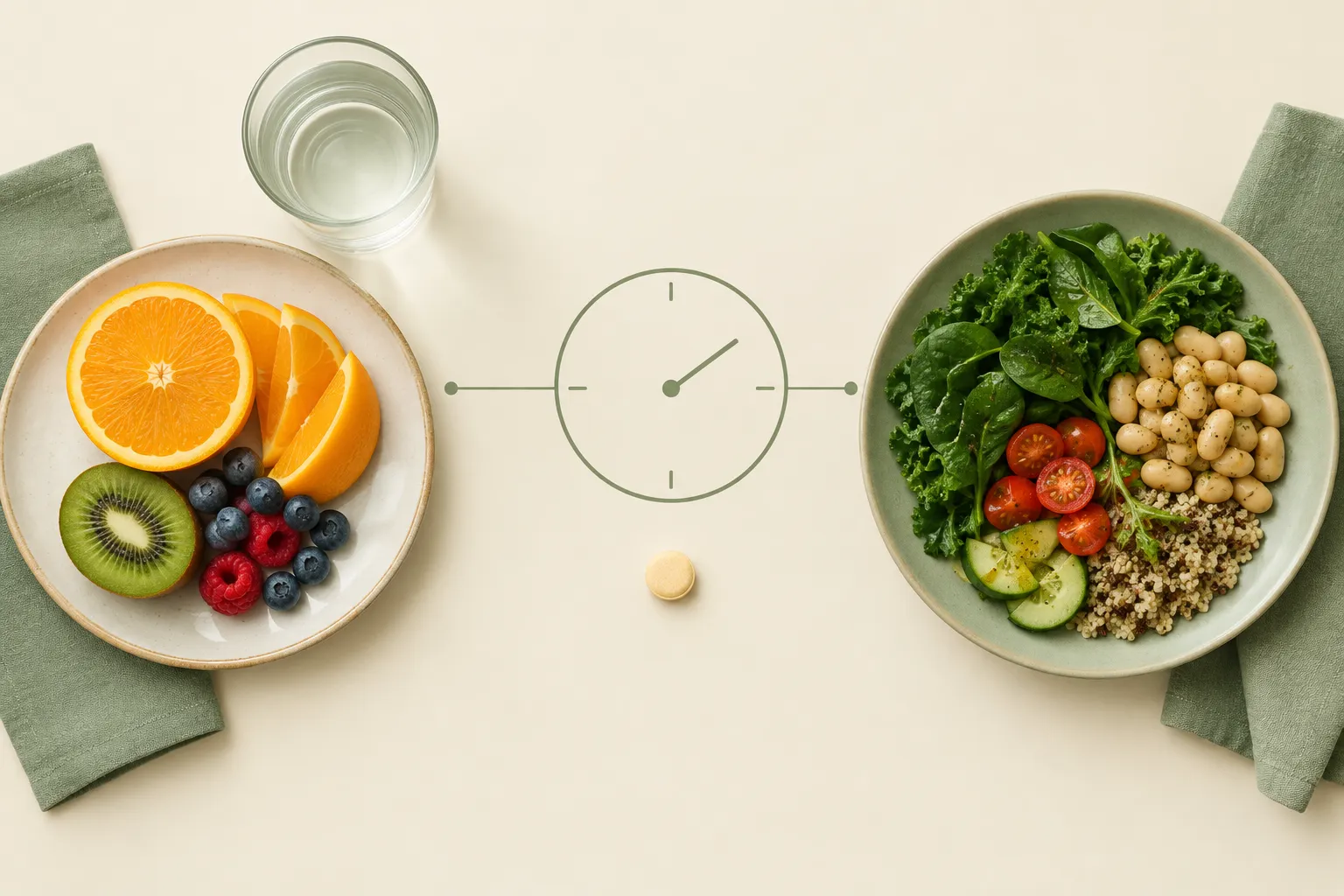
Vitamin C is water-soluble, and you can take it at breakfast, lunch or dinner. Choose a meal that fits your day:
|
Your situation |
Sensible time to take vitamin C |
Why |
|---|---|---|
|
You have breakfast every day |
With breakfast |
Easy to remember and gentler if tablets upset your stomach |
|
You skip breakfast |
With lunch or dinner |
No need to take it on an empty stomach in the morning |
|
You prefer an evening routine |
With dinner |
Night-time use does not require a different vitamin C dose |
|
Your stomach feels uncomfortable after a tablet |
With a meal instead of before it |
Food may make the routine more comfortable |
You needn’t change your schedule because you have heard it only works before breakfast. If an evening dose feels uncomfortable, try taking it with an earlier meal.
Should you take vitamin C with food?
You can take vitamin C with a meal. You may have seen advice to take it 30 minutes before food to improve absorption. The NIH Office of Dietary Supplements sets no required time of day or empty-stomach rule, and says ascorbic acid from supplements has bioavailability equivalent to that from food.
Taking a tablet or capsule with a meal and water may feel easier on your stomach. Food does not make the vitamin stronger. Vitamin C also enhances absorption of iron from plant-based foods, so you could take it with a meal containing beans, lentils or leafy greens.
If you get enough vitamin C through food, a supplement may not be necessary. The NHS vitamin C guidance notes that adults should usually be able to get what they need from their diet.
How much vitamin C should you take?
The amount you take deserves more attention than the clock. The NHS states that adults aged 19 to 64 need 40 mg a day. Higher-strength tablets are not automatically a better everyday choice, particularly when large doses can cause digestive problems:
“Taking more than 1,000 mg per day can cause stomach pain, diarrhoea and flatulence.” – NHS
Absorption changes with dose. The NIH fact sheet estimates that around 70% to 90% of vitamin C is absorbed at intakes of 30 to 180 mg a day, compared with less than 50% at doses above 1 g a day. That difference concerns dose, not time of day. Include any vitamin C from your multivitamin or combined formula when you consider taking a separate tablet.
Taking vitamin C with other supplements
You can take vitamin C and zinc in the same routine, including with a meal. There is no need to put one in the morning and the other at night. Taking them together does not promise an instant immune boost or replace a varied diet. If you use a combined supplement, read its label alongside any separate products so you know how much of each nutrient you take.
If you take a multivitamin at breakfast, look at its vitamin C content before adding a separate tablet. Follow the directions for each product you use. For wider scheduling questions, see Best Time to Take Vitamins in the UK. For help choosing between tablets, capsules and other formats, see How to Choose a Vitamin C Supplement.
A routine you can stick to
If breakfast is your most reliable meal, take vitamin C then. If mornings are rushed, use lunch or dinner instead. An upset stomach is a reason to take it with food and reconsider the amount.
Neither morning nor night gives vitamin C a special advantage, so choose a comfortable time you can stick to. If a supplement belongs in your routine, explore InfiniVit’s vitamin C options within its wider range of carefully considered wellness supplements. Compare the stated ingredients and serving size before you choose.
FAQ
Is vitamin C best to take in the morning or night?
Either is fine for an oral supplement. Take it at a time you can remember, preferably with a meal if it bothers your stomach.
Is 250 mg of vitamin C too much?
Not necessarily. The NHS says adults aged 19 to 64 need 40 mg a day and warns that more than 1,000 mg a day can cause digestive symptoms. A 250 mg serving exceeds the daily amount needed, so consider what you already get from food and other supplements rather than assuming more is better.
What should not be taken with vitamin C?
You do not generally need to separate vitamin C from zinc or a multivitamin by time of day. Check for overlapping ingredients and follow the product directions. If you take prescribed medicines, ask a pharmacist about your combination.
Why shouldn’t you take vitamin C every day?
There is no general ban on taking vitamin C every day. Adults can usually get enough from food, so an extra supplement may be unnecessary. High doses can also cause digestive symptoms.