
 English
 Arabic
 Polish
 Russian
How to Choose a Vitamin C Supplement
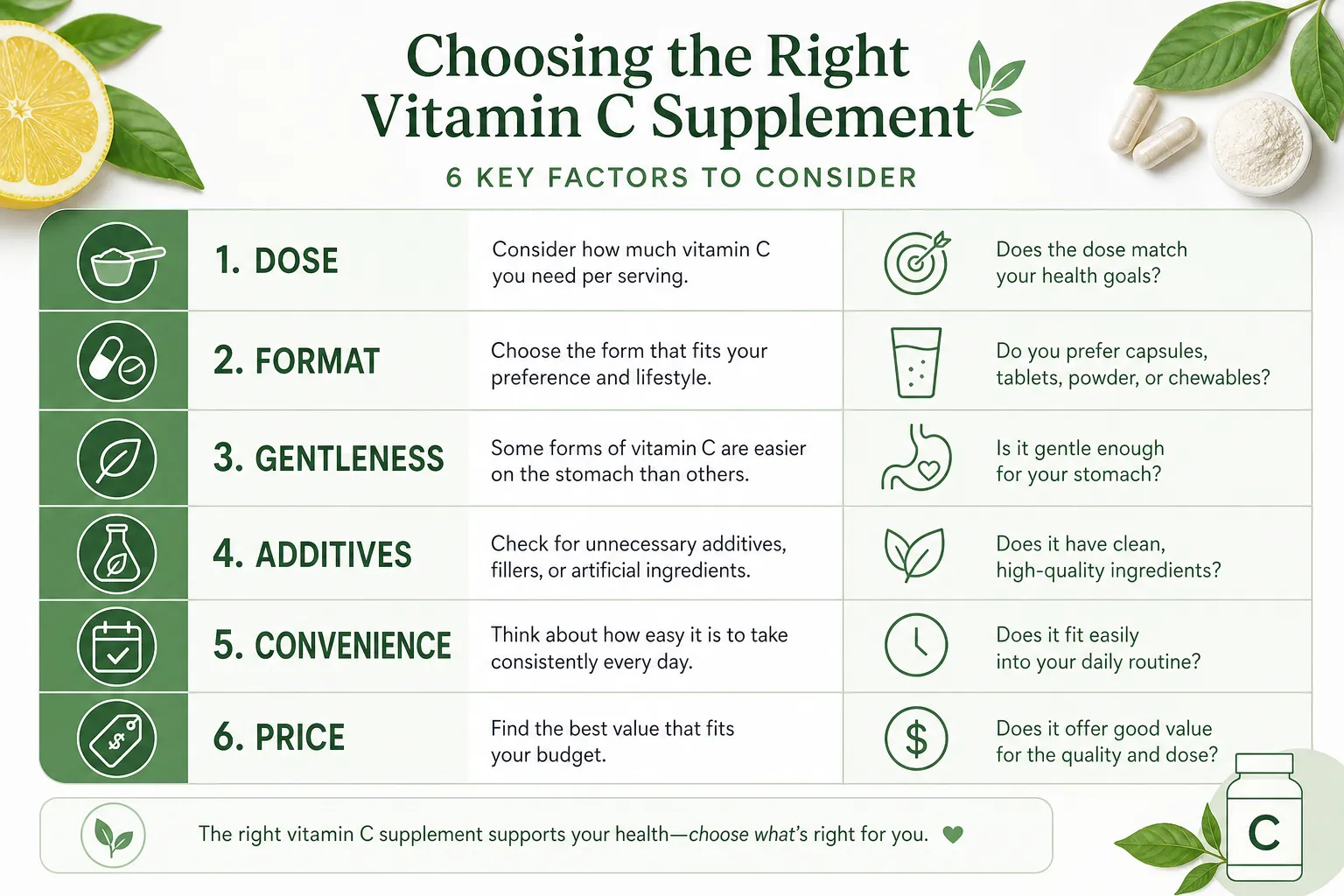
Choosing a vitamin C supplement should be simpler than it often feels on the shelf. UK shoppers are faced with tablets, capsules, powders, chewables, fizzy effervescents, “gentle” mineral forms, liposomal liquids, and food-based blends – all claiming to be the best type of vitamin C supplement. In reality, the right choice usually comes down to three practical questions:
-
Do you need a supplement at all?
-
Which form can you take comfortably and consistently?
-
What dose makes sense for your diet and routine?
For many people, food already covers the basics. But if your diet is inconsistent, you dislike fruit and vegetables, travel often, want a simple backup, or prefer a measured daily intake, a vitamin C supplement can be a sensible addition. The key is to compare format, dose, ingredients, and day-to-day practicality rather than assuming the highest-strength product is automatically the healthiest vitamin C supplement.
At InfiniVit, we believe supplement choices should feel clear, grounded and trustworthy. That means focusing on science-led formulations, realistic expectations, high-grade ingredients, and formats people can genuinely stick with – not hype. Vitamin C contributes to normal immune function, normal collagen formation, and the protection of cells from oxidative stress, but the best vitamin C supplement for you is the one that fits your needs without unnecessary extras.
Start Here: Do You Even Need a Vitamin C Supplement?
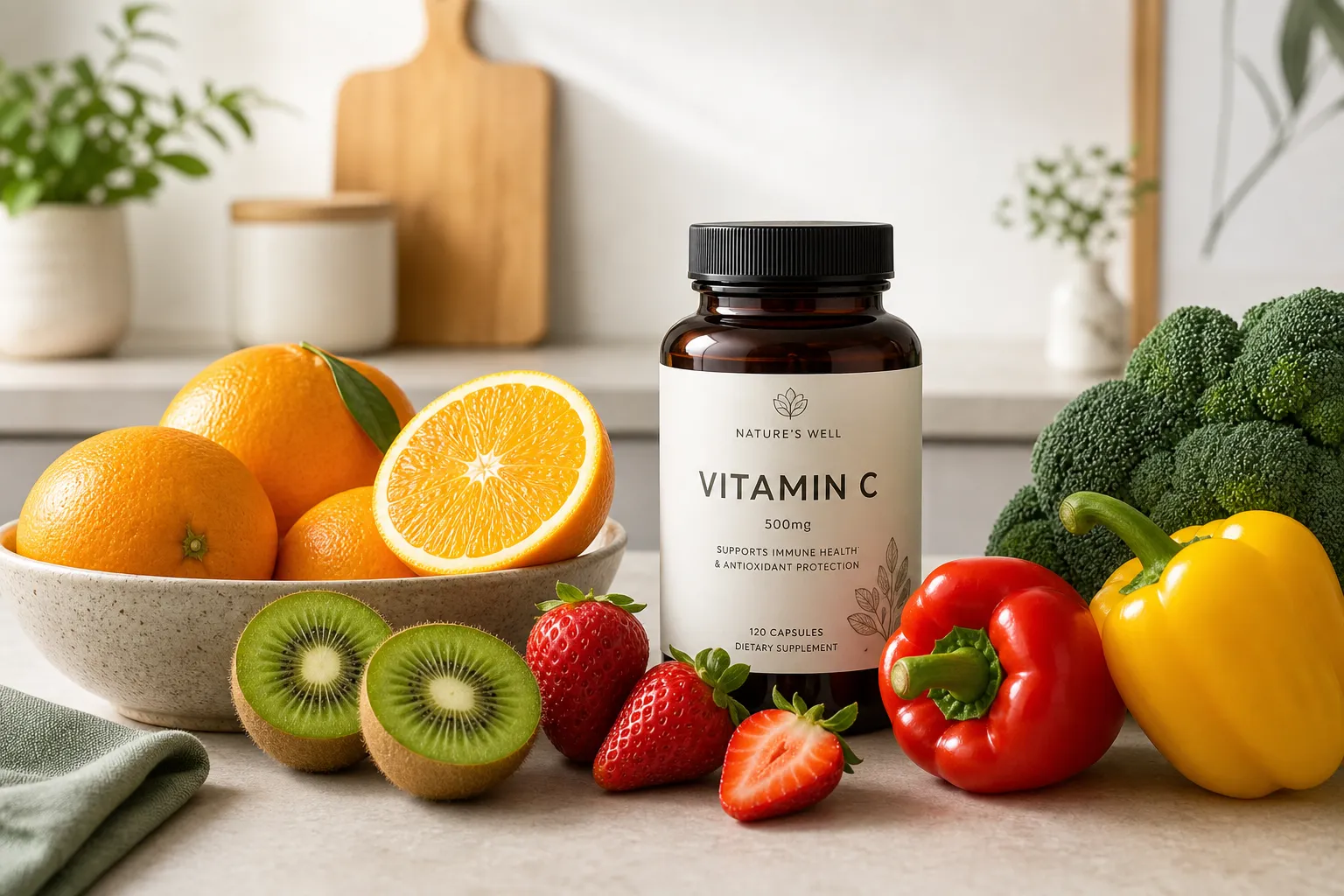
Before comparing pure vitamin C capsules or deciding between a powder vitamin C supplement and chewables, it helps to step back. Vitamin C is widely available in everyday foods, especially:
-
citrus fruit and juice
-
peppers
-
strawberries
-
blackcurrants
-
broccoli
-
Brussels sprouts
-
potatoes
-
kiwi fruit
If you regularly eat a varied diet with fruit and vegetables, you may already be getting enough.
“Adults aged 19 to 64 need 40mg of vitamin C a day.” – NHS
That figure often surprises people because many vitamin C food supplements contain 500mg or 1000mg per serving. A higher label number does not always mean a better product. It may simply reflect a stronger formula than most people require.
You may be more likely to consider a vitamin C supplement UK shoppers commonly buy if you:
-
eat limited fruit and vegetables
-
follow a repetitive or convenience-heavy diet
-
want a simple “insurance policy” on busy weeks
-
struggle with swallowing certain foods or textures
-
prefer a measured intake in capsule, liquid or powder form
If you want broader support for everyday resilience and nutrient habits, our guide to best vitamins for immune support in adults gives useful context on where vitamin C fits within a balanced routine.
What Competitor Guides Often Miss
Many roundups focus on “best rated vitamin supplements” or rank the best vitamin C tablets UK retailers stock, but they often gloss over a few practical points that matter more than product hype:
|
What many guides overemphasise |
What actually matters more |
|---|---|
|
Highest mg per tablet |
Whether the dose suits your diet and tolerance |
|
Marketing terms like “premium” or “natural” |
Clear labelling, sensible formula design, and trusted manufacturing |
|
One “best” form for everyone |
Personal fit: gentleness, taste, convenience, and cost |
|
Big promises about skin or immunity |
EFSA-authorised functions and realistic daily use |
|
Long product lists |
Simple comparison between forms |
That is why this guide focuses on how to choose, not just what to buy.
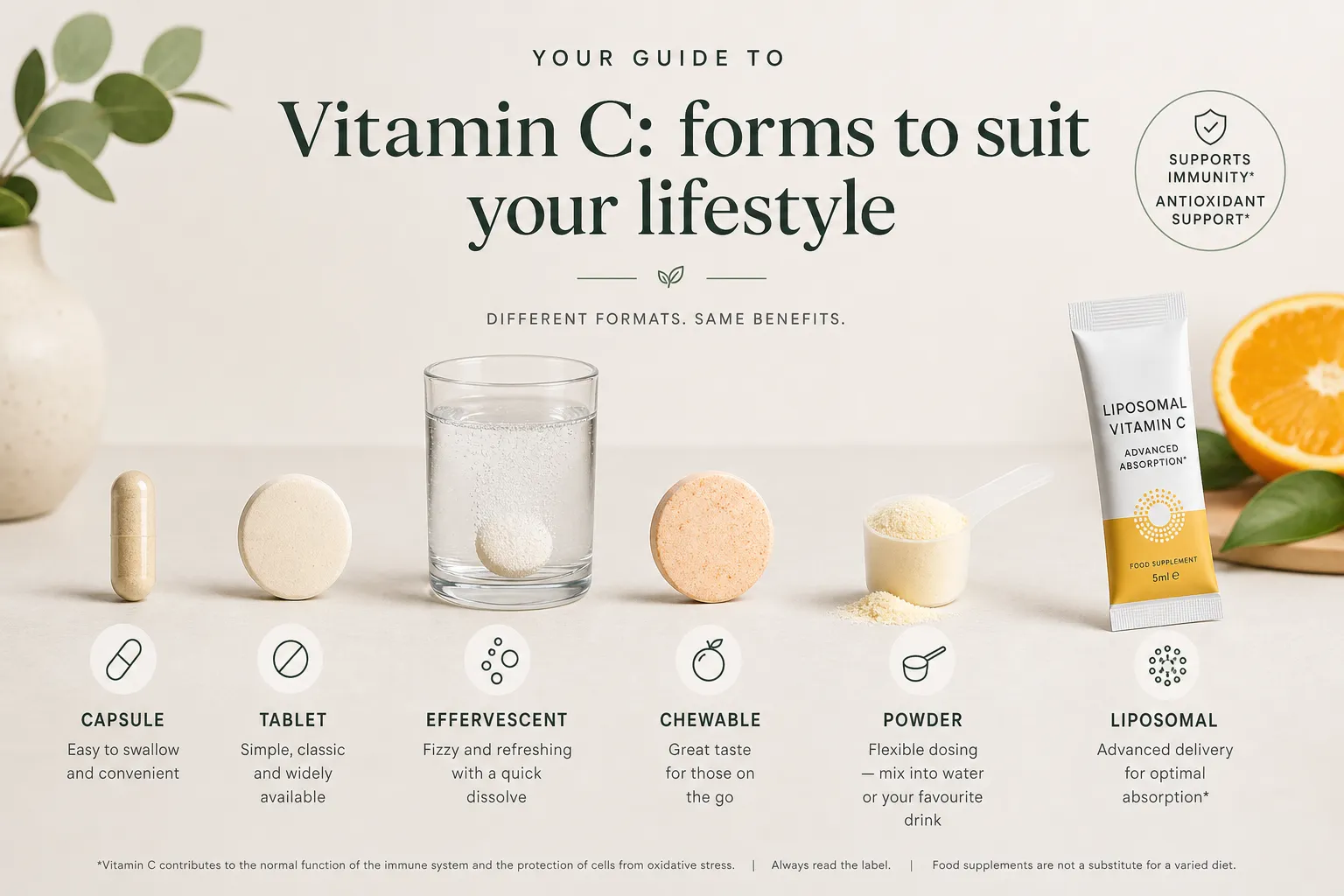
The Main Forms of Vitamin C Supplement You’ll See
Ascorbic Acid: The Standard Form
Ascorbic acid is the classic, most common form used in vitamin C tablets UK shoppers see in pharmacies, supermarkets and online. It is usually:
-
widely available
-
cost-effective
-
easy to compare across brands
-
used in capsules, tablets, powders, chewables, and drinks
For most people, this is a good vitamin C supplement format to start with. It is straightforward and usually the most budget-friendly way to get a defined amount.
A simple example is Vitamin C Plus, a standard capsule-style format that suits shoppers who want a familiar, no-fuss option.
Mineral Ascorbates: “Gentler” Vitamin C
Mineral ascorbates include forms such as:
-
sodium ascorbate
-
calcium ascorbate
-
magnesium ascorbate
These are often described as less acidic than straight ascorbic acid. People sometimes prioritise them if they find standard vitamin C harsh on the stomach or want a gentler format. That does not automatically make them the most effective vitamin C supplement for everyone, but they can be a sensible choice for people who prefer a lower-acidity feel.
A few points to remember:
-
they may cost more
-
they still provide vitamin C, but with a mineral attached
-
the mineral content is not always nutritionally significant unless clearly stated
If you have a sensitive stomach, this is one of the first alternatives worth considering.
Chewables: Convenient, But Check the Extras
Chewables are popular for people who dislike swallowing tablets. They can be practical, portable and easy to remember. But they often come with trade-offs:
-
added sweeteners
-
flavourings
-
colourings
-
acids that may not suit sensitive mouths or teeth if used frequently
A chewable can still be a good vitamin C supplement, but it pays to read the ingredients panel. If you want pure vitamin C with fewer extras, capsules or powders may be cleaner.
Effervescents: Easy to Take, But Often More Processed
Effervescent vitamin C dissolves in water to create a fizzy drink. For some people, this is the most practical route because it avoids large tablets and feels easier to take consistently.
The downside is that effervescents can include:
-
sweeteners
-
flavourings
-
sodium
-
bulking agents
-
acidity regulators
They can be useful, especially if you struggle with pills, but they are not always the simplest formula on the shelf. If you value minimal ingredients, compare labels carefully.
Powders: Flexible Dosing
A vitamin C powder supplement can be useful if you want:
-
adjustable serving sizes
-
an alternative to tablets
-
the option to mix with water or a smoothie
-
fewer tablet binders
This format suits people who want flexibility, especially if they do not want a full vitamin C supplement 1000mg every day. A powder can make smaller or split doses easier.
If you are also interested in how whole-food powders fit into a broader wellness routine, our article on organic superfoods powder benefits offers a helpful perspective.
Liposomal Vitamin C: Premium Positioning, Higher Cost
Liposomal products wrap vitamin C in fat-like particles, often marketed as an advanced-delivery format. These are commonly sold as liquids, sachets, or capsules and usually cost more than standard tablets.
A liposomal option may appeal if you:
-
dislike standard tablets
-
want a more premium-feeling format
-
are looking for a high-strength product in liquid or sachet form
But it is worth keeping expectations realistic. Liposomal does not automatically mean “the best vitamin c supplement on the market” for every person. Often, the trade-off is simply higher price for a different delivery format.
A relevant example is Liposomal Vitamin C, which fits shoppers comparing standard ascorbic acid against more modern delivery formats.
What About Food-Based, Whole-Food, or “Natural” Vitamin C?
Some shoppers specifically look for a whole food vitamin c supplement, whole food vitamin c powder, or food based vitamin c supplement because they prefer a less synthetic-feeling option.
These products usually fall into one of two camps:
-
Vitamin C derived from food ingredients, such as acerola, acai, camu camu or berry concentrates
-
Blends where whole-food ingredients contribute vitamin C alongside other plant compounds
These can be appealing if you prefer a more natural vitamin c supplement or best natural vitamin c supplement UK style product. However, there are a few things to keep in mind:
-
the actual vitamin C content may be lower than a standard high-strength tablet
-
the label may spotlight botanicals more than dose clarity
-
“natural” does not always mean better absorbed
-
they may include broader antioxidant compounds, which may or may not be what you want
Food-form examples include VitaBerry Boost and Acai Immunity Advanced Formula, which are useful reference points for shoppers comparing berry-based vitamin C food supplements with standard ascorbic acid products.
Dose Matters Less Than Many People Think
One of the biggest misunderstandings around vitamin c supplements uk shoppers compare is that more is always better.
“Approximately 70% to 90% of vitamin C is absorbed at moderate intakes of 30 to 180 milligrams (mg)/day. However, at doses above 1 gram (g)/day, absorption falls to less than 50%.” – NIH Office of Dietary Supplements
That means the strongest vitamin c supplement is not necessarily the most practical or efficient choice for daily use.
A Simple Way to Think About Dose
|
Daily label dose |
Who it may suit |
Things to consider |
|---|---|---|
|
40–100mg |
People topping up an already decent diet |
Often enough for simple maintenance |
|
200–500mg |
People wanting a moderate supplement routine |
Usually easy to find in simple formulas |
|
1000mg |
People specifically wanting higher-strength products |
May be less comfortable for some and not always necessary |
Is a 1000mg Product “Too Much”?
Not automatically, but it may be more than you need. If you are choosing a vitamin c supplement 1000mg product, ask yourself:
-
Do I actually want this much every day?
-
Would a 500mg option do the job more practically?
-
Am I likely to stick with this format long term?
-
Do I tolerate high doses comfortably?
For many shoppers, a vitamin c supplement 500 mg product is the more practical middle ground.
How to Match the Format to the Person
If You Want the Simplest Formula
Choose:
-
capsules or tablets
-
minimal excipients
-
clearly stated vitamin C amount
-
fewer flavourings and sweeteners
This often suits people looking for pure vitamin c, pure vitamin c supplement, or pure vitamin c capsules.
If You Have a Sensitive Stomach
Consider:
-
mineral ascorbates
-
lower doses
-
splitting the dose
-
avoiding very acidic chewables or large high-strength effervescents
If You Hate Swallowing Tablets
Try:
-
chewables
-
effervescents
-
liquids
-
powders
The best vitamin c supplement uk option is often the one you will actually take consistently.
If You Want Flexible Dosing
Go for:
-
powder
-
liquid
-
smaller capsules
-
a product that allows half-servings or split use
If You Prefer a Food-Led Feel
Look at:
-
berry-based blends
-
whole food vitamin c supplement formats
-
broader antioxidant formulas with vitamin C included
For example, Advanced Immuno Support is a useful reference for shoppers comparing standalone vitamin C with formulas that combine vitamin C and other antioxidants in one product.
Ingredient Label Checklist: What to Compare Before You Buy
When comparing healthy vitamin c supplements, use this quick checklist:
|
Label question |
Why it matters |
|---|---|
|
What form is it? |
Ascorbic acid, mineral ascorbate, liposomal, or food-based all feel different in use |
|
How much vitamin C per serving? |
Helps you avoid buying more strength than you want |
|
How many tablets/capsules per day? |
Convenience matters for consistency |
|
Are there sweeteners or flavourings? |
Especially relevant in chewables and effervescents |
|
Any unnecessary fillers? |
Useful if you prefer cleaner formulas |
|
Is it vegan/vegetarian/halal/kosher if needed? |
Important for dietary fit |
|
Where is it made? |
Trust often starts with manufacturing standards |
At InfiniVit, quality matters because shoppers increasingly want more than generic high-street options. UK manufacturing, GMP and ISO9001-aligned standards, and transparent formulation logic all help separate a good vitamin c supplement from a flashy one.
The Practical Pros and Cons of Each Format
|
Format |
Best for |
Pros |
Watch-outs |
|---|---|---|---|
|
Standard tablet/capsule |
Most adults |
Simple, affordable, easy to compare |
Some tablets are large |
|
Mineral ascorbate |
Sensitive stomachs |
Less acidic feel |
Usually pricier |
|
Chewable |
Pill-averse users |
Easy and convenient |
Sweeteners, acids, flavourings |
|
Effervescent |
People who prefer drinks |
Easy to take |
Can contain sodium and additives |
|
Powder |
Flexible dosing |
Adjustable, no big tablets |
Taste and measuring required |
|
Liposomal liquid/capsule |
Premium-format shoppers |
Alternative delivery style |
Higher cost |
|
Food-based blend |
Whole-food preference |
Broader plant compounds |
Often lower vitamin C dose clarity |
When Diet May Already Be Enough
This is the part many supplement articles skip. If you eat fruit and vegetables consistently, there is a good chance you do not need a separate vitamin c supplement every day.
That does not mean supplements are pointless. It simply means they should be used purposefully:
-
when food intake is inconsistent
-
when convenience matters
-
when you want a measured intake
-
when a specific format suits your routine better than relying on diet alone
If your wider goal is to improve nutrient intake from everyday eating first, our guide on antioxidants for health is a useful companion read.
Common Shopping Mistakes to Avoid
1. Assuming Higher Strength Means Higher Quality
A vitamin c supplement 1000mg may be appropriate for some people, but it is not automatically a better buy than a 250mg or 500mg option.
2. Ignoring Additives
Chewables and effervescents can look convenient, but the ingredient list may be far less simple than a capsule.
3. Buying for Marketing Language Alone
Terms like “whole food”, “pure liquid vitamin c”, or “most effective vitamin c supplement” sound compelling, but they still need to be backed by clear dose and format information.
4. Choosing a Format You Dislike
The best rated vitamin c supplement is not helpful if you hate swallowing it or forget to take it.
5. Overlooking Practical Value
Sometimes a good vitamin c supplement is simply the one that offers a sensible dose, clean label, fair cost per day, and easy daily use.
A Straightforward Buying Framework for UK Shoppers
If you want a quick decision tree, use this:
Choose Standard Ascorbic Acid If…
-
you want the simplest starting point
-
you value affordability
-
you are happy with capsules or tablets
-
you want easy comparison across products
Choose Mineral Ascorbates If…
-
you find acidic products uncomfortable
-
you want a gentler option
-
you do not mind paying slightly more
Choose Chewables or Effervescents If…
-
you dislike swallowing pills
-
you prioritise convenience and taste
-
you are happy to accept more added ingredients
Choose Powder If…
-
you want flexible serving sizes
-
you prefer mixing into drinks
-
you want an alternative to large tablets
Choose Liposomal If…
-
you prefer premium liquid or sachet formats
-
you are comfortable with a higher price point
-
you want to try an alternative delivery system without expecting miracles
Choose Food-Based or Berry-Led Blends If…
-
you prefer a whole-food style approach
-
you want plant compounds alongside vitamin C
-
you are comfortable with lower or more variable vitamin C doses
Final Verdict
The best vitamin c supplement is rarely the flashiest one. For most UK shoppers, the right choice is a product that is:
-
clear about its form
-
sensible in dose
-
easy to take daily
-
appropriate for your stomach and preferences
-
made to a standard you trust
If your diet is already strong, you may not need one at all. If you do want a supplement, start with practicality before marketing. A standard capsule may be perfect. A gentler mineral ascorbate may suit you better. A chewable or effervescent may win on convenience. A liposomal or food-based product may fit if you value those formats and understand the trade-offs.
At InfiniVit, our approach is to make those choices easier: premium-quality supplements, carefully considered formulations, and reliable UK manufacturing standards without overclaiming. Whether you prefer straightforward Vitamin C Plus, modern Liposomal Vitamin C, or food-led options such as VitaBerry Boost, the smartest supplement is the one that genuinely fits your life.
FAQ
How to pick a good vitamin C supplement?
Pick a supplement by comparing form, dose, ingredients, and practicality. A good product should clearly state how much vitamin C it provides, avoid unnecessary extras if you want a simpler formula, and come in a format you can take consistently.
What form of vitamin C is the best to take?
There is no single best form for everyone. Standard ascorbic acid suits most people, while mineral ascorbates may feel gentler, and chewables, powders, or liposomal products may be more convenient depending on your preferences.
What should you not mix with vitamin C?
Vitamin C is generally straightforward, but if you take prescription medicines or have a medical condition, it is sensible to check with a pharmacist or GP before adding a high-dose supplement. This is especially relevant if you are using multiple supplements or want to take higher-strength daily doses.
Is 1000mg of vitamin C too much daily?
Not necessarily, but it may be more than many people need, especially if their diet already contains plenty of fruit and vegetables. Higher doses are also absorbed less efficiently and may be less comfortable for some people.
What are the potential side effects of taking too much vitamin C?
Taking large amounts can cause stomach pain, diarrhoea, flatulence, or abdominal discomfort, particularly at higher doses. If that happens, reducing the dose or switching to a gentler format may help.
Is it better to take 500 mg or 1000 mg of vitamin C?
For many people, 500mg is the more practical middle ground because it is easier to tolerate and may already be well above daily dietary needs. A 1000mg product can suit some shoppers, but it is not automatically a better or higher-quality choice.