
 English
 Arabic
 Polish
 Russian
Best Supplements for Gut Health and Bloating
If your stomach often feels heavy, gassy, irregular or just “off”, choosing the right supplement can be confusing. The market is full of digestive health supplements, but not every option suits every goal. Some are chosen for bloating after meals, some for everyday regularity, and others for broader digestive health support when diet, stress or travel seem to throw things out of balance.
This guide is designed to help UK readers match supplement type to symptom pattern more intelligently. Rather than treating all gut products as interchangeable, we’ll break down the main categories clearly: probiotics, prebiotics, fibre, digestive enzymes and soothing botanicals. We’ll also cover where evidence is stronger, where it is more mixed, and when persistent symptoms deserve medical advice instead of another supplement.
What most competitor guides get right – and what they miss
Most top-ranking articles agree on a few useful basics:
-
gut health matters for comfort, regularity and overall wellbeing
-
probiotics and fibre are among the most common starting points
-
digestive enzymes may help some people around meals
-
lifestyle still matters alongside supplements
That’s all true. But many articles stay too generic. They list “best” supplements without explaining who usually chooses what and why. They also tend to blur together bloating, constipation, food sensitivity, sluggish digestion and microbiome support as if they are the same thing.
That is the gap this guide fills. The better question is not “what is the best digestive health supplement?” but:
Which supplement type usually fits your goal?
|
Goal or pattern |
Often considered first |
Why people choose it |
|---|---|---|
|
Bloating after meals |
Digestive enzymes or selected botanicals |
Often used when symptoms seem linked to meal composition |
|
Mild irregularity or sluggish bowels |
Fibre blends |
Helps support stool bulk and regularity when tolerated well |
|
After antibiotics or during routine maintenance |
Probiotics |
Chosen to support microbial balance |
|
Want to feed beneficial bacteria |
Prebiotics |
Nourish resident gut bacteria rather than adding new strains |
|
Sensitive digestion with occasional discomfort |
Gentle gut-support blends |
Often combine several supportive ingredients in one formula |
For readers also trying to improve diet quality alongside supplements, our guide to how antibiotics affect the gut is a useful companion read.
Why bloating happens in the first place
Bloating is a symptom, not a diagnosis. It can be linked to:
-
eating too quickly
-
large meals
-
low fibre intake
-
suddenly increasing fibre too fast
-
inconsistent hydration
-
stress and the gut-brain connection
-
certain foods, including very fermentable ones
-
temporary changes after illness or antibiotics
-
constipation or slowed transit
That matters because the “best digestive support supplements” for one cause may be the wrong fit for another. Someone with low fibre and poor regularity may benefit from a very different approach than someone who mainly feels uncomfortable after rich meals.
The main supplement categories for gut health
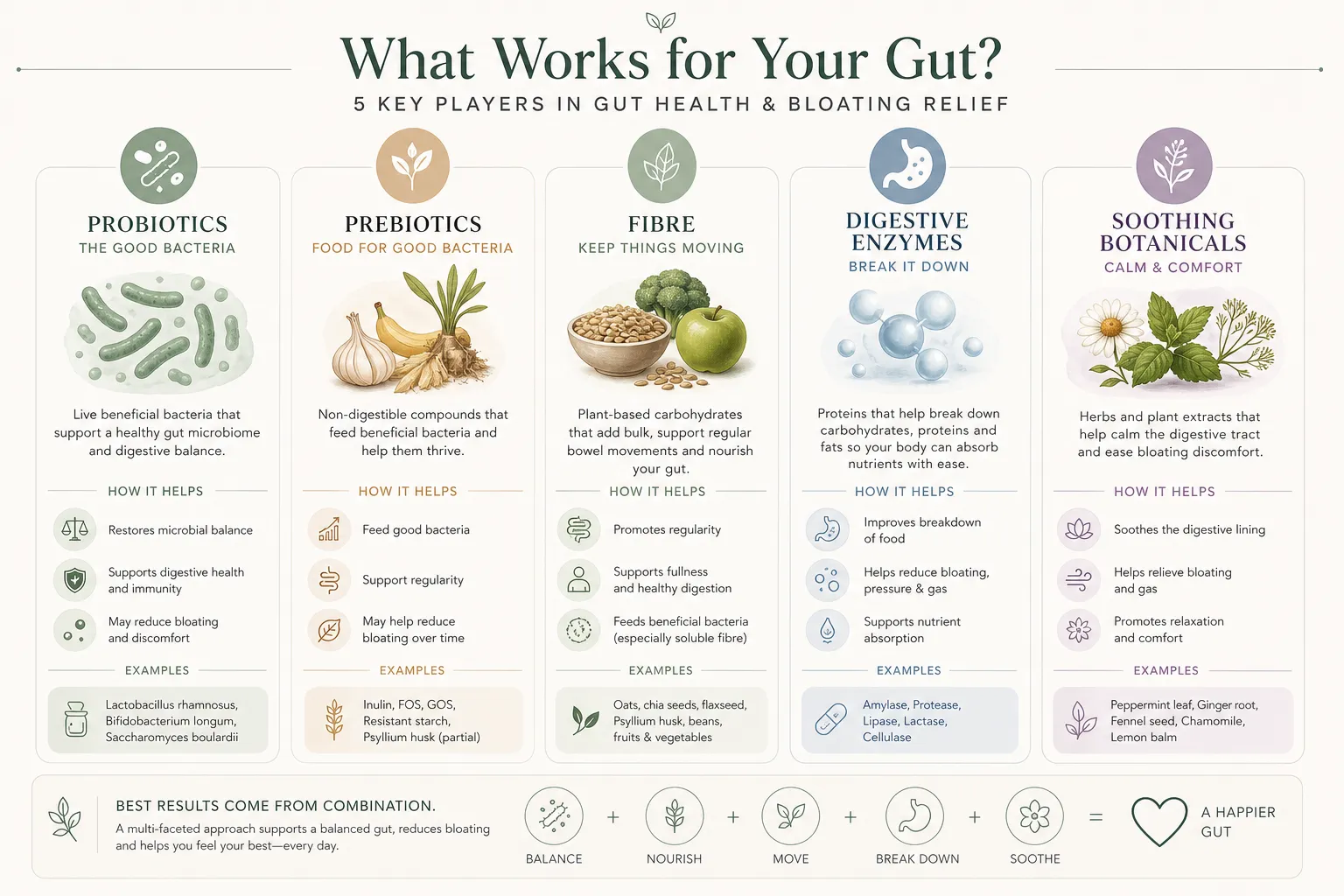
1. Probiotics
What they are
Probiotics are live microorganisms, usually bacteria or yeasts, taken in specific amounts to support the balance of gut flora.
When people usually choose them
They are often chosen for:
-
everyday digestive health support
-
after antibiotics
-
when digestion feels unsettled during travel, routine changes or stress
-
general microbiome-focused support
What they may help with
Evidence is strongest when probiotics are discussed by strain and purpose, not as one blanket category. Some people report improvements in bloating or bowel regularity, while others notice little change. That’s one reason probiotic shopping can feel frustrating: two products can both say “friendly bacteria” yet contain completely different strains and strengths.
Best fit pattern
A probiotic may be a sensible first category if your goal is daily maintenance rather than immediate relief after a heavy meal.
At InfiniVit, this is where a product such as InfiniBio Maintenance may fit as an everyday option, while InfiniBio MAX or InfiniBio PLUS may appeal to those seeking broader or more advanced live culture formulations.
Limitations
-
not all probiotic strains do the same thing
-
higher CFU does not automatically mean better
-
some people get temporary gas or bloating when starting them
-
benefits usually depend on consistency over time
2. Prebiotics
What they are
Prebiotics are fibres or compounds that feed beneficial bacteria already living in the gut.
When people usually choose them
They are often considered when the goal is:
-
supporting the microbiome through nourishment rather than live cultures
-
helping fibre intake
-
pairing with probiotics in a broader gut routine
Best fit pattern
Prebiotics can make sense if you want to support a healthy gut environment over time and already tolerate fibre fairly well.
Where caution is needed
This is one of the biggest content gaps online: prebiotics are not always the best first step for noticeable bloating. Because they are fermentable, some people with sensitive digestion may initially feel more gassy or bloated, especially if they start too fast.
That doesn’t make them bad. It just means they are often better introduced gradually and strategically.
3. Fibre supplements
What they are
Fibre supplements help increase your intake of soluble, insoluble or mixed fibres to support bowel regularity and digestive comfort.
When people usually choose them
They are often chosen for:
-
mild constipation or sluggish regularity
-
low dietary fibre intake
-
feeling “backed up” or incomplete
-
general digestive support supplements aimed at routine wellbeing
Best fit pattern
If bloating is linked to irregular bowels or low fibre intake, fibre may be more relevant than a probiotic.
The key rule: go low and slow
Starting too much fibre too quickly is one of the fastest ways to worsen bloating. Gradual increases, along with adequate fluid intake, usually work better.
A well-designed mixed-fibre option can be helpful for people wanting steady digestive support. Examples in this category include Digest Fibre Plus and Multi Fibre Complex, depending on whether you prefer a broader fibre-based approach to regularity.
For readers wanting a deeper understanding of fibre types and how they behave, see our articles on fibre for digestion, the ultimate fibre supplement and understanding psyllium husk and its benefits.
Evidence and limitations
Fibre is among the more practical and evidence-aligned choices when intake is low, but:
-
it is not a quick fix
-
it needs water to work properly
-
it may not suit everyone in the same form
-
too much too soon can aggravate symptoms
4. Digestive enzymes
What they are
Digestive enzymes help break down components of food such as fats, proteins and carbohydrates.
When people usually choose them
They are often used for:
-
bloating that happens mainly after meals
-
heavier meals that feel hard to digest
-
support around certain food patterns
-
occasional digestive heaviness rather than all-day symptoms
Best fit pattern
If you feel relatively fine until you eat – then become uncomfortable, full or bloated – digestive enzymes are often one of the more targeted categories to consider.
A formula such as Digestive Enzymes Plus fits this category and is the kind of option people typically look at when they want support tied to meal digestion rather than microbiome maintenance alone.
What they do not do
Digestive enzymes are not a universal cure for all gut problems. They are most sensibly used when the symptom pattern is meal-related, not as a catch-all answer to every digestive complaint.
5. Soothing botanicals and broader gut-support blends
What they are
This category includes herbal and combined formulations used to support digestion more gently. These may include botanicals associated with digestive comfort, alongside ingredients chosen for broader gut balance.
When people usually choose them
They are often chosen for:
-
occasional digestive discomfort
-
everyday bloating support
-
people who want a multi-angle formula rather than one isolated ingredient
-
a gentler all-round approach to digestive support supplements
Best fit pattern
If your symptoms are mild, non-specific and linked to general day-to-day digestive sluggishness, a blended formula may feel more practical than buying several separate products.
A product such as HEALTHY GUT Complex is an example of a broader category blend, while Healthy Colon Formula may be more relevant where the aim is gentle everyday regularity support.
If you’re specifically interested in apple cider vinegar-style digestive support for occasional bloating or everyday digestion, Apple Cider Vinegar Plus would naturally sit in that conversation.
Evidence caveat
This category is where marketing often gets ahead of evidence. Some botanicals are widely used and subjectively popular, but they tend to have more variable data than core nutritional strategies like fibre optimisation or targeted enzyme use.
How to match supplement type to symptom pattern
If you mainly feel bloated after meals
Start by thinking about:
-
meal size
-
eating pace
-
high-fat or rich meals
-
carbonation
-
possible digestive enzyme support
Most likely starting category: digestive enzymes, then selected botanicals if appropriate.
If you are bloated and not going regularly
Think about:
-
total daily fibre
-
water intake
-
physical movement
-
whether stool regularity has slowed
Most likely starting category: fibre support, increased fluids, gentle regularity support.
If your digestion feels unsettled after antibiotics or routine changes
Think about:
-
probiotic support
-
food quality
-
consistency rather than quick fixes
Most likely starting category: probiotics, sometimes alongside gentle fibre.
If you want long-term microbiome support
Think about:
-
probiotics
-
prebiotic foods or fibres
-
diet quality overall
Most likely starting category: probiotics and/or prebiotics, depending on tolerance.
If your symptoms are broad and mild rather than sharply defined
Think about:
-
a blended gut formula
-
simple foundational changes first
-
whether one supplement could cover several gentle support angles
Most likely starting category: a general gut-support blend.
What makes a good digestive supplement?
Not all products in the category are equal. The better digestive support vitamins and supplement blends tend to be more thoughtful in four ways:
|
What to look for |
Why it matters |
|---|---|
|
Clear ingredient rationale |
Helps you understand what the formula is actually for |
|
Sensible dosing |
“More” is not always better |
|
Quality manufacturing |
Supports consistency and trust |
|
Honest positioning |
Good brands avoid over-claiming |
At InfiniVit, that quality lens matters. Premium formulations, high-grade ingredients, UK manufacturing partnerships, GMP and ISO9001 standards, and careful compliance with authorised EFSA wording all help distinguish well-designed supplements from generic high-street formulas. For health-conscious adults, that usually means more confidence in what the product is designed to do – and what it is not claiming to do.
A practical comparison of the main categories
|
Category |
Best known for |
Usually chosen when |
Main caution |
|---|---|---|---|
|
Probiotics |
Microbiome support |
Everyday gut maintenance, post-antibiotics, routine changes |
Strain matters; not all work alike |
|
Prebiotics |
Feeding beneficial bacteria |
Long-term microbiome nourishment |
Can worsen gas if introduced too fast |
|
Fibre |
Regularity and stool bulk |
Sluggish bowels, low fibre intake |
Needs gradual use and good hydration |
|
Digestive enzymes |
Meal digestion support |
Bloating after meals, heaviness |
Less relevant if symptoms are not meal-linked |
|
Botanicals/blends |
Gentle all-round support |
Mild, mixed digestive discomfort |
Evidence is more variable by ingredient |
The lifestyle foundations that make supplements work better
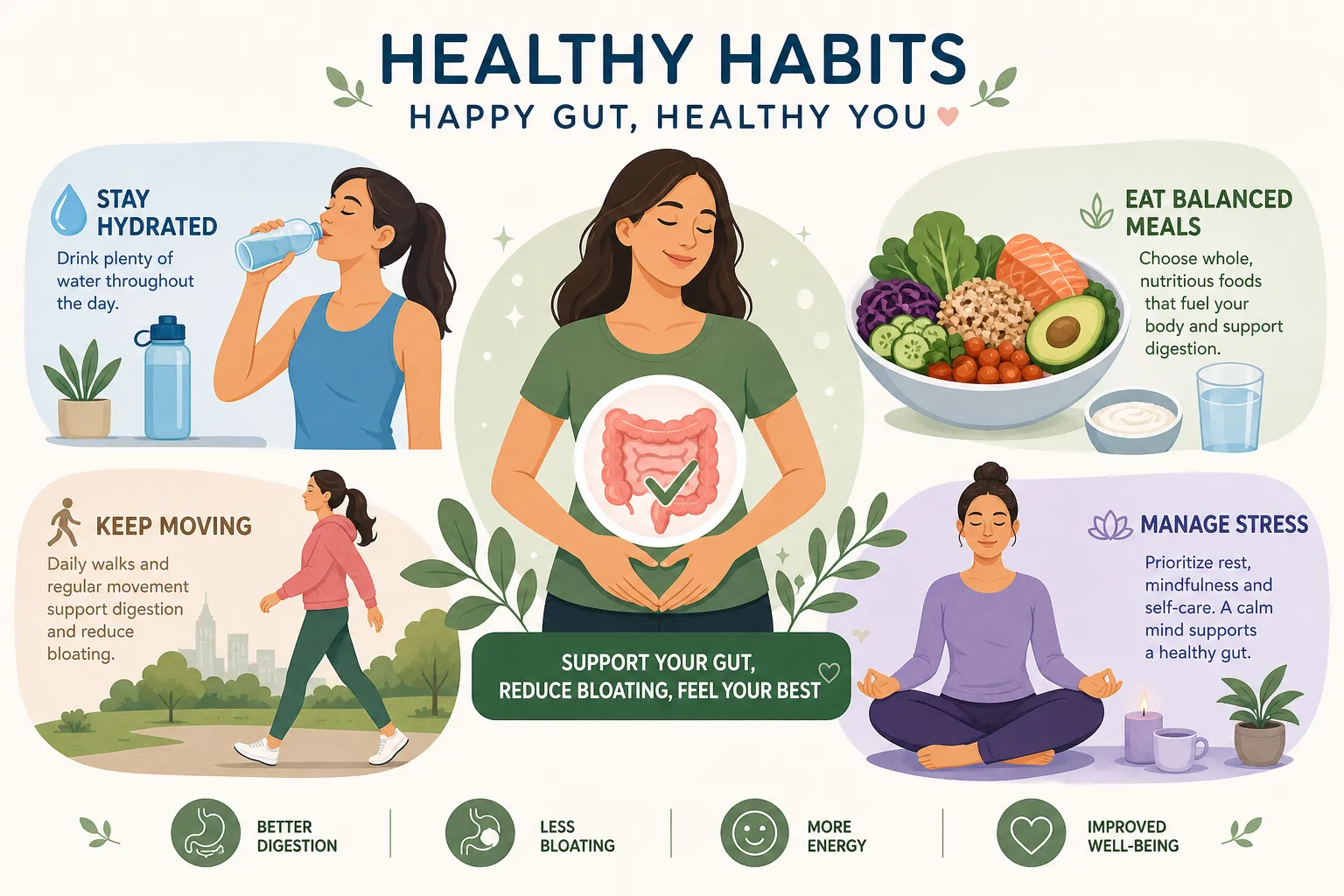
Even the best digestive health supplements work better when the basics are in place:
-
drink enough water
-
increase fibre gradually, not suddenly
-
chew properly and slow down meals
-
walk daily or stay physically active
-
notice whether stress worsens symptoms
-
keep alcohol and very processed foods in perspective
This is where many “best digestive health supplements” roundups fall short: they talk about capsules, but not the context in which capsules help.
Where evidence is stronger – and where it is more limited
Stronger practical support
-
fibre for low intake and regularity support
-
digestive enzymes for meal-related digestive heaviness in selected situations
-
probiotics for specific purposes when the strain and use case are clear
More mixed or limited
-
broad “gut reset” claims
-
blanket promises about repairing the gut
-
herbal blends marketed as universal cures
-
assuming all bloating means you need live bacteria
That balanced view matters. Good digestive supplements should be presented as support tools, not miracle solutions.
When not to self-manage with supplements alone
Seek medical advice if you have:
-
persistent or worsening symptoms
-
unexplained weight loss
-
blood in the stool
-
ongoing abdominal pain
-
a major change in bowel habit
-
difficulty swallowing
-
symptoms that wake you at night or keep returning
Supplements have a place, but they should not delay proper assessment when red flags are present.
Final verdict: what are the best supplements for gut health and bloating?
The best option depends on your pattern, not just the product label.
-
choose probiotics when the goal is everyday microbiome support
-
choose prebiotics when you want to feed beneficial bacteria and tolerate fermentable fibres well
-
choose fibre when bloating is linked to sluggish bowels or low intake
-
choose digestive enzymes when symptoms show up mainly after meals
-
choose soothing blends when you want broader, gentle digestive health support
For many people, the smartest place to begin is not the most expensive formula, but the category that most closely matches what their digestion is actually doing.
InfiniVit’s approach is built for that kind of informed choice: science-led formulations, premium-quality ingredients, UK manufacturing standards, transparent claims, and a broad range spanning probiotics, fibre, enzymes and advanced wellness blends. If you want digestive support supplements that feel considered rather than generic, it’s a strong place to start exploring what truly fits your needs.
FAQ
What is the 7 day gut reset?
A so-called 7 day gut reset usually refers to a short period of simplifying your diet, improving hydration, reducing ultra-processed foods and supporting digestion with basics like fibre or probiotics. It is not a medical treatment or an instant fix. For most people, consistent daily habits matter far more than a one-week reset.
What can I take to improve gut health and bloating?
That depends on the pattern. Digestive enzymes are often chosen for bloating after meals, fibre for sluggish regularity, and probiotics for everyday digestive balance. The best results usually come from matching the supplement type to the symptom rather than choosing at random.
What are the top 5 supplements for gut health?
The five main categories are probiotics, prebiotics, fibre, digestive enzymes and soothing botanical blends. Each serves a different purpose, so the “top” choice depends on whether your goal is microbiome support, regularity, meal digestion or general digestive comfort.
What’s the best gut repair?
There is no single supplement that can honestly be called the best gut repair. A better approach is to support digestion with the right category for your needs, while also improving diet quality, hydration, stress management and consistency. If symptoms are persistent, medical advice is more important than stronger marketing claims.
What are the 7 signs of an unhealthy gut?
Common signs people notice include bloating, irregular bowel habits, excess gas, digestive discomfort, feeling unusually full, food-related sensitivity and changes in stool pattern. These symptoms can have many causes, so persistent or worsening issues should be checked by a healthcare professional.
What are the six super six foods for gut health?
A practical “super six” could include yoghurt or kefir, oats, flaxseed, legumes, fermented vegetables and fruit or vegetables rich in fibre. These foods help support digestive wellbeing by providing beneficial bacteria, fermentable fibres or overall dietary diversity. They work best as part of a balanced routine rather than in isolation.