
 English
 Arabic
 Polish
 Russian
Natural supplements for immune support deserve the same scrutiny as any product you put in your body. Before buying a herbal blend, identify its ingredients and daily serving, then consider whether it is suitable alongside your medicines. A plant extract is not automatically more effective or safer than a nutrient supplement or food.
The video below explains how food relates to immune health.
What “immune support” means on a UK label
Food supplements and medicines follow different rules. In Great Britain, only authorised claims in the nutrition and health claims register may be used. A botanical food supplement cannot promise to prevent or treat an infection. If a blend includes a nutrient with an authorised immune-function claim, the claim applies to that nutrient, not automatically to the herbs alongside it.
A THR number identifies a traditional herbal medicine registered under the UK’s Traditional Herbal Registration scheme. It is not an ordinary food supplement. Traditional use carries a different evidential standard from clinical efficacy: the MHRA notes that separate demonstration of efficacy is not required for registered traditional herbal medicines. Follow the particular product’s leaflet for its indication, restrictions and dose; another product containing the same plant may differ.
|
What you see |
What it can tell you |
What it does not prove |
|---|---|---|
|
“Herbal” or “natural” on a food supplement |
The product contains a plant-derived ingredient |
That it is risk-free or effective against infections |
|
An authorised nutrient health claim |
The named nutrient has a permitted claim when conditions of use are met |
That every herb in the formula shares the claim |
|
A THR number on a herbal medicine |
The particular product is registered for stated traditional use |
That clinical efficacy has been established to the standard required for a conventional medicine |
Phrases such as “immune booster” and “fights viruses” tell you little about which ingredient supports a claim or the evidence behind it. For a closer look at permitted wording, read what UK supplement claims really mean.
Herbal supplements for immune support: what is in the blend?
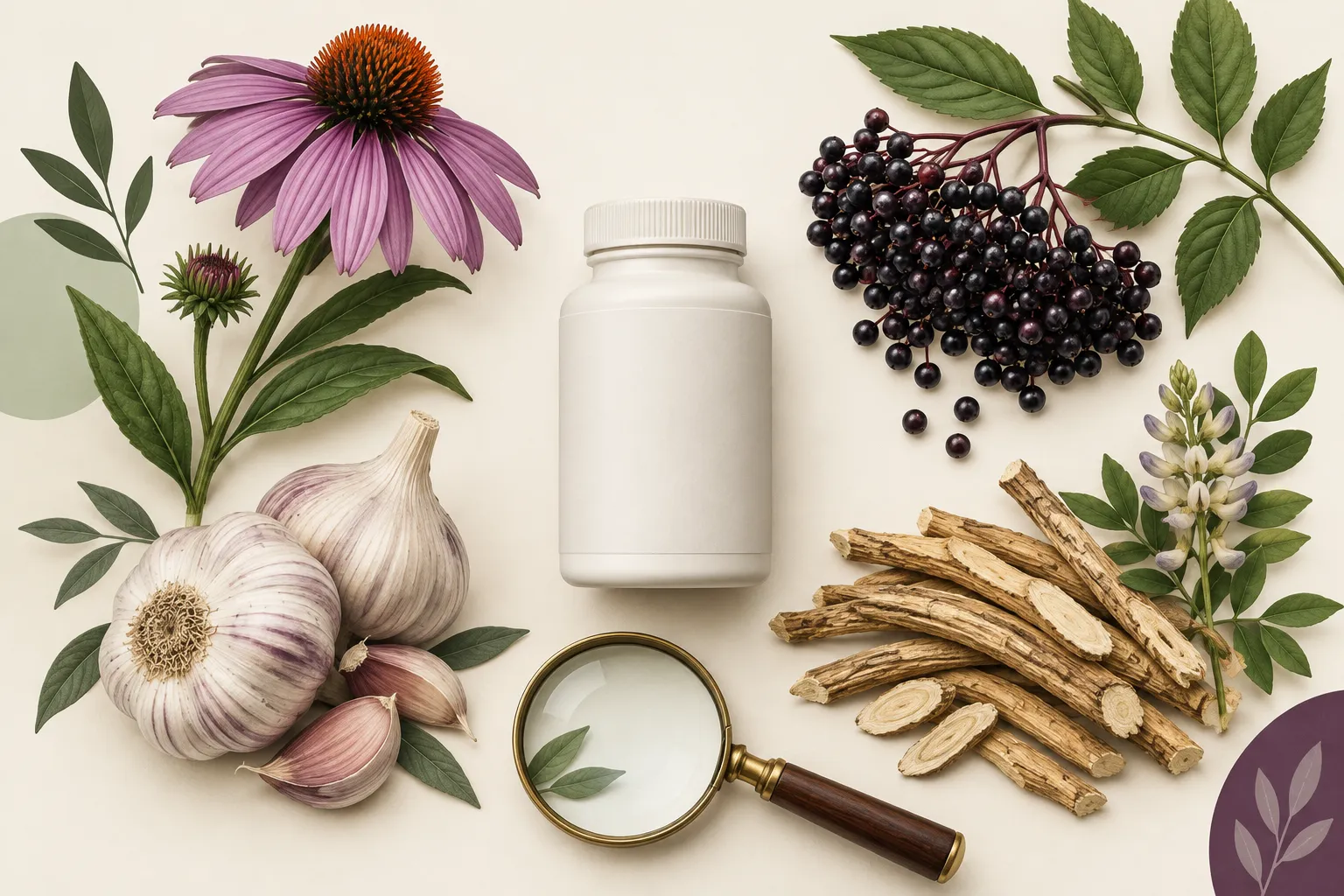
Use these names to compare labels, not to select a treatment. Evidence for one species or preparation cannot establish the effects of another. Do not rely on these herbs to prevent or treat an infection.
|
Ingredient on a label |
What to look for |
Reason for caution |
|---|---|---|
|
Echinacea |
Species, plant part, extract and amount per daily serving |
“Echinacea” alone does not identify a preparation; individual products can have different instructions and exclusions |
|
Elderberry |
Whether the label gives a botanical name, preparation and quantity |
Juice, powder and extract are not interchangeable just because each says “elderberry” |
|
Garlic |
Plant name, form and quantity |
Garlic supplements may be relevant to a medication discussion, particularly if you take medicines affecting bleeding |
|
Astragalus |
Botanical name, root or other plant part, preparation and quantity |
A blend can hide how much of the herb the daily serving supplies |
Echinacea and elderberry
Seasonal products often feature echinacea or elderberry. Identify the specific preparation before interpreting a claim about either plant. A seller who says an herb prevents illness makes a stronger claim than one who lists it in a wellness blend. Testimonials and cell studies cannot establish a benefit for the capsule you are considering.
Garlic and astragalus
Adding garlic to dinner and taking a concentrated garlic extract call for different safety decisions. Astragalus often appears in blends that state only a total blend weight. For either ingredient, look for a legible serving size, safety information and a claim you can interpret.
How to read the label before buying
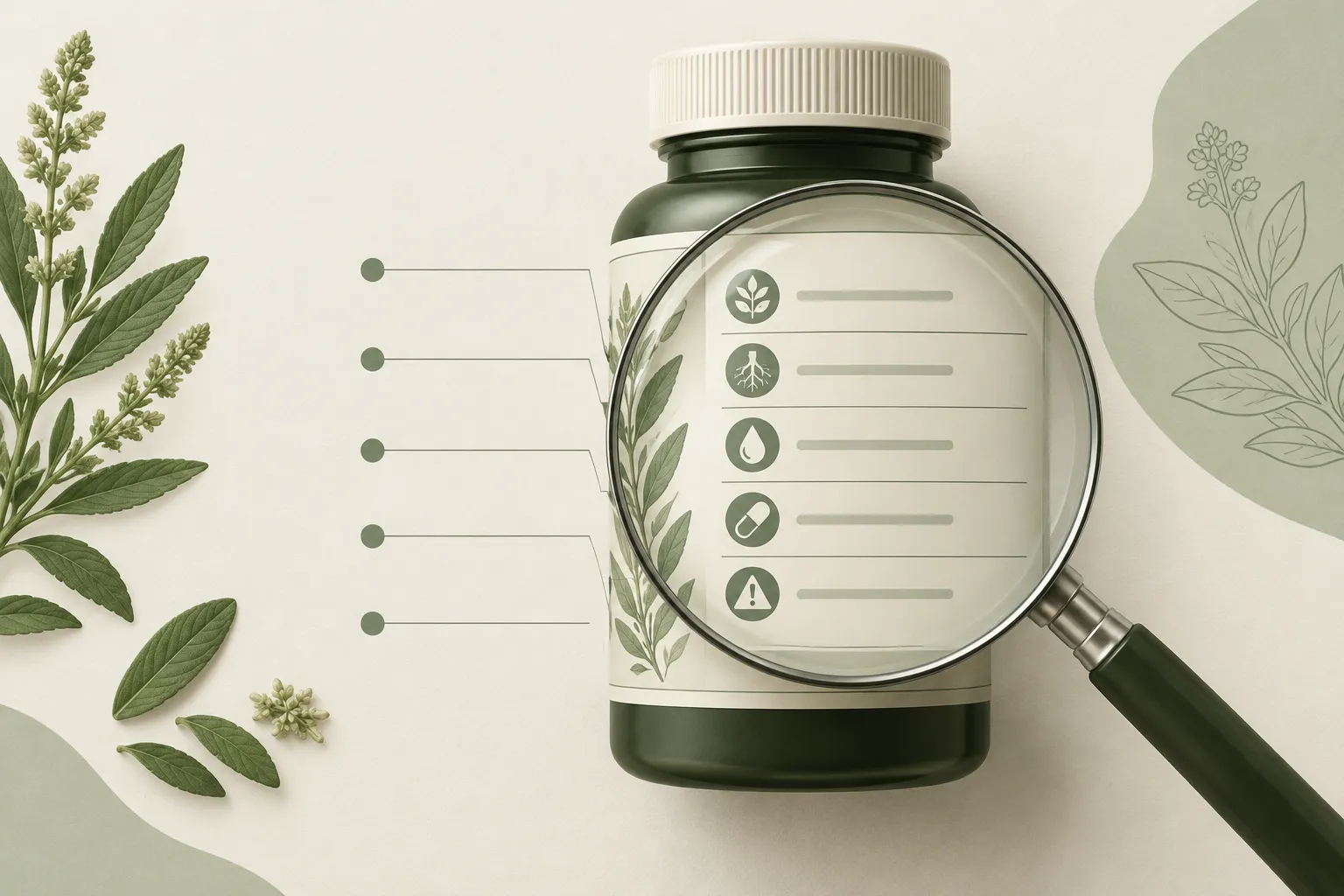
Start with the daily serving. A label that says “500 mg per capsule” gives a different amount from one that says “500 mg per two-capsule serving”. In a blend, look for an amount beside each botanical rather than a single figure for the mixture.
Read the rest of the pack in this order:
-
Find the botanical name and plant part. “Echinacea extract” tells you less than a label naming the species and whether it uses root or aerial parts.
-
See whether you are buying whole-herb powder, juice or an extract. An extract ratio or standardised compound describes the preparation; it does not guarantee a health outcome.
-
Read the daily serving, intended duration, and any age or health restrictions.
-
Separate herbs from vitamins and minerals in a blend. A lawful nutrient claim may relate to the vitamins or minerals.
-
Look for the responsible business, batch details, expiry date and contact information. Certifications may answer dietary or manufacturing questions, but they do not prove an immune benefit.
The number of plants on the front of a bottle says less than the information on the back. InfiniVit offers targeted, multi-ingredient wellness formulations; use the same checklist for one of its blends and a single-herb product. Even a carefully assembled blend needs clear directions and a reason to fit your routine. For help assessing the rest of a pack, see how to choose quality supplements in the UK.
Safety comes before the word “natural”
Herbs contain biologically active substances. Eating a plant, taking its concentrated extract and using a registered herbal medicine involve different preparations and instructions. The word “natural” says nothing about whether one is safe for you.
Speak to a pharmacist before taking an herbal supplement if you take any medication, or if you are pregnant or breastfeeding. Show them the pack or a photo of the ingredients and directions. Mention prescription medicines, especially those that affect bleeding or suppress immune activity. Keep taking prescribed treatment unless your clinician tells you otherwise.
“Ginkgo biloba, garlic and glucosamine have antiplatelet activity and can increase the effects of warfarin, direct-acting oral anti-coagulants (DOACs) and antiplatelets.” – NHS Specialist Pharmacy Service
If you already take supplements, compare their full ingredient lists. Two “immune” blends could contain the same nutrient or herb without making that clear on the front of either pack. Stop taking a new product and seek advice from a healthcare professional if you notice an unwanted effect.
Herbs, nutrients and food: which should you choose?
An authorised claim does not mean that you need a nutrient supplement, and a herb does not replace a balanced diet. Think about why you want a product: you may have a dietary gap, prefer a particular format or have a health question for a clinician. Those reasons call for different choices.
|
Option |
What makes it useful |
Its limit |
|---|---|---|
|
Food |
Provides nutrients as part of eating and drinking |
It cannot be replaced wholesale by a capsule |
|
Nutrient supplement |
May provide a defined amount of a vitamin or mineral; some nutrients have authorised immune-function claims |
A claim about normal function is not a promise to avoid illness |
|
Herbal supplement |
Can provide a specified botanical preparation if the label is clear |
Its plant name alone does not establish efficacy, safety or a permitted immune claim |
Vitamin C, vitamin D, zinc and selenium beside herbs
Vitamin C, vitamin D, zinc and selenium each have authorised wording about contributing to the normal function of the immune system, subject to conditions for using the claim. Normal function is the point: the wording does not promise to boost immunity beyond normal or protect against the common cold. Mentions of white blood cells or immune responses can sound more convincing than an unexplained label warrants.
|
Nutrient |
A sensible comparison with an herb |
|---|---|
|
Vitamin C |
A defined nutrient amount and a normal immune-function claim are easier to interpret than an unnamed botanical blend; a balanced diet may already provide what you need |
|
Vitamin D |
The NHS advises everyone to consider 10 micrograms daily during autumn and winter, because getting enough from food alone is difficult |
|
Zinc |
Its authorised normal immune-function claim belongs to zinc, even when the capsule also contains echinacea |
|
Selenium |
Its authorised normal immune-function claim belongs to selenium, not automatically to elderberry or another plant on the label |
An authorised claim describes what the nutrient does; it does not mean you need to take essential vitamins and minerals on top of a herbal formula. Compare amounts and overlapping ingredients before adding a product to your routine.
If you want a wider comparison of formulations, read Best Immune Support Supplements for Adults before narrowing your choice to botanicals. For routines beyond a purchase decision, see How to Support Immune Health Year-Round. The right purchase may be no herbal product at all.
A five-minute buying checklist
-
Can you identify each herb, its plant part and its amount per daily serving?
-
Is the product a food supplement or a THR-registered herbal medicine, and are its claims consistent with that status?
-
Are the suggested directions and precautions clear?
-
Does a nutrient claim name the nutrient responsible, rather than imply that every herb in the blend has the same evidence?
-
Have you considered medicines, pregnancy, breastfeeding and overlap with products you already take?
If a “proprietary blend” hides the amounts, choose a product with a clearer label. The same goes for promises to keep you from getting ill. A short ingredient list with usable quantities can be easier to assess than a longer one without them.
The bottom line
Choose herbal supplements for immune support by product-specific transparency and suitability. Look for a named plant, a defined serving and realistic claims; ask a pharmacist before buying if an interaction concerns you. If you prefer a premium blend, explore InfiniVit’s immunity and antioxidants range and apply the same label checks to every option.
FAQ
What are the best herbs for immunity?
A herb’s name alone cannot tell you which product is suitable. For echinacea, elderberry, garlic or astragalus, compare the preparation, daily amount, product status and precautions. If you take medication or are pregnant or breastfeeding, speak to a pharmacist before taking one.
How do I boost my immunity naturally?
“Boosting” is a poor measure of what a herbal supplement can do. Food and appropriate nutrient intake matter to normal immune function; assess any herbal product by its label and safety precautions. Do not rely on it to prevent infection.