
 English
 Arabic
 Polish
 Russian
Best Supplements for Immune Support in Adults
If you are trying to choose the best supplements for immune support, the hardest part is not finding products. It is working out which type of product actually makes sense for you.
The UK market is crowded with single vitamins, multi-ingredient formulas, mushroom blends, probiotic products, gummies, powders, and “all-in-one” immune system supplements. Many adults end up buying overlapping formulas, doubling up on the same nutrients, or choosing products with impressive-sounding ingredients but unclear purpose. A better approach is simpler: understand what each supplement type is for, where the evidence is strongest, and how it fits into your wider routine.
At InfiniVit, we believe immune support should be approached with clarity, quality, and restraint. High-grade ingredients, science-led formulations, transparent labelling, and UK manufacturing standards matter far more than hype. And importantly, supplements should support a healthy lifestyle rather than act as quick fixes.
For a more nutrient-focused companion read, see our guide to best vitamins for immune support in adults.
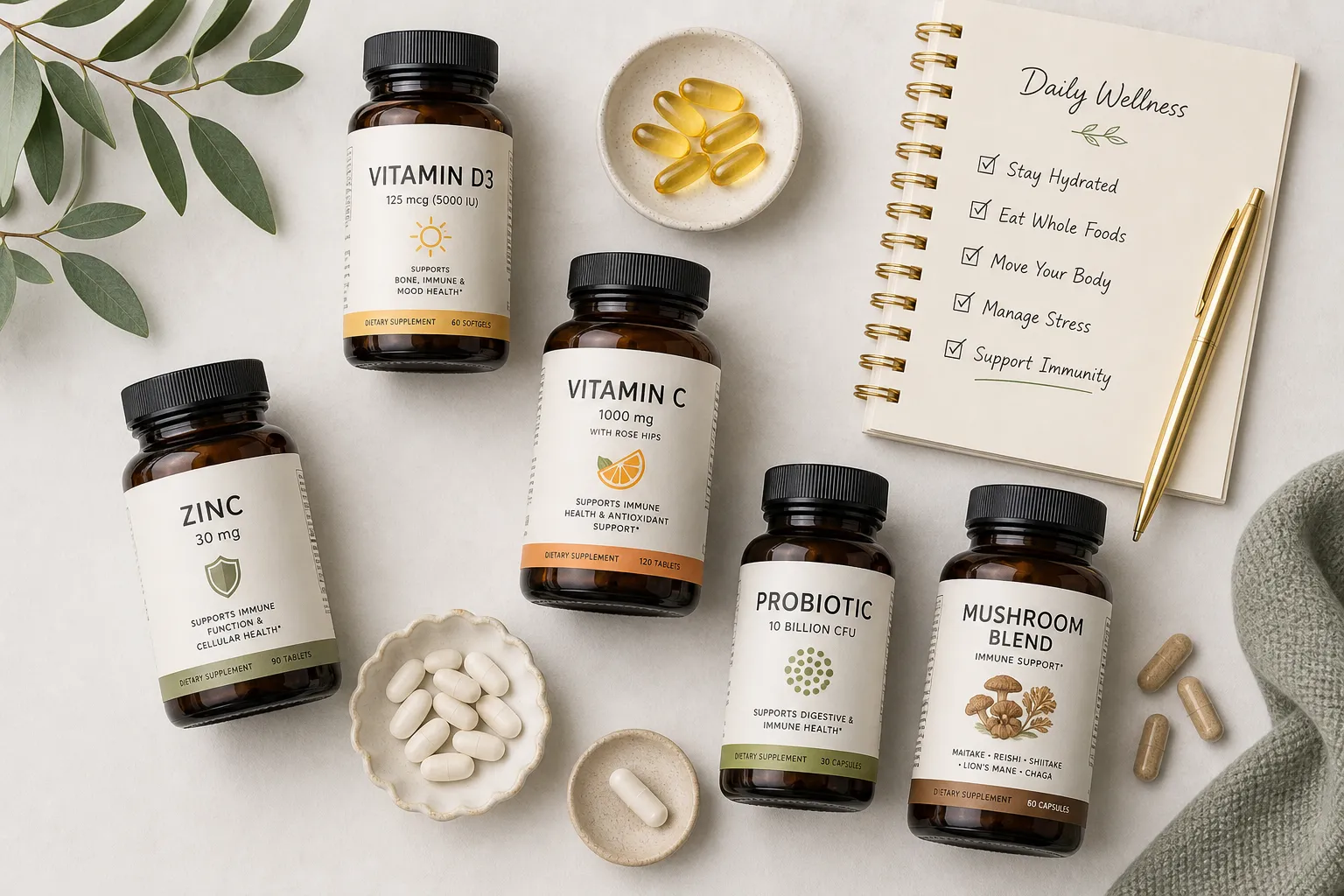
What “immune support” should mean in practice
When adults search for the best supplements for immune system support, they often mean one of three things:
-
They want to cover likely nutrient gaps.
-
They want help choosing between different supplement formats.
-
They want to avoid wasting money on products that overlap.
A measured, evidence-led UK view starts with this principle: supplements can help maintain normal immune function when they provide nutrients with authorised health claims or help correct low intake, but they are not shortcuts to resilience.
That matters because sleep, overall diet quality, energy balance, stress, exercise, smoking status, alcohol intake, and underlying health conditions all influence immune function. A supplement can complement that picture, but it cannot replace it.
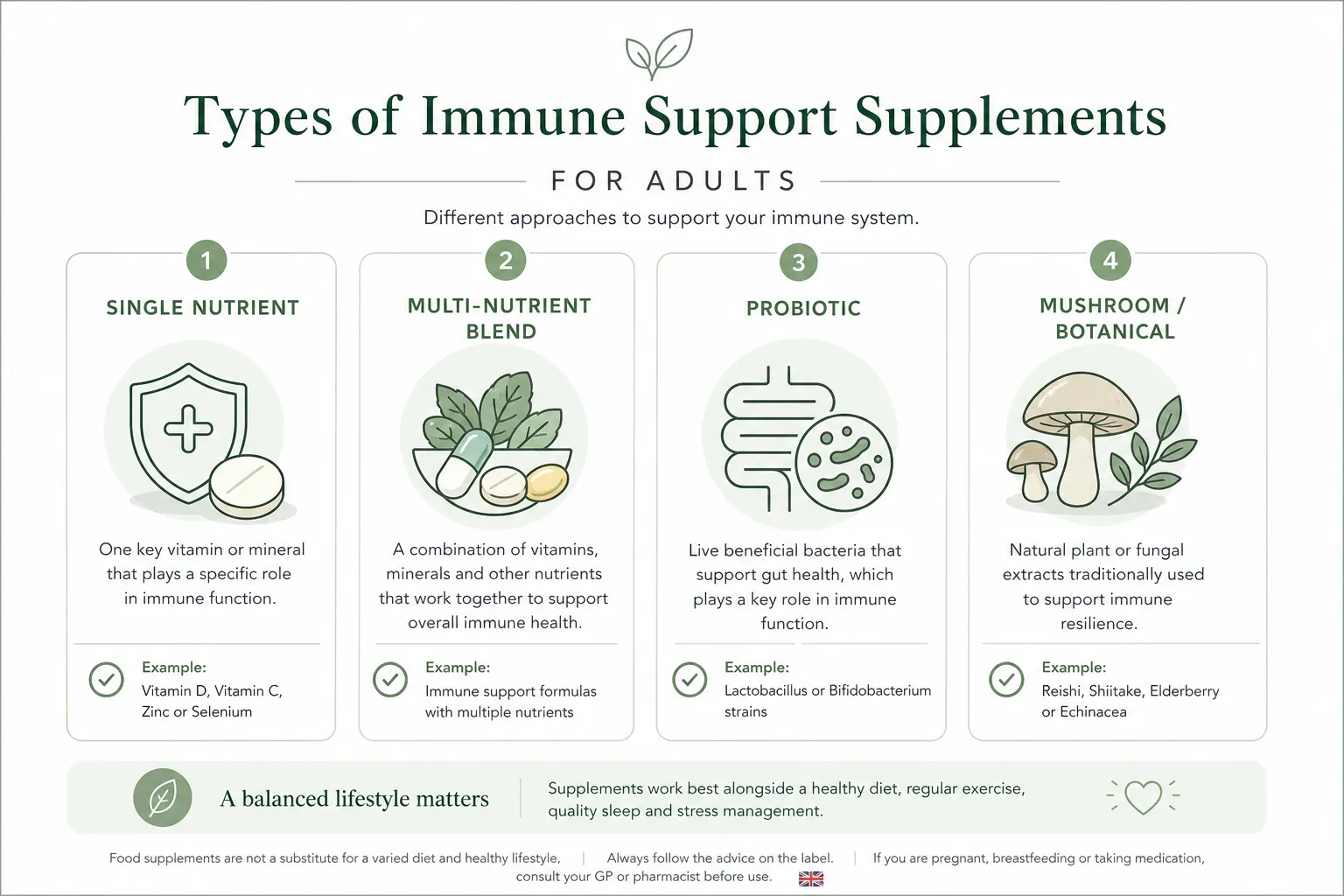
The main types of immune support supplements
Rather than ranking products by marketing strength, it is more useful to compare categories.
Quick comparison table
|
Supplement type |
Best for |
Main strength |
Main limitation |
Best suited to |
|---|---|---|---|---|
|
Single-nutrient supplements |
Targeting one known need |
Clear dose and purpose |
Can lead to overlap if stacked carelessly |
Adults wanting precision |
|
Multi-nutrient immune blends |
Convenience |
Combines core nutrients in one formula |
May duplicate nutrients already taken elsewhere |
Busy adults wanting one main product |
|
Probiotics / gut-focused supplements |
Gut-immune connection |
Useful when immune goals overlap with digestive goals |
Not all strains or formulas are interchangeable |
Adults with digestive-focused wellness routines |
|
Mushroom / botanical formulas |
Broader wellness positioning |
Often used in targeted blends |
Immune claims may be limited or ingredient-specific |
Adults seeking complementary formulations |
|
Gummies / powders / lozenges |
Ease and consistency |
Can improve adherence |
May contain lower doses, sugars, or narrow use-cases |
Adults who dislike tablets or capsules |
1) Single-nutrient supplements: best when you want precision
For many adults, the most sensible place to start is not a huge formula. It is a single nutrient chosen for a clear reason.
This category is often strongest when you are targeting a likely gap rather than chasing novelty. In UK adult routines, the most common examples are vitamin D, vitamin C, and zinc.
Why they are useful
Single-nutrient supplements make it easy to:
-
know exactly what you are taking
-
adjust dose without affecting other nutrients
-
avoid paying for unnecessary extras
-
reduce the risk of doubling up across products
This is particularly helpful if you already take a multivitamin, protein blend, greens powder, or fortified foods.
Their downside
They are less convenient if you genuinely need support across several areas at once. Some people also end up building a complicated stack of separate bottles, which can be expensive and harder to follow consistently.
Best fit
Single nutrients are often among the best supplements for immune system health if you want a simple, measured routine based on identifiable needs rather than a maximalist formula.
2) Multi-nutrient immune blends: best for convenience, not always for everyone
A multi-nutrient immune formula brings several ingredients together in one place, often centred on vitamins and minerals that contribute to the normal function of the immune system.
This can be useful when your priority is simplicity. Instead of buying several separate products, you use one blend with a defined purpose.
What distinguishes a good blend
A better-quality blend is not just “more ingredients.” It is a formula where the nutrient choices make sense together, the doses are coherent, and the label is transparent.
Look for:
-
core nutrients with recognised roles
-
sensible amounts rather than scattered token doses
-
no unnecessary duplication with your multivitamin
-
a format you can realistically take every day
-
manufacturing standards you trust
At InfiniVit, this is where science-led formulation matters. Premium immune blends should be thoughtfully balanced rather than overloaded for label appeal. As an example of this category, Advanced Immuno Support sits within the multi-nutrient immune blend space.
Common mistake to avoid
Do not assume that the product with the longest ingredient list is automatically the best supplement for immune support. Sometimes a shorter formula with stronger rationale is the better choice.
3) Probiotics and gut-focused formulas: relevant when digestion is part of the picture
Interest in gut health and immunity often overlaps, and not without reason. Many adults looking for immune system supplements UK options are also dealing with bloating, digestive disruption, or the effects of busy, inconsistent routines.
That does not mean every probiotic is an “immune supplement,” but it does mean this category can be relevant when your wellness goals are broader than one nutrient.
When this category makes sense
A gut-focused formula may be worth considering if:
-
your diet is inconsistent
-
digestive comfort is part of your wider health goal
-
you are already focusing on fibre, fermented foods, and routine
-
you want a supplement strategy that supports more than one area of wellbeing
If this is your starting point, you may also find our guide to natural supplements for gut health useful.
As an example of a probiotic-focused category fit, InfiniBio MAX can sit within a gut-support routine where digestive balance is part of the bigger picture.
The key caution
Do not treat all probiotic products as equivalent. Strains, dose formats, storage needs, and intended use can differ significantly. And importantly, immune-function claims should not be casually extended to every gut-health product as a whole.
4) Mushroom and botanical formulations: complementary, but assess claims carefully
Mushroom and botanical products are popular in the wellness space because they often appeal to adults looking for natural-feeling, more holistic formulations.
This category can include mushrooms, herbal extracts, and plant compounds positioned around resilience and everyday support. The appeal is understandable, but consumers should be careful not to assume that every ingredient in an “immune” formula carries the same level of authorised claim language.
Where this category can fit
A mushroom or botanical product may appeal if you:
-
prefer plant-led formulations
-
want a complementary product alongside core nutrients
-
value broader wellness routines over minimal supplementation
-
are specifically interested in mushroom-based formulas
A category-relevant example here is Organic Mushrooms Immuno Defence.
The important distinction
For vitamins and minerals such as vitamin C, vitamin D, selenium, and zinc, authorised wording such as “contributes to the normal function of the immune system” may be appropriate. That same language should not automatically be applied to mushrooms, botanicals, or the product overall unless specifically permitted.
This is one reason brand trust matters. At InfiniVit, transparent communication and EFSA-aligned wording help customers separate solid nutritional support from exaggerated claims.
5) Specialty formats: gummies, lozenges, powders, and seasonal “immune” products
Not every adult wants capsules or tablets. Format can strongly affect consistency, and consistency usually matters more than buying the most dramatic-looking product.
Gummies
Gummies can be useful for adults who struggle with tablets. But check:
-
sugar content
-
actual nutrient levels
-
serving size
-
whether the product is really convenient or just appealing
Lozenges
Lozenges are typically more format-specific and may be chosen for convenience or a particular nutrient delivery style, such as zinc. They can be practical, but they are not automatically a complete immune support option on their own.
Powders
Powders can work well for adults already using shakes or smoothie routines. The main question is whether the product gives you meaningful amounts of relevant nutrients, or simply adds another overlapping layer.
Which supplement type is best for which adult?
If you want the simplest evidence-led approach
Start with a single nutrient or a well-built multi-nutrient blend.
If you already take several products
Audit your routine first. A blend may add unnecessary overlap, while a single nutrient may be more precise.
If digestive health is part of your goal
A probiotic or gut-focused formulation may be more relevant than adding yet another standalone vitamin.
If you prefer plant-led wellness routines
A mushroom or botanical formula may fit your preferences, but it should usually sit alongside, not replace, attention to core nutrients and overall diet quality.
The UK angle: why supplement choice can differ here
For adults comparing the best supplements for immune system UK searches, context matters. In the UK, limited sunlight exposure across much of the year shapes how people think about daily nutrition, especially vitamin D.
“The NHS recommends that adults and children over 4 should consider taking a daily supplement containing 10 micrograms of vitamin D during the autumn and winter.” – NHS
That does not mean everyone needs the same immune routine, but it does show why UK supplement decisions often look different from generic international advice.
If you want to explore that topic further, our guide on vitamin D benefits explained for UK adults is a useful next read.
What the strongest evidence tends to favour
When people ask about the best supplements for immune system, they often expect a dramatic answer. In reality, the most credible choices are usually the least glamorous: products built around well-established nutrients, used appropriately, and taken consistently.
“Your immune system needs certain vitamins and minerals to work properly. These include vitamin C, vitamin D, and zinc.” – NIH Office of Dietary Supplements
This is also where many shoppers overcomplicate things. They move too quickly from “cover the basics” to “buy five overlapping immune formulas.”
How to avoid buying overlapping immune supplements
This is where many adults waste money.
Common overlap patterns
|
You already take |
Watch out for adding |
Why it matters |
|---|---|---|
|
A multivitamin |
An immune blend with similar vitamins and minerals |
May duplicate vitamin D, zinc, selenium, vitamin C |
|
A vitamin D supplement |
A second immune formula containing vitamin D |
Total intake can rise without clear benefit |
|
A zinc product |
Lozenges plus a blend plus a multivitamin |
Easy to stack the same mineral unintentionally |
|
A greens powder |
An all-in-one “immunity” formula |
May create messy overlap without dose clarity |
Smart audit questions
Before buying, ask:
-
What is this product’s main role in my routine?
-
Does it replace something I already take, or just add to it?
-
Which nutrients are repeated elsewhere?
-
Is the dose meaningful, or is the formula built for marketing impact?
-
Can I sustain this routine daily?
Common mistakes adults make when choosing immune supplements
Mistake 1: Assuming more ingredients means better support
A longer label is not the same as a better formula. Some products are crowded but unfocused.
Mistake 2: Buying multiple “immune” products without checking overlap
This is especially common with multivitamins, zinc products, seasonal blends, and gummies.
Mistake 3: Focusing on one product while ignoring the basics
If sleep is poor, meals are erratic, stress is high, and diet quality is inconsistent, a supplement can only do so much.
Mistake 4: Confusing marketing language with authorised claims
A premium supplement brand should communicate clearly and responsibly. Words like “support” can be appropriate in context, but disease-style promises are not.
Mistake 5: Choosing poor-quality products for the sake of low price
Purity, stability, ingredient form, manufacturing quality, and honest labelling all matter. This is part of why many adults move away from generic high-street options toward better-designed formulas from specialist brands.
How InfiniVit approaches immune support differently
At InfiniVit, our philosophy is straightforward: thoughtful formulation beats noise.
That means:
-
high-grade ingredients selected for purpose
-
science-led blends designed for real routines
-
UK manufacturing with strict GMP and ISO9001 quality standards
-
transparent wording aligned with authorised statements where relevant
-
a wider wellness perspective that recognises links between immunity, digestion, stress, energy, and daily resilience
-
options across different dietary needs, including vegan and vegetarian formulations, with broader availability of organic, halal, and kosher options across the range
Where it genuinely fits a person’s needs, a product such as Acai Immunity Advanced Formula may appeal within the broader multi-ingredient immune category, but the right choice always depends on the rest of the routine rather than the product in isolation.

A simple decision framework for adults
If you want a practical way to choose among the best supplements for immune support, use this order:
Option 1: Start with a single nutrient
Best if you know what gap you are trying to address.
Option 2: Choose one multi-nutrient blend
Best if convenience matters and you are not already duplicating nutrients elsewhere.
Option 3: Add a probiotic or gut-focused formula only if it suits your wider goals
Best if digestion and routine resilience are part of the same picture.
Option 4: Use mushroom or botanical products selectively
Best as a complementary choice, not as a substitute for core nutritional basics.
Final verdict
The best supplements for immune support in adults are not necessarily the products with the most ingredients, the loudest packaging, or the broadest promises. For most people, the strongest choices are the ones that fit a clear purpose: a well-chosen single nutrient, a carefully designed multi-nutrient blend, or a targeted gut-focused or botanical formula used appropriately.
If you want a smarter approach to supplements for immune system health, think in terms of fit, overlap, quality, and consistency. That is where better outcomes and better value usually come from.
InfiniVit is built for adults who want more than generic high-street supplementation: premium-quality ingredients, carefully developed formulations, trustworthy claims, and expert-led wellness support across immunity, gut health, brain function, energy, sleep, stress, and beyond. If you are ready to build a cleaner, more intentional supplement routine, explore the InfiniVit range and choose products that genuinely match your needs.
FAQ
What is the most effective immune support supplement?
There is no single best product for everyone. In practice, the most effective option is usually the one that matches a genuine need, such as a well-chosen single nutrient or a sensible multi-nutrient blend built around nutrients that contribute to the normal function of the immune system.
How do I boost my immune system quickly?
There is no true quick fix. The most reliable approach is to support sleep, diet quality, stress management, regular movement, and consistent daily nutrition, using supplements only as part of that wider routine.
Do immune boosting supplements actually work?
Some supplements can be useful when they help correct low intake or provide nutrients with authorised immune-function claims, such as vitamin D, vitamin C, zinc, and selenium. They support normal immune function, but they do not act as instant fixes or substitutes for healthy living.
What are the best supplements for strengthening the immune system in the UK?
For UK adults, the most sensible options are often single nutrients or well-designed blends centred on established vitamins and minerals, especially where diet or seasonal factors make intake less reliable. The right choice depends on whether you need precision, convenience, or a broader routine that also includes gut or lifestyle support.
What do doctors prescribe to boost the immune system?
Doctors do not usually prescribe general “immune boosters” for healthy adults. Instead, they may address specific deficiencies, medical conditions, or underlying causes where appropriate, which is very different from over-the-counter wellness supplements.
What vitamins does NHS recommend?
The NHS advises that adults and children over 4 should consider a daily 10 microgram vitamin D supplement during autumn and winter. Additional supplementation depends on age, diet, health status, and whether a clinician has identified a particular need.