
 English
 Arabic
 Polish
 Russian
If you eat a varied diet and have no deficiency, extra vitamins are unlikely to ease bloating, constipation or an unsettled stomach. The best gut health vitamins are those that meet a genuine nutritional need. In the UK, that might mean vitamin D in autumn and winter, or a discussion with a clinician about B12 or folate if your diet is restricted or you have symptoms of deficiency.
You may need to address a dietary gap, find the cause of digestive symptoms, or both. A multivitamin might help with the first. Persistent diarrhoea still needs an explanation.
Do vitamins improve gut health?
Vitamins are essential nutrients. You need adequate amounts for normal bodily functions; taking more does not follow as a treatment for digestion when your intake is sufficient. No single vitamin has been shown to treat everyday bloating.
Products sold for “gut health” are often something else entirely:
|
Product |
What it is |
Where it fits |
|---|---|---|
|
Vitamins |
Essential micronutrients, including D, B12 and folate |
Useful when dietary intake or a diagnosed deficiency calls for them; not a stand-alone remedy for gut symptoms |
|
Fibre and prebiotics |
Dietary carbohydrate that includes forms fermented by gut microbes |
Food-based fibre supports bowel habits; increase it gradually if you are prone to bloating |
|
Live cultures or probiotics |
Live microorganisms supplied in foods or supplements |
Not vitamins, and effects depend on the product and the person |
|
Digestive enzymes |
Substances that break down components of food |
Not vitamins; their use depends on the specific digestive problem |
Where prebiotics, probiotics and enzymes fit
Your gut microbiome includes bacteria that feed on components of your food. Some fibres in onions, beans and oats act as prebiotics that gut bacteria can use. Prebiotic supplements add fibre; they do not correct vitamin deficiency. A large increase in fermentable foods can worsen bloating or gas if you are sensitive to them.
Probiotic products supply live microorganisms, sometimes called “friendly bacteria”. They differ from prebiotics, and products differ from each other. A named bacterium or a count of colony-forming units tells you what a product contains. It cannot tell you whether the product will ease your digestive issue. You can take a prebiotic with a probiotic, though you need neither as a routine vitamin supplement.
Digestive enzymes help break down food components. They serve a purpose when you need an enzyme for a specific problem, rather than as another ingredient in a broad gut blend. They do not supply the vitamins needed for normal nutrition.
For fibre, live cultures and enzymes, see Best Gut Health Supplements in the UK. A bottle marketed as a “gut vitamin” may contain none of them. If your question concerns immune function, read Gut Health and Immunity: What Is the Link?.
Which vitamins matter most?
Vitamin D: a UK seasonal recommendation, not a bloating remedy
The NHS gives this seasonal recommendation:
“Everyone (including pregnant and breastfeeding women) should consider taking a daily supplement containing 10 micrograms of vitamin D during the autumn and winter.” – NHS
People with little sun exposure may need year-round advice. The NHS recommendation addresses vitamin D intake; it does not establish a treatment for IBS, constipation or a damaged gut lining. The NHS also warns adults against taking more than 100 micrograms (4,000 IU) a day unless a doctor advises otherwise. If you are comparing labels, see how to choose a vitamin D supplement.
Vitamin B12 and folate: consider absorption as well as intake
B12 and folate deficiencies can cause tiredness and other symptoms. Intake may be too low, or a digestive condition may interfere with absorption. NHS guidance on causes lists Crohn’s disease as a possible contributor to B12 deficiency and coeliac disease as a possible cause of folate deficiency. A GP can assess symptoms and arrange blood tests if you suspect a deficiency. A generic multivitamin could delay diagnosis if you rely on it instead.
B12 is particularly relevant if your diet excludes animal foods. Folate comes from foods such as leafy greens, and supplements may be appropriate for specific life stages or a confirmed shortfall. Neither is a general-purpose supplement for relieving bloating.
What about vitamins A and C?
UK guidance describes vitamin A’s role in keeping the lining of some body parts healthy and vitamin C’s role in keeping cells healthy. Neither statement shows that extra A or C heals an inflamed intestine or relieves digestive complaints. Avoid high-dose vitamin A without individual advice, especially if you are pregnant or could become pregnant. For food sources and precautions, see vitamin A foods and safer choices.
Best vitamins for gut health: choose by need, not symptom
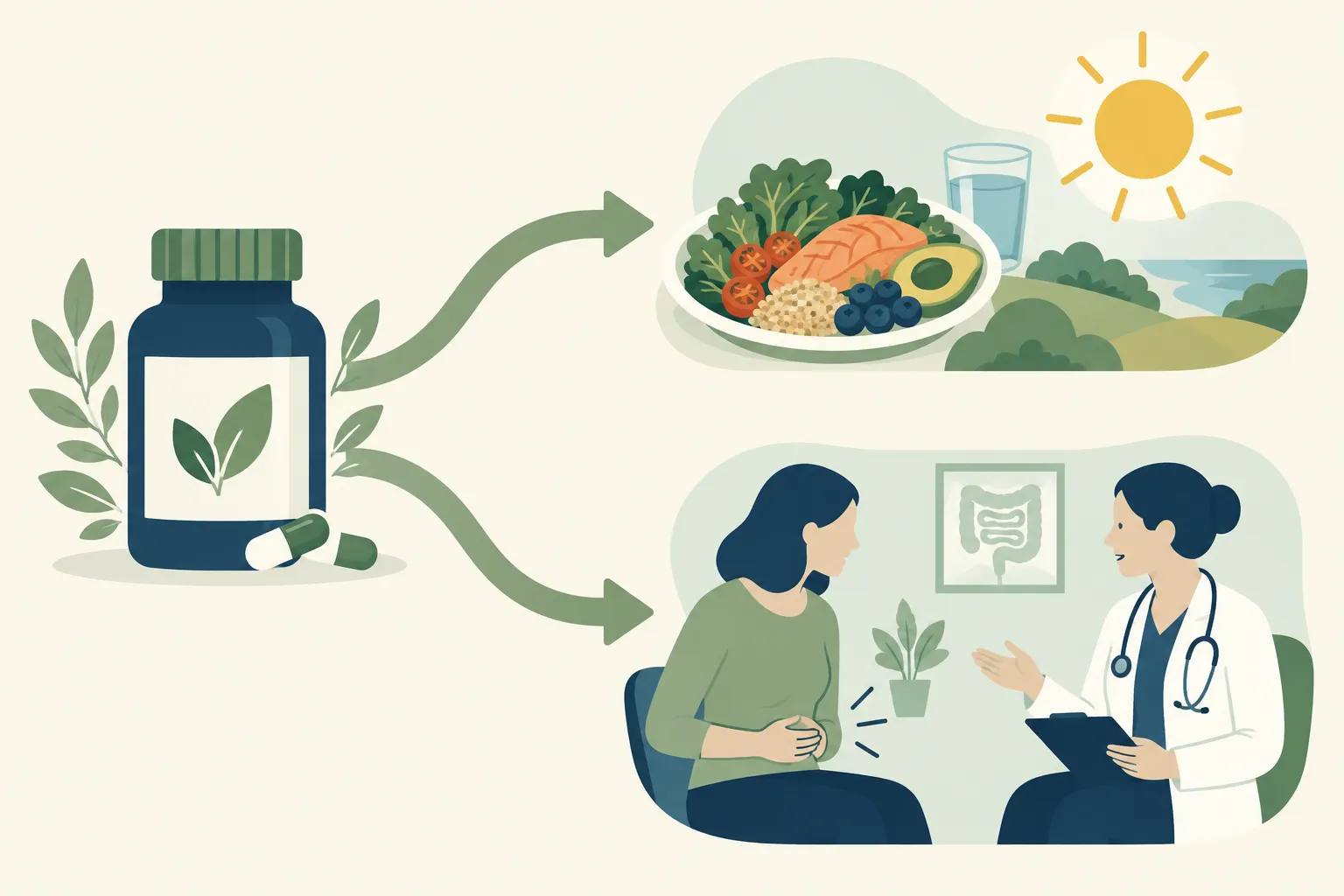
If you know which nutrient you need, you can choose a supplement to match. If your main concern is pain or a change in bowel habits, start with the symptom:
|
Situation |
Sensible next step |
Why a vitamin alone may not help |
|---|---|---|
|
Little sunlight in autumn or winter |
Consider the NHS seasonal vitamin D recommendation |
Vitamin D covers a common seasonal need, not a diagnosis of bloating |
|
Diet excludes animal products |
Consider whether your B12 intake is adequate |
Correcting intake and investigating symptoms are separate tasks |
|
Persistent diarrhoea alongside tiredness |
Ask a GP about symptoms and possible nutrient testing |
Poor absorption can be a consequence of a digestive condition |
|
Abdominal pain, constipation or bloating without a known deficiency |
Look at food, fluids and symptom pattern; seek assessment if it continues |
No vitamin has been established as a general fix for these complaints |
An irritable bowel syndrome (IBS) diagnosis alone does not establish a vitamin deficiency. Coeliac disease, meanwhile, can affect nutrient absorption and may call for both treatment of the condition and attention to nutritional intake. That distinction helps you decide whether a supplement belongs in the plan.
Food first, supplements when appropriate
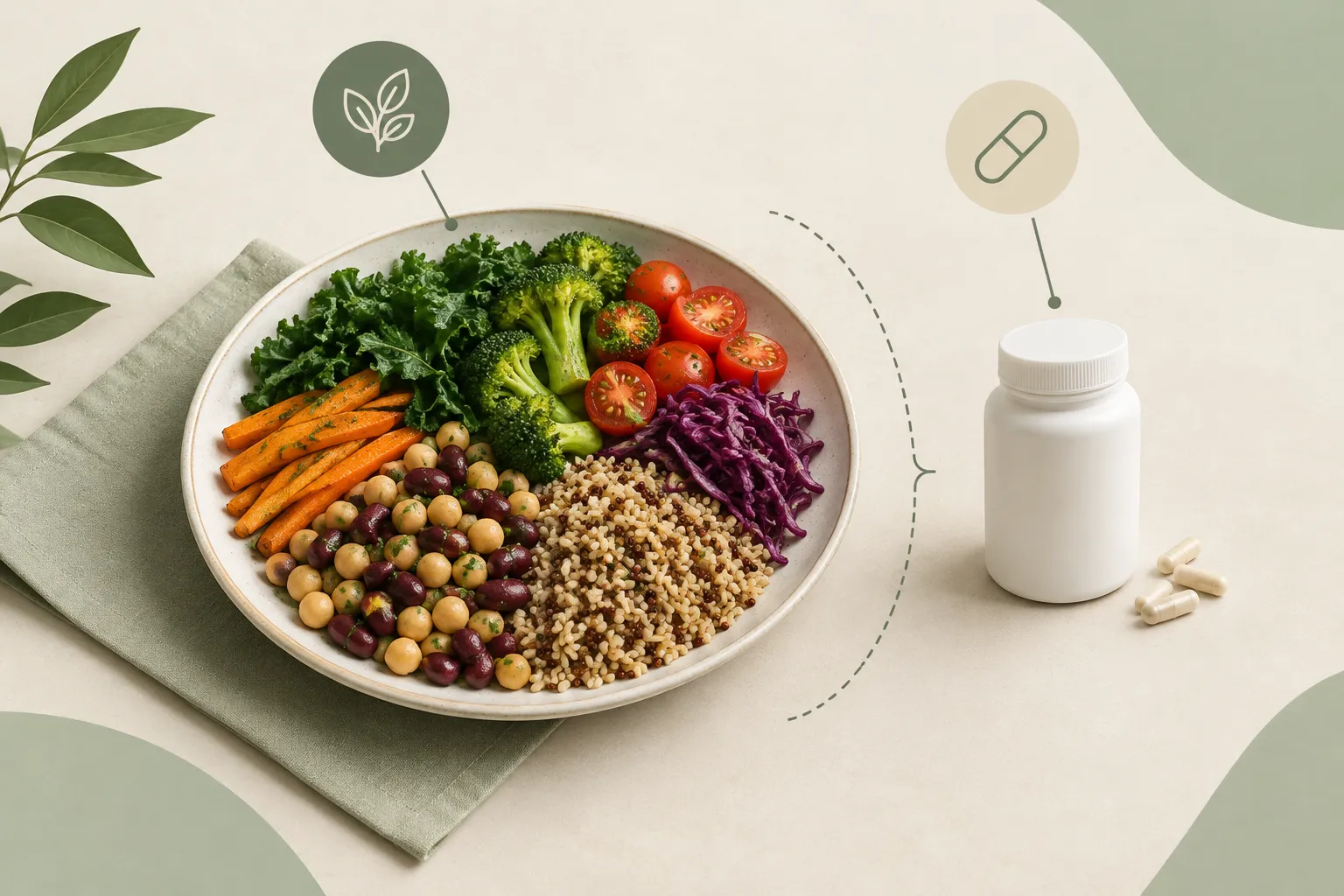
Meals can supply both vitamins and the fibre that a vitamin tablet lacks. Include vegetables and fruit alongside beans, lentils or wholegrains you tolerate. The NHS guideline is 30 g of dietary fibre a day for adults as part of a balanced diet. Increase it gradually and drink enough fluid; a sudden jump may make wind or bloating worse.
Choose a supplement for a specific need, rather than a promise of a “gut reset”:
-
In autumn and winter, consider vitamin D at the UK-recommended amount.
-
If you restrict foods or suspect a shortfall, consider what your diet may lack; seek advice if you have symptoms of deficiency.
-
If bowel symptoms continue, investigate the cause rather than relying on a vitamin blend.
If you combine products, read each label so you know how much of a vitamin you take in total. A carefully formulated supplement can fill a real gap. A longer ingredient list, however, says little about whether it will help your digestion.
When gut symptoms need medical advice
Pain, diarrhoea, constipation and bloating can have several causes. If you think you have IBS and your symptoms have lasted more than four weeks, the NHS advises speaking to a GP. Persistent symptoms, fatigue, unexpected weight loss or suspected B12 or folate deficiency may also warrant assessment for coeliac disease. Continue eating gluten until testing is complete; cutting it out beforehand can affect the result.
For unexplained weight loss, bleeding from your bottom or bloody diarrhoea, a hard lump or swelling in your abdomen, or breathlessness with palpitations and unusual paleness, seek urgent advice through a GP or NHS 111. Do not try to manage these symptoms with vitamins.
The bottom line
No vitamin is a universal answer to bloating. Eat a varied diet where possible, follow the UK’s seasonal vitamin D advice, and seek assessment for suspected deficiency or persistent gut symptoms. If you identify a nutritional gap, InfiniVit is a place to find thoughtfully formulated supplements. Choose by ingredient and amount, with a clear purpose for taking it.
FAQ
What is the quickest way to improve gut health?
Start with regular meals, a varied diet and adequate fluids; increase fibre gradually rather than making a sudden change. Extra vitamins are unlikely to settle digestive symptoms quickly if you are not deficient. If symptoms persist or you notice warning signs, seek medical advice.
What is the very best supplement for gut health?
There is no single best supplement for everyone. A vitamin is useful when it meets a nutritional need, while fibre, live cultures and enzymes are different products with different purposes. For persistent bloating or changes in bowel habits, identify the cause before choosing a supplement.