
 English
 Arabic
 Polish
 Russian

The best multivitamin for men over 40 depends on what your diet leaves out and what you already take. Turning 40 does not create a new nutritional requirement overnight. Some men may benefit from a supplement that fills a gap; others need only a single nutrient, or no multivitamin at all.
Do you need a multivitamin in your 40s?
Look at what you eat most weeks. Meals that include vegetables and fruit, protein foods, wholegrains and sources of healthy fat may leave little for an all-in-one tablet to add. Missing whole food groups, irregular meals or a restrictive diet give you a reason to look more closely at particular nutrients.
Your diet tells you more than the age band on a bottle. Someone eating no animal products has different considerations from someone who eats fish, dairy and meat. A supplement cannot make up for consistently inadequate food intake. If you have a diagnosed deficiency, absorption problem or persistent symptoms, seek individual advice rather than using a multivitamin as a test or treatment.
In the UK, consider vitamin D separately. Guidance depends on the season and circumstances such as limited sun exposure. If vitamin D is your only reason for buying a supplement, a standalone product may be simpler than a multi.
“Adults should consider a daily supplement containing 10 micrograms (400 IU) of vitamin D during autumn and winter.” – NHS, Vitamin D
The NHS also advises year-round vitamin D for adults with very little sun exposure. People with dark skin should consider taking it throughout the year too. In either case, compare the amount in a multivitamin with the NHS advice.
Start with a simple decision tree
|
Your situation |
Sensible next step |
|---|---|
|
You eat a varied diet and have no known nutritional concern |
Do not assume that an age-labelled multivitamin is necessary. Consider the UK vitamin D advice separately. |
|
You avoid a food group or your diet is repeatedly limited |
Identify the likely nutrient gap first. A targeted supplement may be more appropriate than an all-in-one formula. |
|
You mainly want to follow vitamin D guidance |
Compare the amount in a standalone vitamin D product with that in a multivitamin; avoid taking both automatically. |
|
You already use a multi, fortified products, powders or other supplements |
Add up overlapping nutrients using the actual daily serving on each label before buying another product. |
|
You take prescribed medicines or have a medical condition |
Ask a pharmacist or clinician about the specific product before starting it, particularly if it includes vitamin K or herbal ingredients. |
Choose a dose that fits your reason for supplementing and everything else you take. A longer ingredient list does not help if most of it serves no purpose for you.
How to read a UK multivitamin label
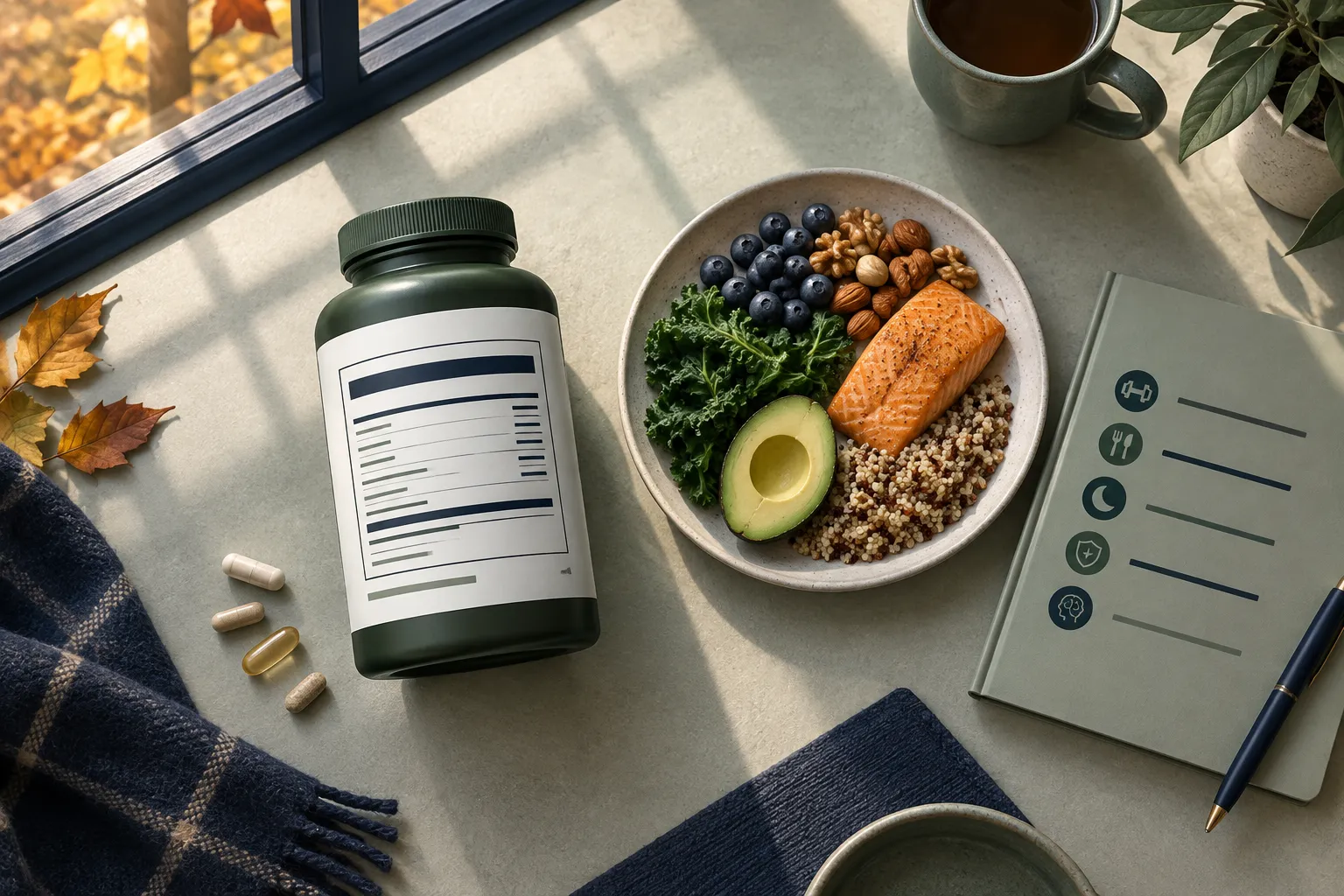
Check the daily serving, not the front-of-pack headline
Start with the recommended number of tablets or capsules per day. Compare amounts per daily serving rather than per tablet, especially if the directions call for several capsules. Then look at each nutrient amount and its percentage of NRV, or nutrient reference value. The NRV provides a labelling reference; it is not a personal target to maximise.
Suppose a label lists 5 micrograms of vitamin D per capsule and directs you to take two capsules daily. That serving supplies 10 micrograms. Add a separate 10-microgram vitamin D tablet and your supplement total reaches 20 micrograms, though neither pack looks high-dose on its own.
“Over 40” and “men’s” tell you whom a product is marketed to. Put two products side by side and compare the ingredients, dose and directions. Choose a serving you can keep up with, and stick to the stated amount.
Look closely at vitamin D and overlapping doses
Check the multi’s vitamin D amount against any separate vitamin D you use. Count overlapping nutrients in mineral tablets, immune blends, energy formulas and fortified foods you consume often. A gym routine alone does not establish a need for a high-dose multi; men who train have their own diet and supplement considerations, distinct from the question of turning 40.
|
Label detail |
Why it matters |
|---|---|
|
Vitamin D amount and form |
Helps you see whether the product aligns with the guidance relevant to you, without accidentally doubling up. |
|
Iron |
Do not assume a men’s formula needs added iron. A diagnosed need calls for individual advice, not a guess based on age. |
|
Vitamin A, especially retinol |
Check the total if you also take other supplements containing vitamin A. |
|
Vitamin B6 and zinc |
More is not automatically better; count these across overlapping products. |
|
Vitamin K and botanicals |
These warrant particular attention if you take medicines or want to avoid a complex blend. |
The NHS advises no more than 10 mg of vitamin B6 a day in supplements unless a doctor recommends otherwise. It also warns that too much supplemental zinc can affect copper absorption, and that vitamin A from multivitamins and fish liver oil can add up. Its warfarin guidance says not to take vitamin K supplements while using that medicine. These are reasons to read the combined daily amounts, not reasons for everyone to avoid those nutrients in food.
Read the ingredients beyond the nutrient panel
An all-in-one blend may contain herbs and other extras you had no intention of taking. For a basic nutritional backstop, a short, legible formula can be easier to assess. Read the allergen information and any dietary certification that matters to you. A “premium” label does not establish compatibility with your diet.
Be wary of testosterone, strength or energy promises based solely on being over 40. A multivitamin cannot promise a hormone change or better athletic performance. A claim about a normal bodily function does not mean a product will cure fatigue or identify its cause.
What a multivitamin can and cannot do
A multivitamin can supply several nutrients if your intake falls short. Food still provides the foundation, and a tablet cannot diagnose a deficiency or guarantee that you will feel different. If fatigue, unexplained weight change or other symptoms prompted you to shop, address the cause rather than choosing an age bracket. For fatigue in particular, read what to check before buying vitamins for tiredness.
Broad claims about multivitamin benefits cannot tell you whether your diet leaves a specific gap. Who actually needs supplements in the UK takes a closer look at that question. Use your eating pattern to identify a reason for supplementing, then see whether a label fits it.
Choosing a formula you can live with
The best vitamin supplements for men over 40 depend on the gap you want to address. A targeted product may be simpler if you need one nutrient. For several likely gaps, an all-in-one option with transparent amounts and a manageable daily serving may suit you better. Read the full ingredients and resist stacking “wellness” products with overlapping nutrients.
InfiniVit has UK wellness supplements for targeted needs and broader nutritional support, with a focus on clear ingredient information and considered formulations. Compare each product’s declared daily serving with what you already take. InfiniVit may offer a suitable option if your diet leaves a gap, though a single-nutrient product is the simpler choice when that is all you need.
The bottom line
Choose a multivitamin for a man in his 40s by the gap it fills, not its “40+” label. Consider UK vitamin D advice, and compare doses with supplements and medicines you already use. If you want a considered formula, explore InfiniVit with that checklist in hand. You may find that a targeted product fits better than a multivitamin.
FAQ
Which multivitamin is best for a 40 year old man?
His diet, other supplements and medicines determine what makes sense. Read the full daily serving and look for a plausible gap it would fill. A targeted supplement or no multivitamin may suit him better.
What is the best daily multivitamin for men over 40?
Look for clear nutrient amounts and a serving you can keep up with, without duplicating other products. If vitamin D is your only concern, a standalone supplement may be enough.
What vitamins should a 40 year old man take daily?
Age 40 alone does not dictate a daily list. UK vitamin D advice applies to many adults; choose other supplements based on a dietary gap, a diagnosed need or individual clinical advice.
What is the best multivitamin for men over 40 in the UK?
Compare the amount per daily serving, percentage NRV and vitamin D content with what you already take. A “men over 40” label cannot tell you whether the formula suits your diet or medicines.