
 English
 Arabic
 Polish
 Russian
Check halal supplements one product at a time. A logo on a brand’s homepage cannot tell you whether the vitamin, protein powder or omega-3 bottle in your basket is certified. Look for a current certificate from a named certifier covering that product and its manufacture. Without one, you can still scrutinise ingredients, though the label will not reveal every detail of sourcing and processing.
What “halal” on a supplement actually tells you
These labels give you different kinds of information:
|
Claim on a pack or website |
What it can tell you |
What it does not establish |
|---|---|---|
|
Halal-certified, with a named certifier |
An identified organisation has assessed products within its stated scope |
That every product from the brand, flavour or future batch is covered |
|
“Halal” or “halal-friendly” stated by the manufacturer |
The maker asserts suitability |
Independent certification or its exact standard |
|
Gelatine-free |
The formula does not use gelatine as listed |
The origin of every other ingredient or processing aid |
|
Vegan |
Animal-derived ingredients are excluded under that claim |
Halal certification, or how alcohol-based extracts and shared production are handled |
|
GMP or ISO 9001 |
Information about manufacturing quality or management systems |
A halal assessment |
A vegan capsule avoids animal gelatine in its shell. That does not make the supplement halal-certified. Certified halal bovine gelatine, on the other hand, is not vegan. Best Vegan Supplements in the UK explains plant-based choices, but a vegan label is no substitute for a halal certificate.
How to verify halal supplements in the UK before buying
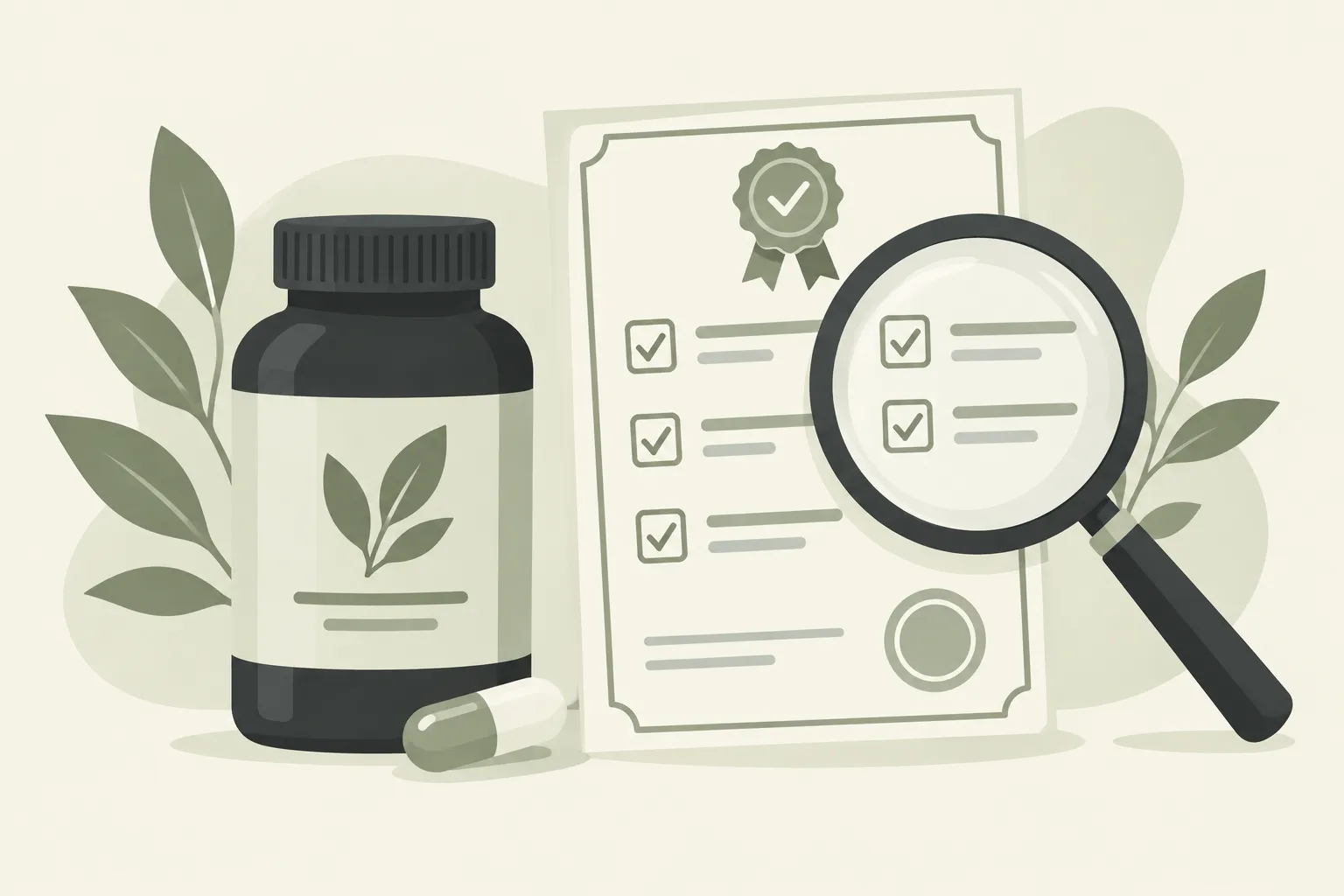
Note the name, size, flavour and format of the item in your basket. Compare those details with the certificate:
-
Find the certifier’s name. The Halal Food Authority (HFA) is a UK certifier; you may also see IFANCA, the Islamic Food and Nutrition Council of America, on imported products. A halal icon alone does not identify who assessed the item. Even a familiar issuer’s name leaves you with the next question: does its certificate include your product?
-
Match the product to the certificate. Look for a product list, schedule or annex naming the specific formulation or SKU. A factory certificate or certificate for a different line should not be read as coverage for your bottle.
-
Read the scope. Does it include the finished product and relevant manufacturing site, or does it only refer to one ingredient or raw-material supplier? Check whether the flavour and capsule or softgel variant are included.
-
Check the dates and identity. Compare the certificate’s validity period, company name and product details with the pack or seller’s listing. An expired certificate does not establish current coverage.
-
Cross-check with the certifier where possible. Use the issuer’s directory or contact details. If a listing is absent, ask the seller for the certificate and product schedule rather than guessing from a badge.
Save the product details and certificate if you buy it regularly. Formulations change, and a new flavour or current formulation may need different coverage. Refer to the documents for the item you are buying now rather than relying on an earlier answer about the brand.
If a seller says “suitable for halal diets” but provides no certificate
Ask: “Is this exact product and flavour currently halal-certified? If so, who issued the certificate, and can you send the certificate and the list of covered products?” If the seller says it is not certified, ask about the capsule-shell source, animal-derived ingredients, processing aids and shared manufacturing lines. Their answers can help you assess the product, but they cannot replace certification.
Read the whole formulation, not just the active ingredient
“In the UK, food supplements are required to be regulated as food and are subject to the provisions of general food law.” – GOV.UK
The nutrient on the front of the pack may be straightforward. Read on for the shell, coating and carrier:
-
Capsules, softgels and gummies: “Gelatine” alone does not tell you its animal source or slaughter status. A cellulose capsule avoids animal gelatine in the shell, but says nothing about the remaining formulation.
-
Binders and coatings: Glycerol, stearic acid, magnesium stearate and some emulsifiers may have different sources. Ask for the source when the pack does not specify it.
-
Flavours and herbal extracts: Alcohol may be present as an ingredient or used during extraction. A label alone may not explain the process; certification standards and individual judgements can differ.
-
Manufacturing: A halal assessment may address how materials are handled on shared equipment. Ingredient lists cannot show cleaning and segregation practices.
If you have concerns about a prescribed supplement or treatment, speak to your clinician before stopping it. A trusted religious adviser can help you consider the religious questions in your circumstances.
Reading supplement labels in the UK
Read the full ingredients panel. A common supplement may put the vitamin in large type and the capsule shell or glazing agent in smaller print. “Vegetable capsule” describes the shell, not the source of every extract inside it. With a multivitamin containing vitamin D3, look at the D3 source and tablet coating too; a plant-derived option removes one animal-source concern without establishing certification.
Cross-contamination on shared lines
Manufacturers may handle halal ingredients on equipment that also handles non-halal products. If a seller claims certification, see whether it covers the finished product and manufacturing process. For an uncertified item, ask how the manufacturer cleans and separates shared lines. A gelatine-free label or factory quality standard cannot answer that question.
Extra checks by supplement type
|
Type |
Main questions to resolve |
|---|---|
|
Vitamins, minerals and gummies |
What is the capsule or gummy base? What are the sources of D3, coatings and any ambiguous excipients? |
|
Omega-3 |
Is the oil from fish or algae? Is it delivered in a gelatine softgel, a plant-based shell or a liquid? What does the certificate cover? |
|
Protein powder |
Is the protein plant-derived or whey-based? If whey, what is known about the production inputs? Are flavourings and enzymes within the certified scope? |
|
Collagen |
Is it marine, bovine or another animal source? For bovine collagen, what evidence covers the animal source and processing? |
|
Liquids and herbal extracts |
Are alcohol or animal-derived carriers used in the finished formula or extraction? |
|
Probiotics |
What is the capsule material, and are culture media or other production inputs covered by the certification? |
Vitamins and gummies
With B12, read beyond the vitamin name: the capsule, gummy base or tablet coating may need a separate check. For vitamin D products, look at the D3 source and delivery format. How to choose a vitamin D supplement explains the wider choice of formats. A plant-based capsule settles one shell question, while certification still depends on the finished product.
Omega-3, protein and collagen
For fish oil, read the oil source and softgel ingredients separately. A fish-based oil can sit inside a gelatine shell; algae-based oil can come in a softgel too. The omega-3 fatty acids tell you nothing about that shell. Protein powders have no capsule to assess, though whey protein processing inputs and flavoured blends still need attention. Marine and bovine collagen come from different sources. With bovine collagen, you also need evidence of appropriate slaughter and processing. Neither source description certifies the finished product.
A quick buying checklist
|
If you find… |
Sensible next step |
|---|---|
|
A current certificate naming the exact product and relevant variant |
Match the issuer, scope and pack details before ordering |
|
A halal logo, but no certifier or product schedule |
Request the certificate and covered-product list |
|
“Vegan” or “gelatine-free” only |
Use it as an ingredient clue, not proof of halal certification |
|
Unspecified gelatine, carriers or extraction methods |
Ask for sources and processing information, or choose an option with clearer documentation |
|
A certificate for the brand or factory but not your item |
Treat your product’s certification status as unconfirmed |
For halal supplements in the UK, ask what evidence covers the formula you plan to buy. Within one range, powders, capsules and oils may use different ingredients and production processes.
Choosing with InfiniVit
InfiniVit has supplements for several wellness needs. For any item you are considering, ask for its current product-level certificate and see whether the named variant falls within the scope. Another product’s certificate cannot cover it by implication; neither can a vegan label or quality credentials such as GMP and ISO 9001. The UK supplement claims explainer explains how quality and health claims differ from dietary certification. If the item has no available certificate, its halal certification status remains unconfirmed. Use the ingredient and sourcing questions above to assess it.
The bottom line
Choose on the strength of a current certificate that names the product, rather than a claim about the brand. Check its dates and scope, then read the complete formula for shells, animal-derived inputs and processing aids. You can explore InfiniVit’s range by wellness goal and ask customer support for documentation on the exact item before you buy.
FAQ
Is vitamin B12 halal?
B12 is only one component of a finished supplement. Check the capsule, gummy base, coatings and other ingredients, and look for a current certificate naming the exact B12 product if you need certified halal assurance.
Which ingredients are halal?
An ingredient’s name alone may not establish its source or how it was processed. Plant-derived ingredients can simplify the animal-source question, but a current certificate covering the finished supplement gives clearer product-level evidence.
What ingredients do Muslims avoid?
In supplements, particular concerns include pork-derived gelatine and animal-derived materials without appropriate halal sourcing. Unspecified capsule shells, certain carriers and alcohol-based extracts may also need investigation; the exact answer depends on the product and the standard being followed.