
 English
 Arabic
 Polish
 Russian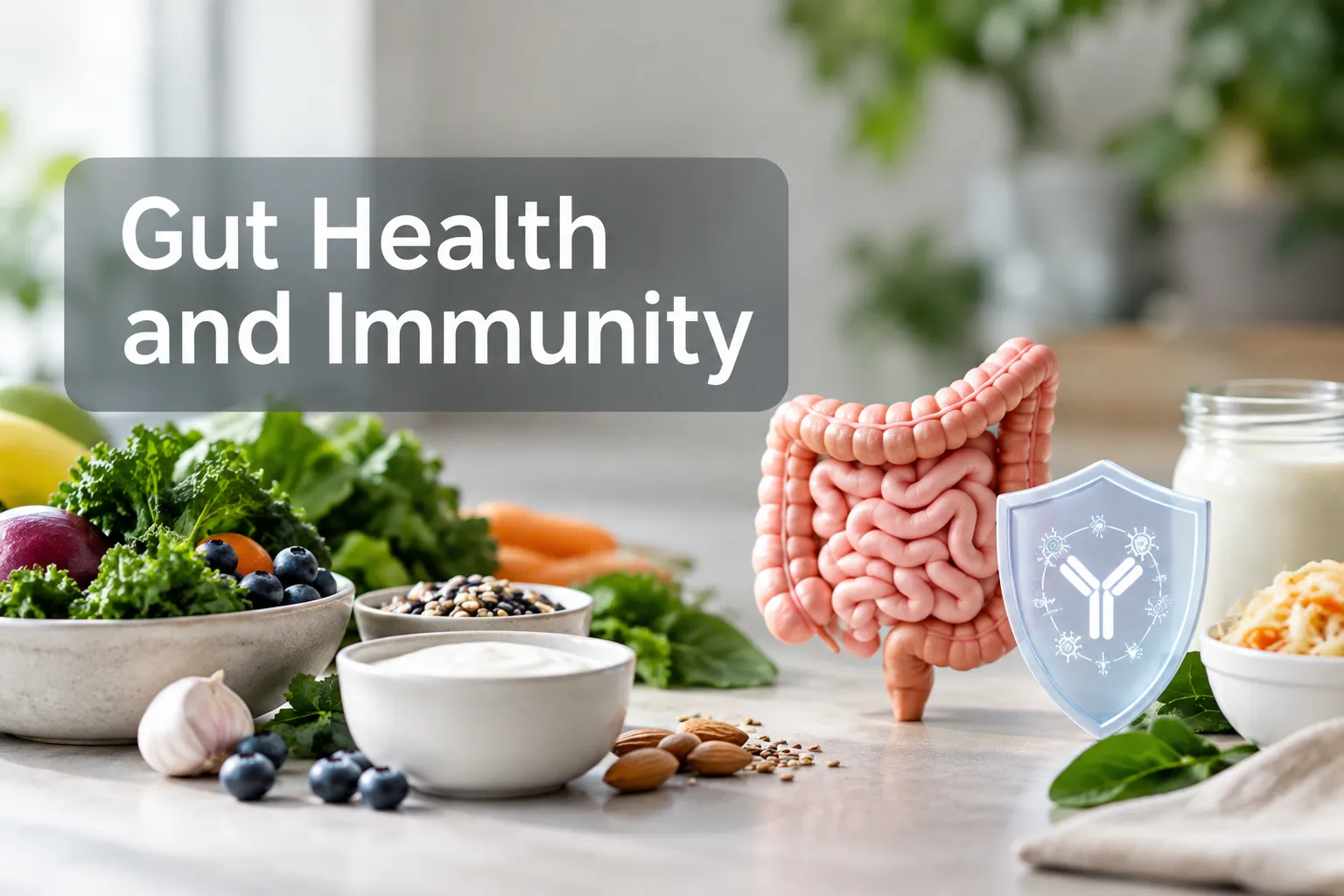
Gut health and immunity are connected. Microbes in your gut communicate with cells in the intestinal lining and the immune system. What you eat affects those microbes, but a probiotic yoghurt or capsule cannot reliably prevent a cold. Varied, fibre-rich meals are the place to start; supplements make more sense when you have a specific reason to take one.
Gut health and immunity: how the two communicate
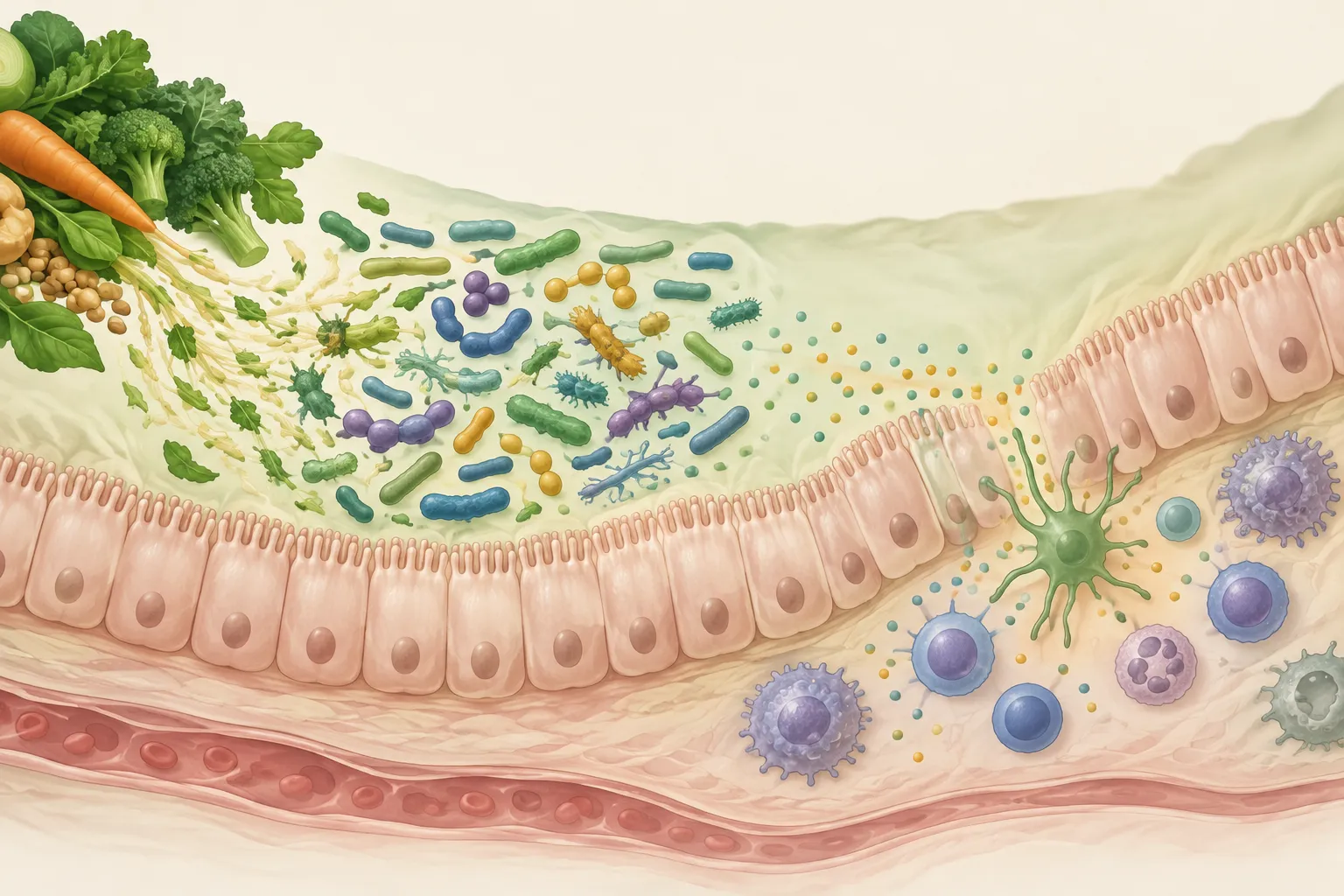
Your gut microbiome is the community of bacteria and other microorganisms in your digestive tract. At the intestinal lining, immune cells encounter signals from food and microbes while the lining helps keep gut contents in place. Your immune system has to recognise threats and tolerate everyday exposures. More activity is not necessarily better.
The barrier and immune surveillance
The lining and its mucus layer help keep material in the gut; nearby immune cells respond to potential threats. Resident microbes interact with both. Researchers can observe changes in gut bacteria alongside changes in immune signalling, but those observations do not establish that changing the microbiome prevents illness.
How probiotics can interact with immune function
In the digestive system, bacteria compete for space and nutrients. Compounds they make also signal to cells in the gut lining and local immune cells. A study may measure a change in an inflammatory marker without finding out whether a healthy adult taking the probiotic product gets ill less often.
Strains in foods and supplements need not behave alike. A product containing live cultures may briefly change the gut microbiota without a measurable immune benefit. To judge a claim about “enhancing immune defences”, you need to know what the researchers measured in people.
Fibre feeds microbial activity
Some microbes ferment fibres our digestive enzymes cannot break down. The short-chain fatty acids they produce take part in signalling between microbes, gut-lining cells and immune cells. A variety of plant foods supplies fermentable material without requiring you to find an infection-fighting “superfood”.
A meal of beans and wholegrains gives microbes material to ferment in the gastrointestinal tract. You can make it part of your daily routine without treating it as an anti-inflammatory medicine.
What the evidence does and does not show
Laboratory work helps explain the gut–immune relationship. Changes in immune markers are interesting, but illness rates answer a different, more practical question. When you see a claim that a food “supports immunity”, look at whether researchers measured markers or actual illness.
|
Evidence |
What it can tell you |
What it cannot tell you |
|---|---|---|
|
Gut and immune-cell studies |
Microbes and their by-products interact with the intestinal barrier and immune signalling. |
That taking a particular supplement prevents illness in people. |
|
Human diet studies |
Changing what people eat may change the microbiome and measured inflammatory markers. |
That a fermented food prevents colds. |
|
Probiotic clinical trials |
A tested strain or combination may affect a defined outcome in a particular group. |
That every capsule, drink or strain works the same way. |
A randomised diet trial published in Cell found changes in microbiome diversity and inflammatory markers among people eating more fermented food. The trial did not establish protection against infection. In a separate Cochrane review, probiotics may have reduced the chance of an acute upper respiratory tract infection, but the reviewers rated that finding low certainty. Strains, populations and products varied, so it cannot support a broad promise about “probiotics for immunity”.
“Probiotics may reduce the chance of at least one acute upper respiratory tract infection.” – Cochrane
That finding does not guarantee protection from the product on your shelf.
Claims about a fixed percentage of the immune system “living in the gut” are common. The intestine does contain immune tissue that interacts with microbes. A single percentage, though, cannot tell you how well your immune system works.
Food-first ways to care for your microbiome
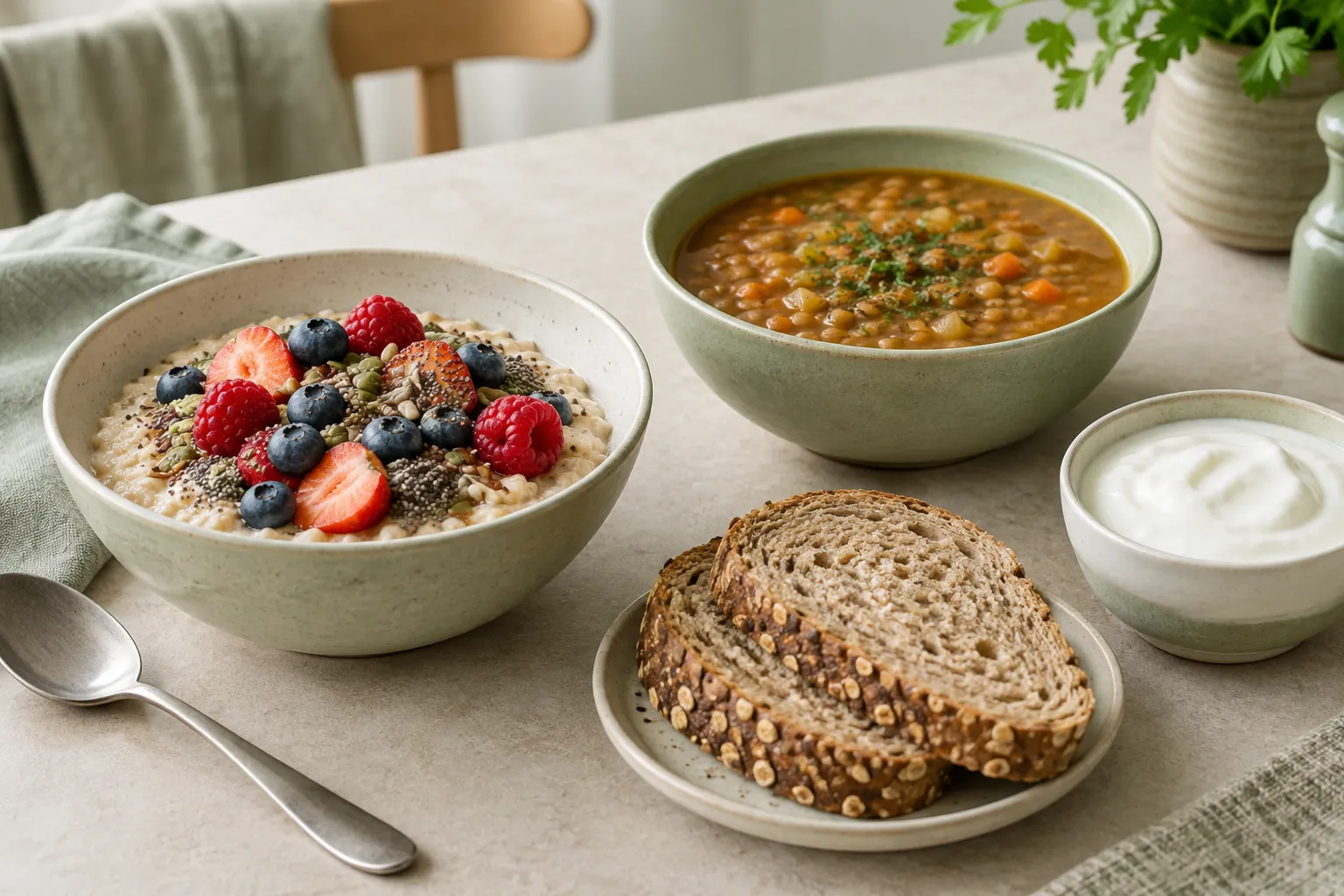
You can act on your diet without buying a microbiome test or building a shelf of supplements. Varied meals bring fibre and other nutrients together. For the wider picture beyond the gut, see how to support immune health year-round.
Build fibre into meals you already eat
The NHS recommends 30 g of fibre daily for adults. These small swaps can help you move towards that amount:
-
Have porridge with berries and seeds instead of a low-fibre breakfast.
-
Add lentils or beans to soup, chilli or a tomato sauce.
-
Choose wholegrain bread or brown rice when you enjoy them.
-
Keep fruit, vegetables and nuts in your regular rotation.
If you currently eat little fibre, increase it gradually and drink enough fluid. Adding a lot at once can cause bloating. Persistent gut symptoms or a condition that limits your diet call for tailored advice from a healthcare professional, rather than a push for more fibre.
Enjoy fermented foods without treating them as medicine
Live yoghurt or kefir may fit your meals if you tolerate dairy; fermented vegetables offer another choice. Some fermented foods no longer contain live microbes when you eat them. Even food with live cultures need not contain a clinically tested probiotic, so choose these foods for what they add to meals rather than for an immunity promise.
Prebiotics are food components that some microbes use. Probiotics are live microorganisms shown to confer a health benefit in an appropriate context. Oats or beans may provide fermentable fibre and make a worthwhile meal without a probiotic label.
Where supplements fit
What probiotics are and how they work in your gut
Probiotics are live microorganisms that confer a health benefit when given in adequate amounts. A label that says “beneficial bacteria” does not establish that benefit. Look for the genus, species and specific strain: even similar-looking strain names can have different evidence behind them.
Prebiotic fibres feed microbes already in your gut. Neither they nor probiotics offer a universal microbiome reset. The NIH Office of Dietary Supplements explains strain-specific evidence and safety; a studied strain tells you more than a phrase such as “gut and immune support”.
Types of probiotics and why strains matter
Labels may list bacterial groups such as Lactobacillus and Bifidobacterium, or a yeast such as Saccharomyces boulardii. Those broad names do not tell you what a product does. A study on antibiotic-associated diarrhoea, for instance, cannot establish that the same product prevents a cold.
Look for the full strain identity and the outcome studied rather than a ranking of “good” and “harmful” bacteria. Diets and gut microbiota differ between people, so a label cannot tell you whether you will notice a change.
Start with the reason you are considering a probiotic. A digestive concern and the hope of fewer infections call for different evidence; no single strain suits everyone seeking fewer infections. Trial findings apply to the strains, doses and circumstances studied, not to every product called a “probiotic”.
A useful label names the strains and amount of live organisms, with storage instructions and a use-by date. More colony-forming units do not, by themselves, mean better results. The NHS guidance on probiotics advises you to speak to a doctor first if you have a weakened immune system or an existing medical condition. Ongoing diarrhoea, bleeding, unexplained weight loss or persistent abdominal pain also need assessment, rather than reliance on a supplement. For a closer look at options, read natural supplements for gut health.
Nutrients and live microbes serve different purposes. NHS vitamin D guidance advises adults to consider 10 micrograms daily in autumn and winter. It offers no reason to expect a gut product to prevent respiratory illness. InfiniVit offers gut-health and immunity-focused supplements, so choose according to ingredients, your diet and any known nutritional gap, without expecting a product to treat or prevent disease.
The bottom line
Your microbiome, intestinal barrier and immune system interact. Eating a wider variety of fibre-rich foods is a practical way to care for your gut; fermented foods can join the menu if you enjoy them. The evidence for probiotics remains too strain-specific and uncertain for blanket illness-prevention claims. For a supplement to use alongside food-first habits, browse InfiniVit’s digestive and gut-health range with measured expectations.
FAQ
How do I support my gut microbiome?
Eat a variety of fibre-rich plant foods, such as wholegrains, vegetables, fruit, beans and lentils. Add fibre gradually if your usual intake is low, and include fermented foods if you enjoy and tolerate them.
Do probiotics support immunity?
Gut microbes interact with immune cells, and some trials of specific probiotics have found possible effects on respiratory infections. The evidence is not strong enough to claim that probiotics as a category prevent illness, or that any particular shop-bought product will do so.
Which probiotic is best for the immune system?
There is no single best probiotic for everyone’s immune system. Studies test particular strains and outcomes, so a general “immune probiotic” label or a high live-organism count does not establish that a product will prevent infections.
Is there a downside to taking probiotics daily?
Some people experience gas or bloating, and benefits are not guaranteed. If you have a weakened immune system or an existing condition, speak to a doctor before taking a probiotic supplement.