
 English
 Arabic
 Polish
 Russian
Start with foods you can keep in your weekly shop: oats, beans, lentils, vegetables, fruit, nuts and seeds. These are the most useful superfoods for digestive health. Add fermented foods if you enjoy them, and vary the plants you eat. A greens powder can top up a meal when choices are limited; whole foods should still do the heavy lifting.
“Superfood” has no legal definition. We use it as a friendly shorthand for foods containing fibre, plant compounds or fermented ingredients. For your next shop, a tin of mixed beans and a bag of oats will be more useful than starting with an expensive tub of powder.
What makes a food worth prioritising?
UK guidance recommends 30g of fibre a day for adults, yet the NHS says average intake is about 20g. Pulses, wholegrains, vegetables, fruit, nuts and seeds all count towards your intake. Their fibres differ, which is one good reason to mix up your choices.
“Prebiotic” describes certain fibres that microorganisms in the gut can use. You can find them in onions, garlic, leeks, asparagus, slightly green bananas, Jerusalem artichokes and chicory. Larger portions of some of these foods can feel uncomfortable, so use amounts that suit you.
Fermented foods are a separate category. Live yoghurt and kefir can contain live cultures. Sauerkraut, kimchi, miso and kombucha may contain them too, depending on how the maker processes and stores them. A fermented product may have no live microorganisms left by the time you eat it.
Top superfoods for digestive health to put on your plate first
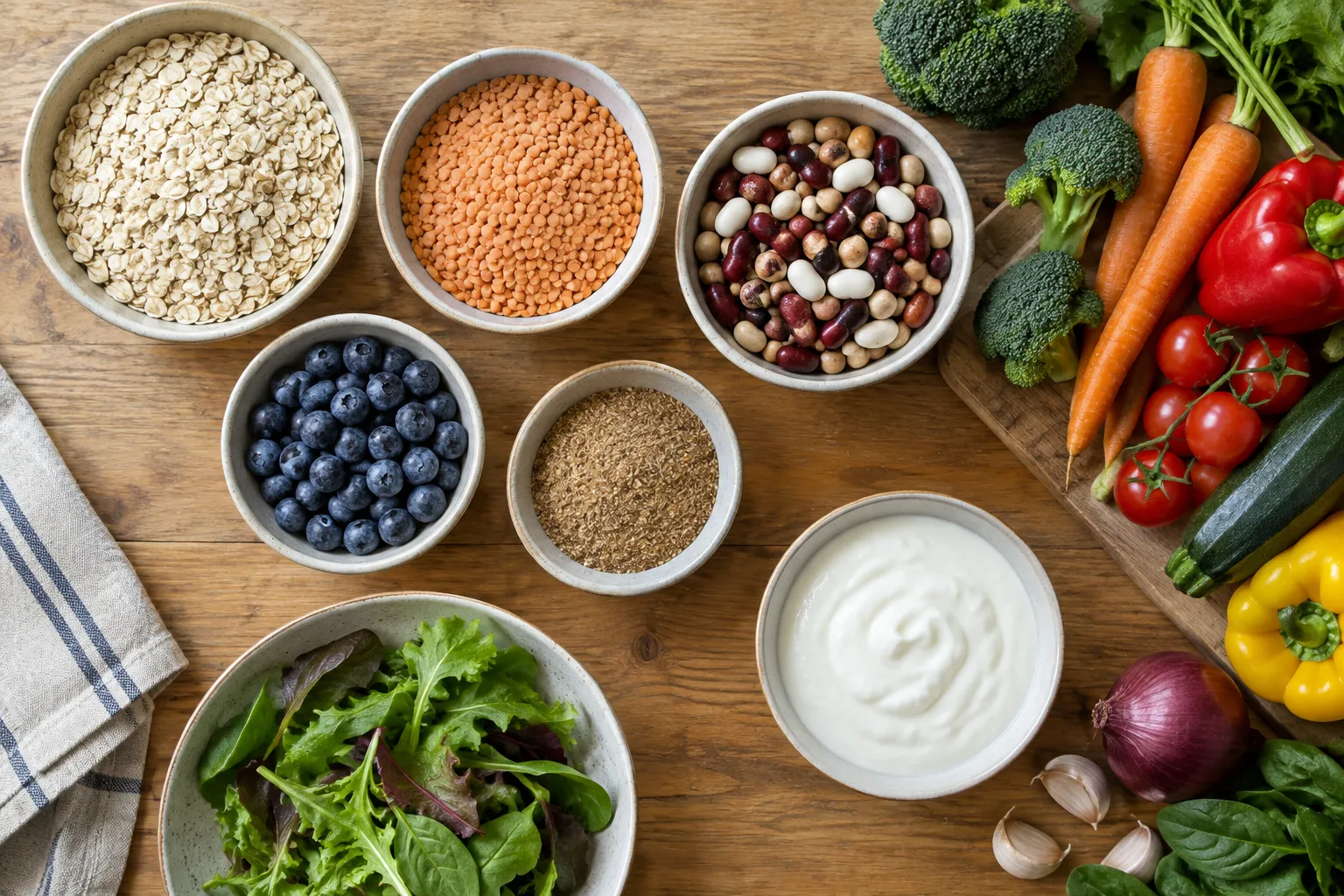
Pick foods from several groups. No single seed, berry or drink has to make every shopping list.
|
Food |
What it provides |
Easy way to add it |
|---|---|---|
|
Oats and barley |
Fibre, including beta-glucan |
Make porridge, or stir barley into soup |
|
Beans, lentils and chickpeas |
Fibre and plant protein |
Add half a tin to a stew, salad or pasta sauce |
|
Wholegrains such as wholemeal bread, brown rice and rye |
Fibre and a change from refined grains |
Swap one usual grain at lunch |
|
Vegetables and fruit |
Fibre and a range of plant compounds |
Use frozen veg at dinner; keep fruit for a snack |
|
Ground flaxseed, chia seeds and nuts |
Fibre and unsaturated fats |
Stir a small spoonful into porridge or yoghurt |
|
Onions, garlic, leeks and asparagus |
Prebiotic-type fibres |
Cook into a soup, omelette or traybake |
|
Slightly green bananas, Jerusalem artichokes and chicory |
Different prebiotic-type fibres |
Slice banana on oats; try small portions of the others |
|
Live yoghurt or kefir |
Fermented dairy with live cultures when labelled as such |
Serve with berries or alongside breakfast |
|
Sauerkraut, kimchi, miso and kombucha |
Fermented ingredients; live cultures vary by product |
Add a small spoonful of kraut to a meal or use miso as seasoning |
|
Berries, cocoa, green tea and extra virgin olive oil |
Polyphenols, a family of plant compounds |
Add berries to breakfast or dress veg with olive oil |
Fibre-rich staples: oats, pulses and seeds
Oats make an easy breakfast; barley works in soup or a grain bowl. Both contain beta-glucan, a type of soluble fibre. Add beans, lentils or chickpeas to a dish you already cook. You can rinse tinned pulses and start with a spoonful.
Try a wholegrain version of something you eat often, such as wholemeal toast, brown rice or rye bread. Wheat bran fibre contributes to an increase in faecal bulk, while rye fibre contributes to normal bowel function. Those authorised claims do not predict how an individual will feel.
Ground flaxseed disappears easily into yoghurt or oats, while chia is best stirred into something moist. Both add fibre and healthy fats. Keep vegetables and pulses in the mix as well, and use nuts when you fancy a different snack. Choose amounts you find comfortable.
Prebiotic ingredients and fermented foods are not the same thing
Prebiotic-rich ingredients contain fermentable fibre. If garlic or onion feels uncomfortable, try less or choose another vegetable you tolerate. Start with a modest portion of Jerusalem artichokes or chicory too, as some people find them difficult.
If you want live cultures in shop-bought yoghurt, kefir, sauerkraut, kimchi, miso or kombucha, look for “live” or “unpasteurised” on the label. Many producers pasteurise foods after fermentation. Cooking miso or fermented vegetables may also affect live cultures, although you can still use them for flavour.
Kombucha can contain added sugar; kimchi, sauerkraut and miso can be salty. Try a small serving with a meal. There is no need to keep every fermented food in the fridge.
Polyphenol-rich extras
Berries, cocoa, green tea and extra virgin olive oil contain polyphenols, naturally occurring plant compounds. Use frozen berries on porridge or a little unsweetened cocoa in yoghurt. Green tea is an easy drink to have alongside a meal, and olive oil works well on vegetables. Keep fibre-rich foods on the plate too.
Make plant variety manageable
Think of “30 plants a week” as a prompt from emerging research on dietary diversity. It is not a proven rule or a score you need to hit. If a simple meal works for you, keep it and try adding one new plant.
-
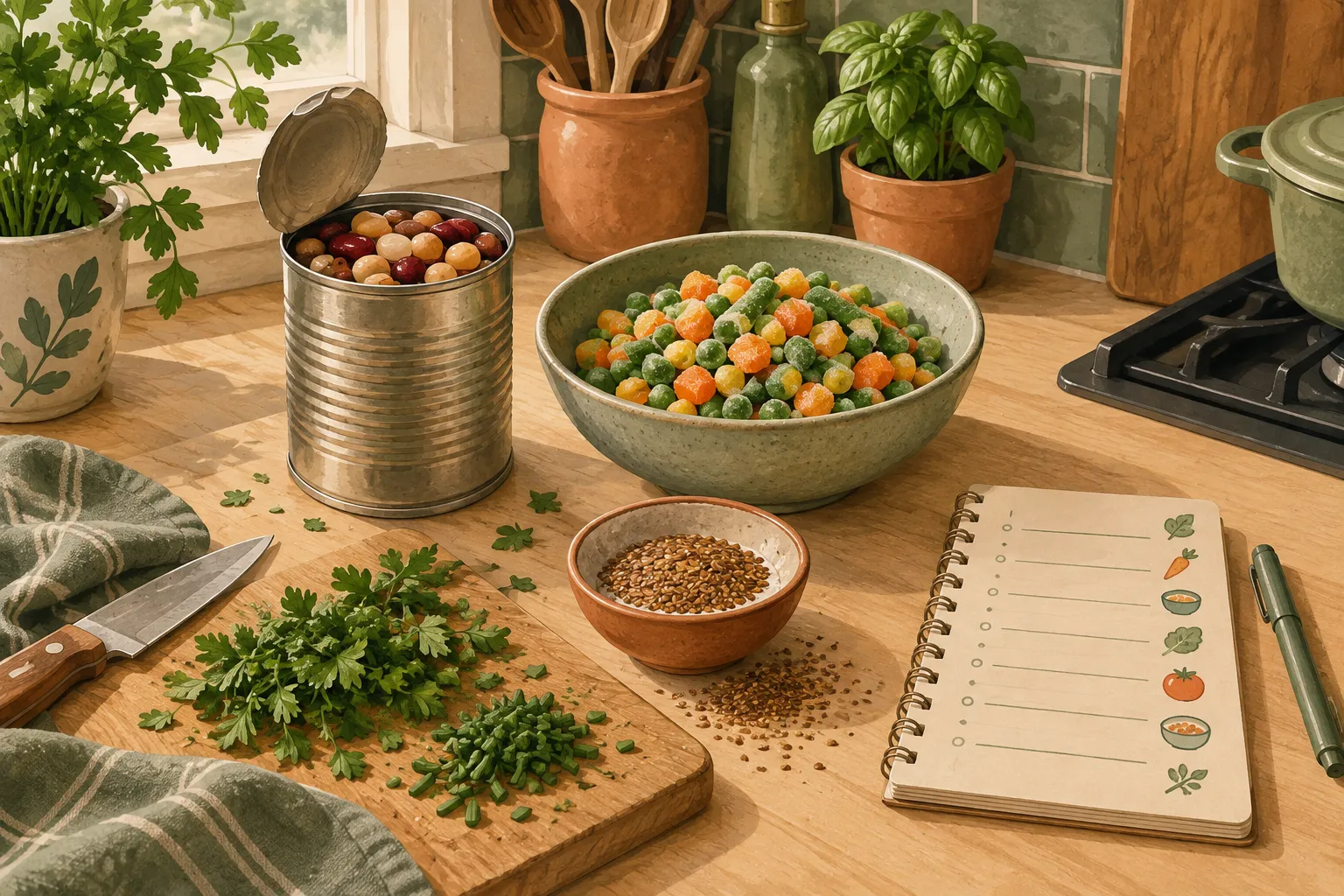
Tip a tin of mixed beans into a stew. If you have lentils, add chickpeas alongside them.
-
Keep a bag of frozen mixed vegetables for lunches and dinners. It is often easier to finish than several half-used bags.
-
Sprinkle flaxseed, chia or chopped nuts onto breakfast, changing the mix as you go.
-
Herbs and spices count towards variety too: parsley in a salad, ginger in a stir-fry or cinnamon on oats adds another plant without another side dish.
Spread your variety across days and weeks instead of squeezing it into one smoothie. Eat enough to feel satisfied, and if you currently eat little fibre, build up rather than jumping straight to a large bowl of beans and bran.
One day of gut-friendly eating
Use this day as a meal idea. Swap foods for ones you enjoy and tolerate; one day of eating cannot tell you how your gut will respond over time.
-
Breakfast: Make oat porridge and top it with live yoghurt, frozen berries and a small spoonful of ground flaxseed. Have green tea alongside if you like it.
-
Lunch: A wholemeal pitta with hummus, cucumber and roasted vegetables, plus a handful of leaves. A tin of mixed beans works in place of hummus in a grain bowl.
-
Dinner: Lentil and vegetable stew with barley, using onion or leek for flavour if it suits you. Finish with a drizzle of extra virgin olive oil; add a little sauerkraut at the table if you like it.
-
Snacks: Try a slightly green banana with a few nuts, or plain kefir with fruit. Have either when you are hungry.
Across the day, you have fibre-rich meals and several kinds of plants, with fermented food if you want it. Drink water too, particularly as you increase fibre.
When a superfood powder makes sense
On busy days or while travelling, a powder may help you add some plant ingredients when vegetables are scarce. It may also suit a fussy eater who accepts it mixed into food. You still miss the texture and range of food combinations in a whole meal. If you already eat plenty of varied plants, or you are stacking several similar powders, the extra cost may buy you much the same ingredients.
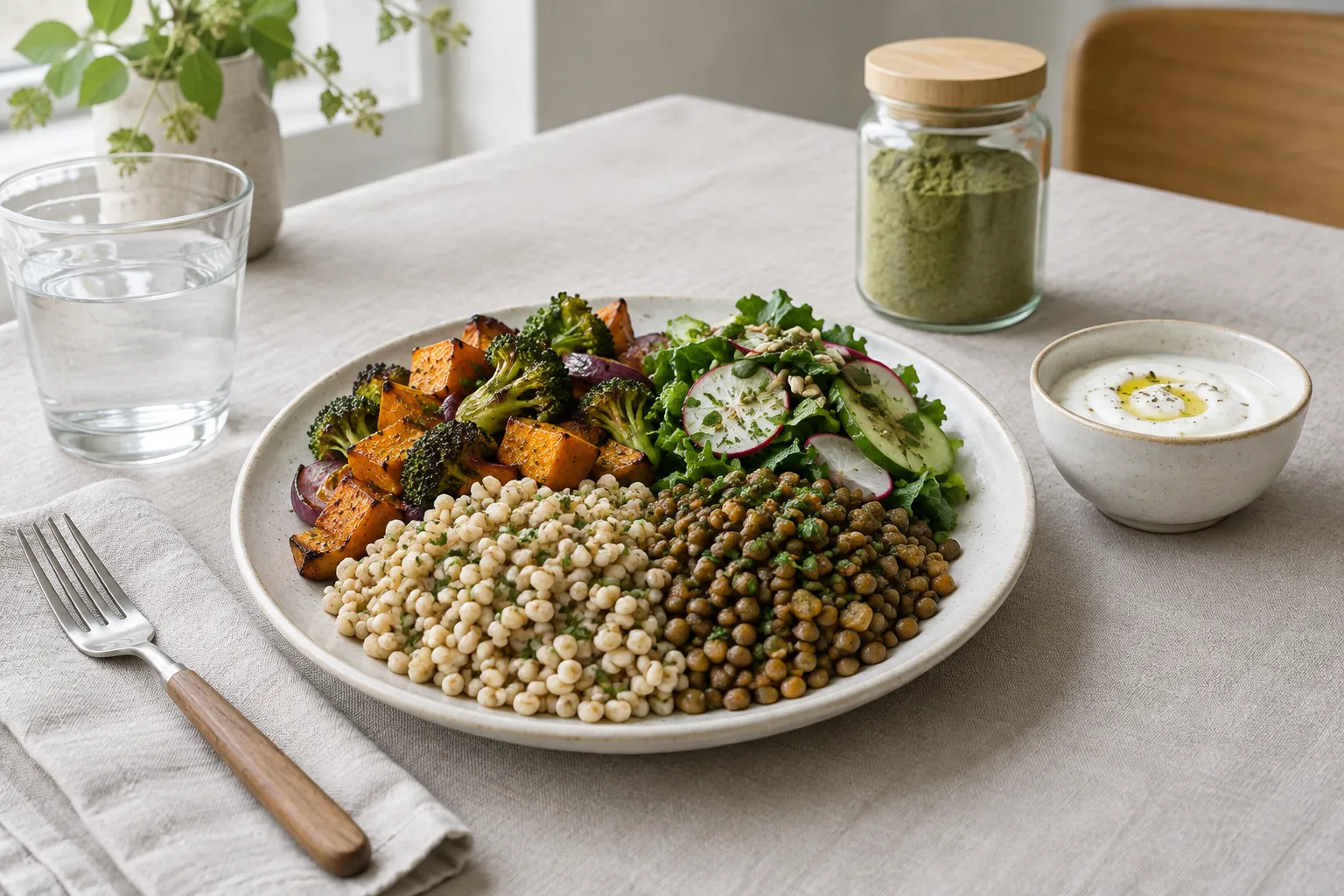
On a powder label, these details are more useful than the number of ingredients on the front:
-
Fibre per serving: Compare the stated amount with your 30g daily aim. An ingredient list cannot tell you how much fibre you get in one portion.
-
Organic status: Look for an actual certification rather than assuming a green colour means organic.
-
Added sugars and fillers: See what else you would be adding to your usual meals.
-
Allergens: Read the declared allergens, including gluten; do not assume a blend made with grasses is suitable for a gluten-free diet.
-
Price per serving: Compare it with the foods you would actually buy and eat.
InfiniVit’s Organic Superfoods Powder combines 35 green foods, vegetables, fruits, herbs, sprouts and seeds in an organic blend. It is Soil Association registered and contains gluten, so it will not suit someone avoiding gluten. The label lists 15.3g of fibre per 100g, which works out at about 2.3g for the suggested 15g serving. You could add it to a meal, while still getting most of your fibre from foods such as oats, pulses and vegetables.
Start gently and know when to seek help
Increase fibre gradually and drink plenty of water. Pulses, prebiotic-rich vegetables and fermented foods can feel uncomfortable for some people, particularly when several are new to the diet. Try one change at a time and pay attention to portion size. If symptoms persist, speak to a GP or dietitian rather than cutting more and more foods.
See a GP for persistent changes in bowel habit, blood in your stool, unexplained weight loss or ongoing abdominal pain. Food choices should not delay an assessment of those symptoms.
The bottom line
For most people, oats, pulses, wholegrains, vegetables, fruit and seeds are a better first purchase than a powder. Add live fermented food if you enjoy it, and build variety at a comfortable pace. A powder is worth considering for the days when those foods are harder to fit in. If you want a thoughtfully formulated top-up, browse the InfiniVit range or email info@infinivit.co.uk with questions.
FAQ
What are the top 3 superfoods for gut health?
There is no official top three. For practical shopping, start with oats, pulses such as beans or lentils, and a fruit or vegetable you enjoy. Together they offer different sources of fibre, and you can add other plants and fermented foods over time.
Which 7 foods naturally boost gut health?
Rather than promising a “boost”, choose seven useful staples: oats, barley, beans, lentils, wholemeal bread, berries and live yoghurt. They bring fibre, plant variety or, in the case of labelled live yoghurt, live cultures. Choose portions and combinations that suit you.
What are the 10 best foods for digestion?
There is no universal ranking. A varied basket could include oats, barley, chickpeas, lentils, rye, vegetables, fruit, flaxseed, live yoghurt and kefir. Introduce higher-fibre or fermented choices gradually if they are new to you.