
 English
 Arabic
 Polish
 Russian
Skin health supplements are most useful when your diet leaves a nutritional gap. Vitamin C and zinc have established nutritional roles relevant to skin. Collagen has been tested for changes in appearance, although the findings are less certain than adverts suggest. Omega-3 supplies a useful dietary fat, without promising a glow. Before buying, consider your diet, the label and the result you want.
Which skin health supplements are worth considering?
|
Ingredient |
What it can reasonably support |
What it does not establish |
When to consider it |
|---|---|---|---|
|
Vitamin C |
Normal collagen formation for the normal function of skin |
That extra vitamin C removes wrinkles or lightens skin |
Your diet contains little fruit or vegetables |
|
Zinc |
Maintenance of normal skin |
That a routine zinc tablet cures acne |
Your intake of zinc-rich foods is limited |
|
Omega-3 (EPA and DHA) |
Intake of marine omega-3 fats when oily fish is absent from your diet |
A guaranteed improvement in redness, dryness or complexion |
You rarely eat oily fish and want a dietary source of EPA and DHA |
|
Hydrolysed collagen |
A possible modest change in hydration or elasticity in some trials |
Reliable anti-ageing results for every product or person |
You understand the uncertain benefit and are comfortable with the cost and source |
An authorised nutrient claim describes a normal function. It tells you nothing about whether that particular bottle has improved skin in a clinical trial. Taking more when your diet already meets your needs may bring no extra benefit.
The four ingredients shoppers ask about
Vitamin C: a defined role in normal collagen formation
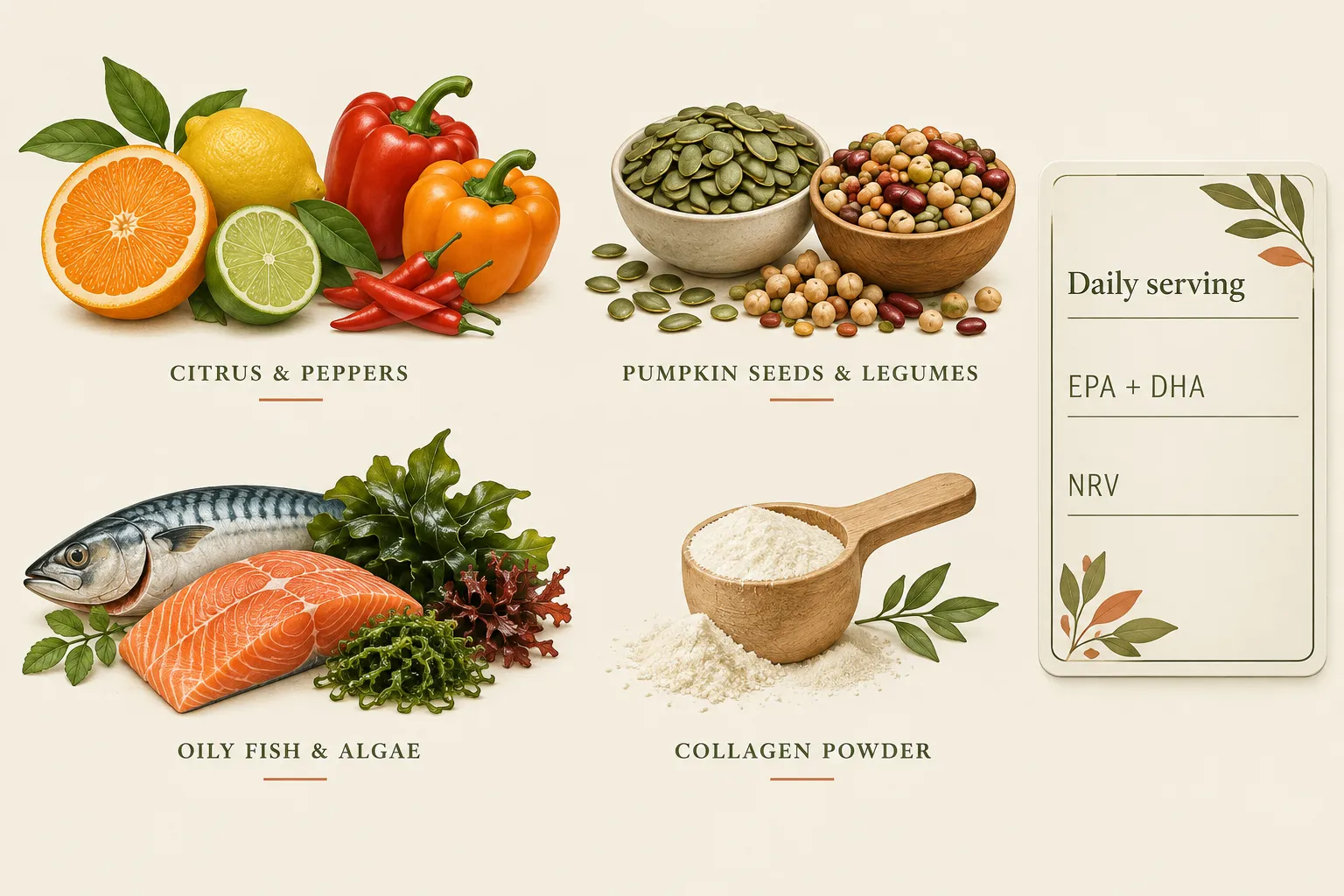
Vitamin C contributes to normal collagen formation for the normal function of skin. Citrus fruit, peppers, berries and other produce can supply it, with a supplement an option if your diet falls short. The claim gives no basis for promises about reversing ageing or whitening skin. Oral vitamin C also differs from a topical skincare formula.
“Vitamin C contributes to normal collagen formation for the normal function of skin.” – UK legislation, authorised health claims
Compare the vitamin C amount per daily serving, not the largest number on the front of the pack. A blend can supply other nutrients too. A longer ingredient list is not evidence of better skin results.
Zinc: maintenance of normal skin, not an acne treatment
Zinc contributes to the maintenance of normal skin. Meat, seafood, dairy, beans, nuts and seeds supply it; a supplement may make sense if you eat few of these foods. The normal-skin claim does not cover treatment of breakouts, eczema or rosacea.
Zinc can turn up in a multivitamin, a skin blend and a standalone tablet. Add the daily amounts before buying another product. High intakes over time can cause problems. Speak to a pharmacist or clinician if you take medicines or suspect a deficiency.
Omega-3: choose it for dietary intake, not a guaranteed glow
Oily fish, fish oil and algal oil provide the omega-3 fats EPA and DHA. A supplement offers another source if you do not eat oily fish. Claims such as “moisture from within” go further than the evidence for specific skin outcomes.
Read the EPA and DHA quantities, not just “fish oil 1,000 mg” on the front. Total oil weight is not the same as active omega-3 content. Check whether the source is fish or algae if diet or allergy matters. If you take anticoagulants or have a planned procedure, discuss fish oil with a healthcare professional.
For a closer look at oil content and serving sizes, use InfiniVit’s UK omega-3 label checklist.
Collagen: promising trial signals, unresolved questions
You will find hydrolysed collagen peptides in powders, drinks and capsules. Some human trials suggest improvements in measured hydration and elasticity. Products vary in source, amount and added ingredients, however, and trial quality and funding make the findings difficult to apply to an individual pack.
“In a 2025 review of 23 randomised trials involving 1,474 people, high-quality studies did not show a significant effect on skin hydration, elasticity or wrinkles.” – Myung and Park, The American Journal of Medicine
Collagen usually comes from animals, often cattle or fish. It does not suit vegans, and the source may matter for allergies. A label that states the source and daily amount tells you more than “collagen blend.” Expect no guaranteed wrinkle reduction or protection against ageing, and keep using sun protection.
As a label example, InfiniVit Marine Collagen Peptides states 9 g marine collagen, 180 mg vitamin C and 10 mg zinc per serving. It contains fish and is not suitable for vegans; anyone already taking zinc should count that 10 mg in their total. The disclosed amounts make comparison easier, but do not prove that this particular blend reduces wrinkles.
What about biotin, vitamin E, hyaluronic acid and probiotics?
Beauty blends often put these ingredients together. Each deserves a separate look.
-
Biotin contributes to maintenance of normal skin, but deficiency is uncommon in people with a varied diet. Large doses can interfere with some blood tests, so tell your clinician or laboratory if you take it.
-
Vitamin E contributes to protection of cells from oxidative stress. That is not the same as proven prevention of UV damage or wrinkles; do not use a pill in place of sunscreen.
-
Hyaluronic acid is studied in oral products for skin moisture, but an ingredient’s presence in a formula does not demonstrate that the finished blend works.
-
Probiotics are not interchangeable: strains and studied outcomes differ. A generic “gut-skin” story is too weak a reason to expect clearer skin from an unspecified blend.
Choose an ingredient for a reason you can name, such as low dietary intake, rather than the length of the blend’s ingredient list.
How to read a UK skin supplement label
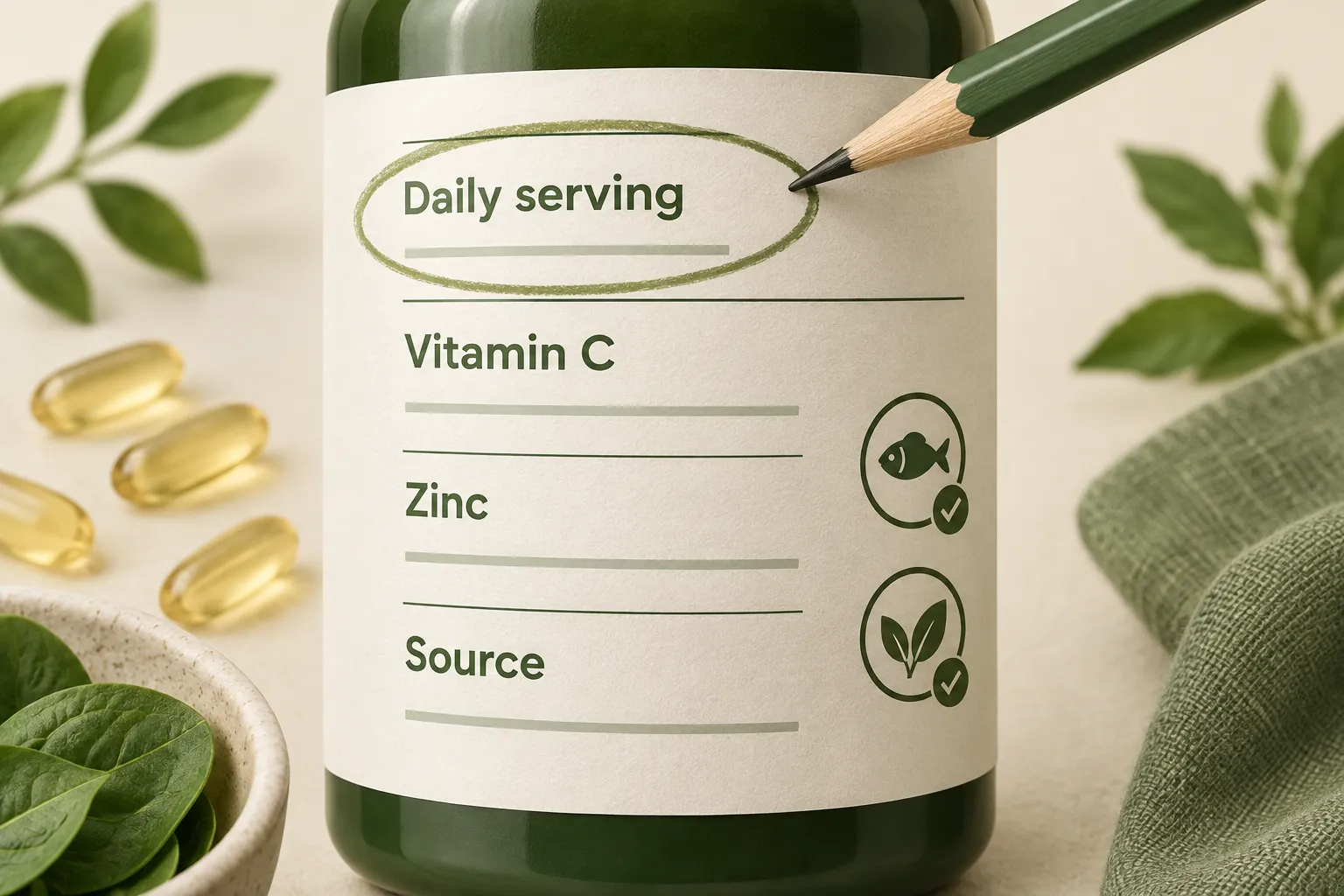
Before you buy, work through the label:
-
Name the need. Is your intake of a particular nutrient low, or are you hoping to change a visible skin condition? Those are different questions.
-
Read the daily serving. Compare the amount per recommended dose, not per capsule if the serving is several capsules. For vitamins and minerals, note the percentage of the nutrient reference value (NRV); it is a labelling reference, not a target for cosmetic results.
-
Identify the active ingredient. In an omega-3 product, find EPA and DHA. In collagen, find the daily peptide amount and animal source. In a blend, see whether each relevant ingredient has its own amount rather than only a proprietary total.
-
Match the wording to the evidence. “Contributes to maintenance of normal skin” is a different claim from “clears acne” or “reverses wrinkles.” Be wary when a product uses a normal-function claim to suggest an unproven beauty outcome.
-
Watch overlap and suitability. Total up zinc and other nutrients from products you already take. Check allergens, vegan status and any certifications that matter to you; do not assume they apply to an entire brand’s range.
-
Consider medicines and life stage. Pregnancy, an existing condition or regular medicines can change which supplements are appropriate. A pharmacist or clinician can help with a specific concern.
Good manufacturing standards matter. They do not establish a visible benefit from the finished formula. For that decision, disclosed amounts and specific claims tell you more than a “miracle glow” promise.
The GB nutrition and health claims register is the reference for permitted wording. InfiniVit’s UK supplement claims explainer helps distinguish a normal-function statement from a promise about appearance.
Food and skin care come first

Meals with protein, colourful produce and healthy fats give you a good starting point. Vitamin C-rich fruit and vegetables and foods containing zinc may already meet your needs. If you eat oily fish, include that when deciding whether an omega-3 supplement would add anything.
For practical meal ideas, see vitamin C foods in everyday UK meals.
Keep using sun protection and avoid smoking. A supplement cannot replace treatment for a diagnosed condition or an assessment of a new skin change. Persistent acne, an itchy rash or skin that is not healing deserves medical advice, whatever the packaging says.
The verdict on the best skin supplements
For UK shoppers, start with any gap in your diet. Vitamin C and zinc have defined roles in normal skin function. Omega-3 can help with dietary intake, while collagen remains an optional purchase with an uncertain cosmetic payoff. Continue to prioritise diet, sun protection and appropriate medical care.
If a supplement fills a gap for you, explore InfiniVit’s skin and wider nutrition range. Compare daily amounts, sources, dietary suitability and claims. Its focus on considered formulations and transparent information makes it a useful starting point; your diet and the individual label should still guide the choice.
FAQ
Does NHS recommend collagen?
The NHS vitamin C advice does not recommend collagen for skin; it says you should be able to get the vitamin C you need from a varied, balanced diet. Collagen trials do not establish that everyone needs a supplement or that a particular product will work.
What supplements can help with skin repair?
Getting enough protein, vitamin C and zinc supports normal tissue processes, especially if dietary intake is low. A supplement is not a treatment for a wound that is not healing; seek clinical advice for persistent or worsening problems.
What supplements are good for eczema?
No general skin supplement is a substitute for eczema treatment. Evidence for omega-3 and probiotics varies by product and outcome, so do not assume a skin blend will control symptoms; discuss persistent eczema with a healthcare professional.