
 English
 Arabic
 Polish
 Russian
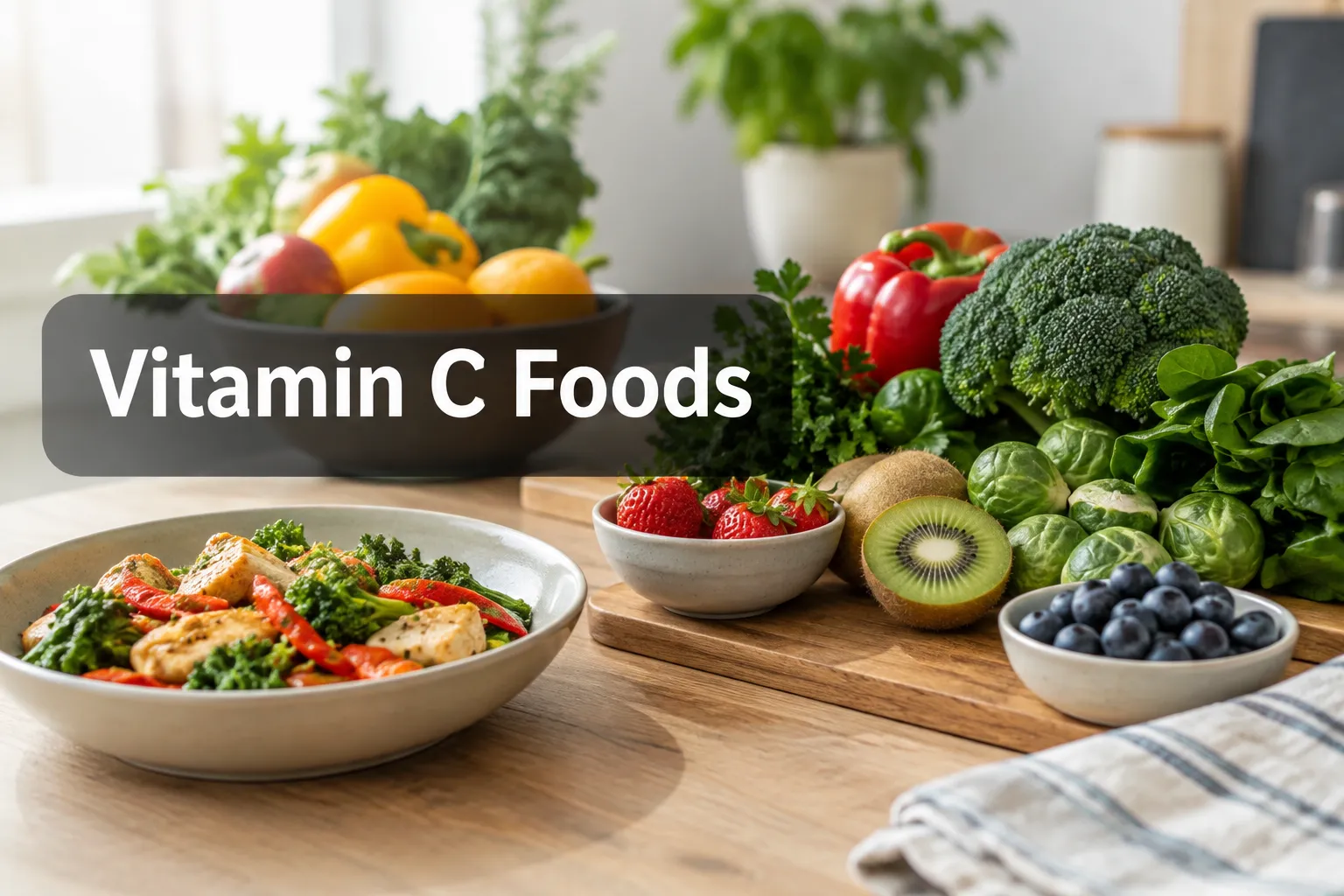
Peppers in a sandwich, broccoli with dinner and berries on porridge are simple ways to get more vitamin C from food. You can find these vitamin C rich foods in most UK supermarkets and fit them around meals you already eat, without making a high-dose tablet your default.
How much vitamin C do UK adults need?
“Adults aged 19 to 64 need 40mg of vitamin C a day.” – NHS
Your body cannot store vitamin C, so it helps to include a source in your regular meals. Most adults can meet their needs with a varied diet.
Vitamin C helps form collagen for normal skin and gums, supports normal immune function and helps you absorb iron from plant foods. Eating peppers or taking a tablet will not cure a cold or treat a health condition. The British Nutrition Foundation’s nutrient overview explains why food remains the usual starting point.
The easiest vitamin C foods to keep in rotation
Start with fruit and vegetables you will use this week. Vitamin C content varies by variety, portion and preparation, so the table shows where each food fits in a meal. For precise figures by food and preparation, use the government’s Composition of Foods Integrated Dataset.
|
Food |
Everyday UK use |
Practical advantage |
|---|---|---|
|
Peppers, especially red or yellow |
Slice into sandwiches, wraps or salads; stir into a pan near the end |
Easy to eat raw and use across several meals |
|
Broccoli |
Steam for a side, add to noodles or fold into a baked-potato topping |
Fresh or frozen florets make a straightforward dinner vegetable |
|
Strawberries |
Add to porridge, yoghurt or a snack bowl |
Fresh in season, with frozen berries useful for porridge |
|
Blackcurrants |
Stir frozen berries into porridge or yoghurt |
Frozen fruit helps when fresh berries are unavailable |
|
Kiwi fruit |
Eat as a snack or chop onto breakfast |
Little preparation and no cooking |
|
Brussels sprouts |
Serve with a roast or shred into a quick pan-fry |
A useful seasonal choice beyond citrus |
|
Potatoes |
Bake or boil as part of a meal |
A familiar source, though less concentrated than peppers or berries |
Tomatoes and cabbage contribute too. Serve potatoes with broccoli or peppers so you have more than one source on the plate. Choose produce you will finish before it spoils.
A day of meals beyond orange juice
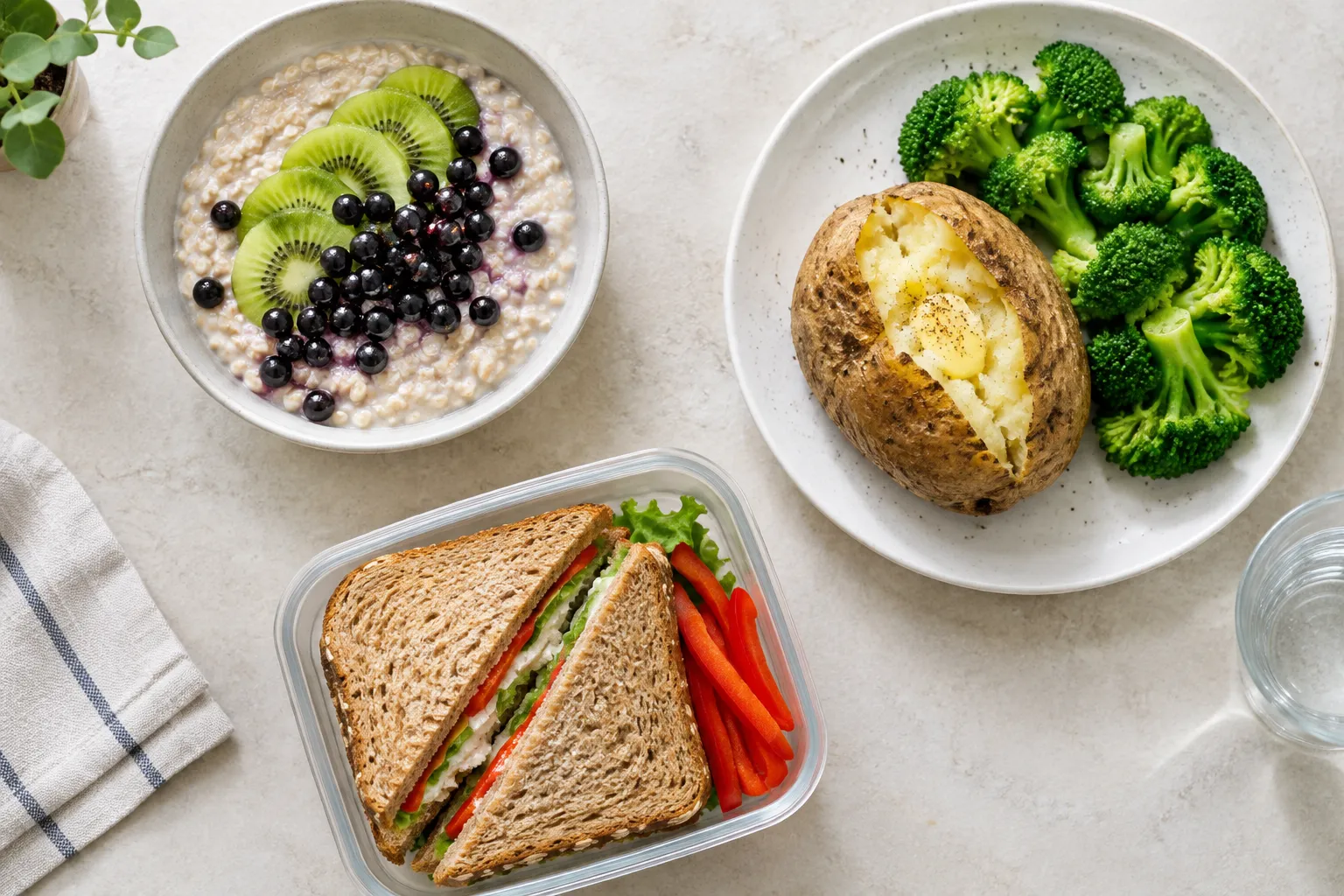
Pick a fruit and a vegetable you like from the table. Make them easy to reach for on a normal working day.
Breakfast: add a fruit you will eat
Top porridge or plain yoghurt with strawberries, kiwi or thawed blackcurrants. Frozen berries can go into hot porridge, while fresh fruit needs no planning. On a rushed morning, pack a kiwi with your lunch instead.
Lunch: put peppers where you already put salad
Add pepper strips to a cheese, hummus or egg sandwich. For a packed lunch, keep the sliced pepper separate until you assemble the sandwich if you dislike soggy bread. Leftover broccoli can go into a grain bowl or a jacket-potato filling with beans; add a few fresh pepper strips at serving time for crunch.
Dinner: keep a vegetable beside the main
Steam broccoli until tender rather than leaving it boiling while the rest of dinner cooks. Add peppers near the end of a stir-fry, or serve shredded sprouts quickly cooked in a pan. If dinner is a baked potato with beans or a vegetable stew, it can still contain vitamin C; add a raw pepper side or fruit afterwards when the meal is mostly long-cooked.
A compact shopping list
-
Fresh: peppers and kiwi, or whichever fruit you will eat this week.
-
Freezer: broccoli florets and blackcurrants or strawberries for meals later in the week.
-
Cupboard or produce rack: potatoes and a tin of beans for a quick dinner.
For a low-effort routine, put frozen broccoli with dinner and pepper in your lunch sandwiches. Buy whichever fruit is affordable and in season. Those small choices make room for vitamin C foods on an ordinary day.
Keep more vitamin C through storage and cooking
Vitamin C is water-soluble, and long boiling can send some of it into water you pour away. Steam or microwave broccoli with a little water, cook it until just tender and use it promptly. In soup or stew you keep the cooking liquid, although extended heat still affects the vitamin.
Keep berries and cut peppers chilled, and buy fresh produce in quantities you can use. Frozen broccoli and berries cover the days when you run out. Slice peppers shortly before serving if convenient, but pre-cut vegetables are worth eating too. A quick meal with vegetables is better than one without them.
Food first, and when to discuss a supplement
Most adults get enough vitamin C from a varied diet, which also provides fibre and other nutrients a tablet cannot replace. If poor appetite, a restricted diet or illness makes eating difficult, speak with a GP or registered dietitian before choosing a large dose. InfiniVit’s overview of who actually needs supplements in the UK can help frame that conversation.
The NHS cautions that more than 1,000 mg of vitamin C a day in supplements can cause stomach pain, diarrhoea and flatulence. That threshold is not a daily target. If you cannot meet your needs through diet and are considering a product, read the label and think about the amount you need rather than the largest number on the front. InfiniVit offers carefully formulated supplements for those circumstances, alongside a food-first approach.
For most UK adults, familiar fruit and vegetables are the sensible starting point. Keep frozen options for busy weeks. When diet falls short, InfiniVit is a place to consider a supplement suited to your needs instead of automatically choosing a high-dose tablet.
FAQ
Which foods provide the most vitamin C?
Peppers, blackcurrants, kiwi, strawberries and broccoli are useful vitamin C sources. The best choice for your routine is one you can eat often, such as raw pepper at lunch or frozen broccoli with dinner; actual amounts depend on the portion and preparation.
Does pasta sauce contain vitamin C?
Tomato sauce can contribute some vitamin C, but long cooking changes the amount and recipes vary. Add peppers near the end of cooking or serve a side salad if you want a more dependable vitamin C source with pasta.
What happens when you start taking vitamin C every day?
Getting vitamin C regularly through food helps you meet a nutrient need your body cannot store. If your diet already provides enough, taking extra is not a shortcut to better health; high-dose supplements can upset your stomach.