
 English
 Arabic
 Polish
 Russian
If you are considering magnesium supplements for sleep in the UK, start with this distinction: getting enough magnesium supports normal health, but supplements have not been shown to treat insomnia. Trials have yet to show that a capsule improves sleep in otherwise healthy adults who already get enough.
Does magnesium help you sleep?
Magnesium contributes to normal nervous-system and muscle function. You might wonder whether it could help with muscle tension at bedtime. Its role in the body cannot tell us whether an extra dose settles racing thoughts, night-time waking or difficulty falling asleep.
A review of three small randomised trials in older adults with insomnia found that participants taking magnesium fell asleep about 17 minutes sooner than those taking placebo. They did not gain a statistically significant amount of total sleep time. The researchers rated the evidence low to very low quality. A later review of randomised trials in adults found mixed results across sleep measures and did not support oral magnesium as a routine treatment for insomnia. Neither result tells us that healthy adults who get enough magnesium will sleep better if they take more.
“Current evidence does not support oral magnesium as a routine treatment for insomnia.” – Journal of Dietary Supplements review
If you eat little magnesium-rich food, increasing your intake may help you meet your nutritional needs. Taking more than you need to deal with persistent sleeplessness has a different aim and much weaker support. UK-authorised claims cover magnesium’s contribution to normal nervous-system function, normal psychological function and reducing tiredness and fatigue. They do not say that it cures insomnia.
Choosing magnesium supplements for sleep in the UK
Start with magnesium in food
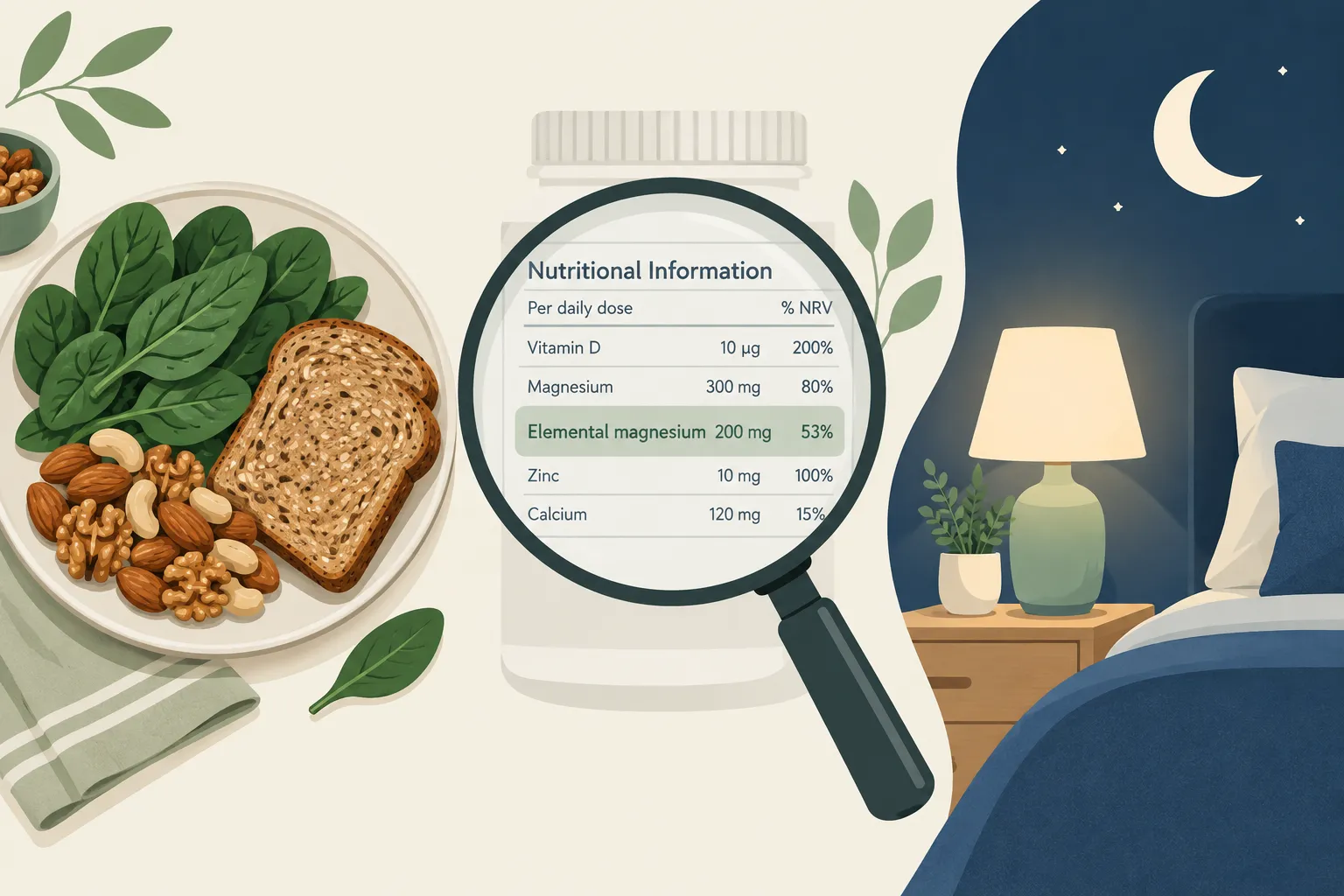
The NHS says adults aged 19 to 64 need 300 mg of magnesium a day for men and 270 mg for women. It names spinach, nuts and wholemeal bread as sources. A varied, balanced diet should provide what you need. Those recommended daily amounts include food and supplements; they are not bedtime capsule doses.
|
Everyday choice |
Simple way to use it |
|---|---|
|
Spinach |
Add it to a lunchtime sandwich, omelette or evening meal. |
|
Nuts |
Keep an unsalted handful as a snack or add some to breakfast. |
|
Wholemeal bread |
Swap it in for white bread when you enjoy it. |
If your meals rarely include these foods, try adding spinach to a wholemeal sandwich at lunch or nuts to breakfast. You can improve your intake without eating them just before bed. If you already eat a varied diet, the case for adding a supplement solely for better rest is uncertain.
Forms and labels: what matters

Magnesium glycinate (or bisglycinate), citrate and oxide each contain magnesium bound to a different compound. Only part of that compound’s weight is elemental magnesium. Absorption varies between forms, but sleep trials have not established which, if any, helps most.
|
Label term |
What it tells you |
What it cannot tell you |
|---|---|---|
|
Magnesium glycinate or bisglycinate |
Names the magnesium compound. |
Whether it will improve your sleep. |
|
Magnesium citrate |
Names a different compound. |
That it works better for sleep than glycinate. |
|
Magnesium oxide |
Names another compound. |
That a larger compound weight means a larger useful dose. |
|
Elemental magnesium, in mg per serving |
The amount of magnesium to count when assessing supplement intake. |
Whether you need a supplement at all. |
A front label may display the weight of a magnesium compound rather than the magnesium it supplies. Look for magnesium in the nutrition information and note whether the figure applies to one tablet or the recommended daily serving. Add magnesium from any other supplements you take. The NIH magnesium fact sheet explains the difference between elemental magnesium and compound weight. “High strength” and “sleep magnesium” tell you less than that number.
If a daily serving contains two capsules, use the magnesium figure for the full serving when adding up your supplements. The NHS recommended daily intake includes food; it is not a target for your pill alone. Its safety guidance below concerns magnesium from supplements.
Research has not established a bedtime window that makes magnesium effective for sleep. If you use a supplement, follow its label and your pharmacist’s advice on spacing it from medicines. Taking it immediately before bed has no proven advantage.
Safety, interactions and sleep problems
The NHS says 400 mg or less a day from supplements is unlikely to cause harm for most people. Taking more than 400 mg from supplements for a short time can cause diarrhoea. That figure is neither a limit on food plus supplements nor a recommended sleep dose. A larger dose may upset your stomach without improving your sleep.
Magnesium can reduce absorption of oral bisphosphonates and tetracycline or quinolone antibiotics. Some diuretics and long-term proton pump inhibitors can affect your magnesium status. Kidney impairment raises the risk of magnesium building up. If you have kidney disease or take regular medicines, ask a pharmacist or clinician about the product and its timing before starting it. Moving your dose to bedtime does not remove an interaction.
InfiniVit’s Sleep and Stress Supplements: What to Check covers label and safety questions beyond magnesium. For the broader decision about daily supplementation, read Who Actually Needs Supplements in the UK?.
If changing your sleep habits has not helped, sleep problems have lasted for months, or insomnia is making daily life hard to cope with, see a GP as the NHS advises. A GP may offer cognitive behavioural therapy for insomnia, including an online programme. A supplement should not delay assessment of ongoing sleep problems.
The bottom line
If your magnesium intake is low, begin with food. No trial evidence makes glycinate, citrate or oxide a proven insomnia remedy. If a supplement fits your nutritional needs, compare the elemental magnesium and consider your other supplements and medicines before choosing one.
InfiniVit takes a science-led approach to supplement information. You can explore its magnesium range and assess the label against your needs. For persistent insomnia, seek help rather than relying on a supplement.
FAQ
Which type of magnesium is best for sleep in the UK?
No type has been established as best for sleep by convincing head-to-head evidence. Glycinate, citrate and oxide are different compounds; compare the elemental magnesium on the label and consider your medicines and tolerance rather than relying on a sleep claim.
Does NHS recommend magnesium for sleep?
The NHS gives guidance on getting enough magnesium and on supplement safety, but its insomnia advice does not recommend magnesium supplements as a treatment. For sleep problems lasting months or affecting daily life, it advises seeing a GP.
What is the downside of magnesium glycinate?
Its sleep benefit has not been established, and choosing a named form does not remove the need to count elemental magnesium or consider interactions. Too much magnesium from supplements can cause diarrhoea, and people with kidney disease need medical advice before supplementing.
Is it okay to take magnesium every night?
Regular use depends on your overall intake, the elemental magnesium dose, your kidney health and any medicines you take. The NHS says 400 mg or less daily from supplements is unlikely to cause harm for most people, but that does not mean nightly magnesium treats insomnia.