
 English
 Arabic
 Polish
 Russian
You do not need a cupboard full of powders to use organic superfoods. Start with the food you eat, pick an ingredient group you would enjoy using, and choose a blend if it lets you skip other tubs. An organic superfoods powder is a convenient addition to meals. Keep fruit and vegetables in your diet.
An unfamiliar ingredient list can make a simple purchase feel complicated. Start with the serving, the production and testing information, and whether you like the format enough to use it.
What “organic superfoods” can and cannot tell you
“Superfood” is a marketing term with no legal definition as a special class of food or quality mark. UK rules still apply to health language on the pack. A seller cannot claim that spirulina or berries boost immunity or treat a condition just because they appear in the ingredients. Any specific health claim must be authorised and relevant to the product’s composition.
“Organic” has production and certification rules. A UK-approved control body must certify an organic product, and its code must appear on the label. A green leaf or the word “natural” cannot take the place of that code. Certification tells you about production, not the dose, nutrient content or contaminant testing.
A scoop does not automatically count towards your five a day. Continue to eat fruit, vegetables, pulses and other everyday foods alongside any powder you use.
Common superfoods, compared by role
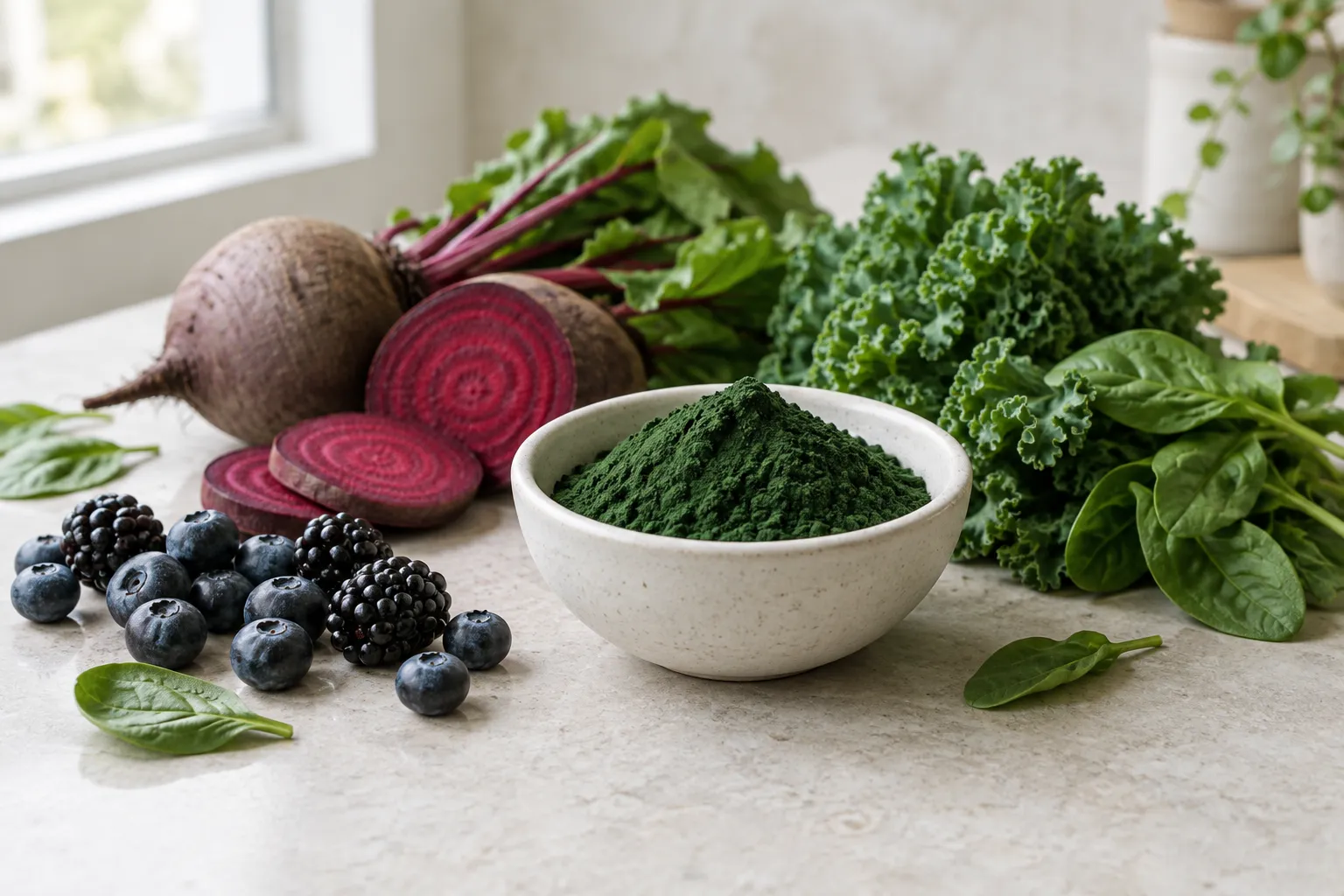
Compare these ingredients by how you might use them in food or a blend. “Chosen for” describes a shopping preference, not a promised health effect. The source, processing and portion affect nutrient levels, so the pack label matters.
|
Ingredient |
Usually chosen for |
Practical distinction or caution |
|---|---|---|
|
Spirulina |
An algae-based green ingredient in smoothies or greens blends |
Strong, savoury flavour; look for information on sourcing and contaminant testing. |
|
Chlorella |
Another algae-based green powder or tablet |
Often overlaps with spirulina in a broad greens blend; check the amount supplied per serving. |
|
Wheatgrass and barley grass |
A grassy flavour and plant-based greens component |
Check allergen and gluten statements, particularly if you have coeliac disease or a cereal allergy. |
|
Moringa |
A leafy green powder used in savoury or fruit-based drinks |
May repeat what a greens blend already supplies; an ingredient name alone says little about the dose. |
|
Matcha |
A green tea flavour and caffeine-containing alternative to a hot drink |
Consider total caffeine intake, including tea, coffee and other supplements. |
|
Baobab |
Tangy fruit flavour and a fibre-containing powder |
Compare declared fibre per serving, not just the presence of baobab on the front label. |
|
Beetroot |
Colour and an earthy flavour in smoothies or food |
A beetroot powder is not interchangeable with a standardised beetroot juice product. |
|
Seaweed and kelp |
Sea vegetables and a source of iodine |
Iodine content can be high and variable; particularly relevant if you have a thyroid condition. |
|
Reishi, shiitake and maitake |
Mushroom ingredients in dedicated blends |
Compare species, the form used and the declared amount; do not assume a mushroom blend has an authorised immune claim. |
|
Berry powders |
Fruit flavour and colour, often from mixed berries |
Check whether the product is whole-fruit powder or an extract, and whether sugar has been added. |
Use the table to narrow your choices
If you drink matcha in the morning, another three green powders may be more than you want. A berry smoothie may already have the fruit flavour you hoped to get from berry sachets. Consider what you enjoy eating before adding another tub.
Seaweeds deserve a closer look
Kelp and other sea vegetables can contribute iodine. The amount differs by species and portion, so read the iodine declaration on your greens mix before adding more seaweed. Treat an iodine-containing blend as a measured serving.
InfiniVit’s Organic Seaweeds Blend is an example of a dedicated seaweed option; consider it separately from any greens mix that already contains kelp.
Mushrooms are ingredients, not promises
Reishi, shiitake and maitake come as powders or extracts, sometimes with other plants. Read the species and amount. A long list of mushrooms tells you little about the quantity of each one, and the mushrooms themselves should not carry an immune claim.
InfiniVit’s Organic Mushrooms Immuno Defence contains shiitake, chaga, maitake, reishi and lion’s mane, plus acerola, astragalus and black pepper. Its ingredients are Soil Association registered. Despite the name, the mushrooms themselves carry no authorised immune claim.
Choose organic superfoods without doubling up
Sort the ingredients you already own into five rough groups:
-
Greens: spirulina, chlorella, grasses and moringa.
-
Berries and other fruit: berry powders and baobab for fruit flavour; compare fibre separately where declared.
-
Seaweeds: kelp and other iodine-containing sea vegetables.
-
Mushrooms: reishi, shiitake and maitake.
-
Fibre-focused additions: ingredients selected for their declared fibre content, rather than an unspecified “gut” promise.
Use these groups to spot duplicate purchases, not to treat the ingredients as nutritionally interchangeable. Baobab can add fruit flavour and fibre, though other fruit powders may contain little fibre. Count matcha alongside your other caffeine-containing drinks; use beetroot if you like its colour or flavour.
Put your labels side by side. Spirulina, chlorella and wheatgrass in one mix may leave little reason to buy another algae or grass powder. If you use a seaweed blend, account for its iodine before adding kelp. A blend can replace separate tubs when one serving contains what you intended to use. If you need a particular declared amount of an ingredient, compare the quantities before making that swap.
If you make smoothies, a single mixed blend may be enough. InfiniVit’s Organic Superfoods Powder combines greens, fruits, berries, vegetables, seeds and mushrooms in a 15 g suggested serving. It contains gluten and will not suit someone avoiding it. Prefer a single ingredient? Choose one you like eating before adding a new category to your routine.
Powder or capsules?
|
Format |
Makes sense when |
Trade-off |
|---|---|---|
|
Powder |
You make smoothies, yoghurt bowls or porridge and want a measured serving mixed into food |
Flavour and texture matter, and a tub is less convenient to carry. |
|
Capsules |
You dislike grassy flavours or need something easy to take when travelling |
Getting the same gram quantity can require several capsules; compare the label serving, not one capsule with one scoop. |
In a smoothie, use the labelled powder serving instead of piling in separate scoops. InfiniVit’s Organic Superfoods Capsules are an option if you dislike the taste or travel often. Read how many capsules make one serving. The format alone tells you nothing about strength, so compare ingredient amounts and the other ingredients before you choose.
A short buying checklist for UK shoppers
Before buying a powder or capsules, scan the pack for:
-
Organic proof: look for an approved control body’s code on the pack. A claim of “natural” is not organic certification. If a particular ingredient is called organic, check precisely which ingredients the certification covers.
-
Origin and traceability: look for the country of origin of the ingredients, not just the address of the company packing or selling them. A UK-based retailer may source plants elsewhere.
-
Testing: ask what heavy-metal and microbial checks are in place, especially for algae and seaweed. Organic certification and contaminant checks answer different questions.
-
Real serving size: compare the grams or milligrams in the suggested serving and divide the pack price by the number of servings. A low tub price is not a bargain if the serving is tiny or requires many capsules.
-
The full ingredient list: look for added sugars, sweeteners, flavourings and fillers. A berry flavour does not guarantee a large berry serving; a long blend list may conceal small individual amounts.
-
Allergens and preferences: read warnings for gluten and cereals in wheatgrass or barley grass products, and examine capsule shells and processing information if vegan or other dietary requirements matter.
Clear ingredient names and manufacturing standards help, but you still need the serving declaration and relevant batch checks. If the amount in a serving remains unclear, a simpler product may be easier to compare.
When to take extra care
The UK regulates food supplements as foods, though some ingredients need extra care. Speak to a GP or pharmacist before starting a concentrated blend if you are pregnant or breastfeeding, have a thyroid condition, or take medication. Kelp and other seaweeds contain iodine; matcha contains caffeine. If you take a blood thinner such as warfarin, a sudden change in vitamin-K-containing greens can matter, so follow the advice given for your medicine.
If you have coeliac disease or an allergy, read the specific product’s allergen declaration. Wheatgrass and barley grass names alone do not settle whether a finished powder is suitable for you. For any multi-ingredient formula, follow the stated serving instructions, and consider whether another supplement already contains the same plant or mineral.
The bottom line
Choose a powder you will use without duplicating half your cupboard. A greens or fruit blend may be enough; seaweed and mushroom products deserve a place only if you want their specific ingredients. Compare certification, servings and testing information, and keep fruit and vegetables on the plate.
At InfiniVit, we put ingredients together with a purpose, so you can build a routine without collecting overlapping tubs. Browse our range, or email info@infinivit.co.uk for help choosing a format or ingredient.
FAQ
Is organic superfood powder good for you?
It can be a convenient addition to a varied diet if the ingredients, serving and quality checks suit you. “Organic” describes certified production, not proof of a health effect, and a powder does not replace fruit and vegetables.
What is the healthiest superfood powder?
There is no single healthiest powder for everyone. Choose one with a clear serving size, ingredients that do not duplicate your current routine and appropriate certification and testing information.
What is the best superfood powder in the UK?
The best fit depends on what you already eat and whether you prefer a greens blend, fruit flavour or a targeted ingredient. For an organic product, look for the approved certifier code and compare the amount per serving and quality information.
What is superfoods powder?
It is a powder made from one or more food ingredients such as algae, grasses, berries or beetroot, intended to be added to a drink or food. “Superfood” is not a legal quality grade; judge the product by its ingredients, certification and serving.
Who should not take super greens?
Suitability depends on the ingredients and your circumstances. If you are pregnant, breastfeeding, taking medicines such as warfarin, or have a thyroid condition, ask a GP or pharmacist before starting a concentrated greens or seaweed blend.
What are the top 3 superfoods?
No three foods deserve a universal top ranking. For a daily routine, compare a greens ingredient, a fruit-based option and, only if appropriate, a targeted addition such as seaweed, rather than buying several versions of the same blend.