
 English
 Arabic
 Polish
 Russian

If you are over 40 and starting strength training, creatine is worth considering once you have a lifting routine. Creatine monohydrate has been studied for repeated, short efforts, and regular use may help you get more from resistance training. You can start lifting without it. It does not treat menopause symptoms.
If you are buying creatine monohydrate powder in the UK, begin with the serving size and ingredient list, not the promises on the front of the tub. The three InfiniVit options below make the differences between a plain powder and workout blends clear.
What is creatine monohydrate?
Creatine is a compound your body makes and also obtains from foods such as meat and fish. Muscles store it partly as phosphocreatine, which helps replenish energy during brief, demanding work such as a set of squats. Monohydrate is the form used in much of the research on exercise. A supplement raises muscle creatine stores; it does not replace practice, adequate food or progressively harder training.
You draw on that stored energy across repeated sets. In your first few weeks with weights, focus on learning the movements and building a habit. As you begin doing more work, creatine may help. Do not expect to feel a difference after one scoop.
What have studies in women over 40 measured?
Studies of older women may not apply in the same way to someone in her early 40s. Studies including both men and women cannot establish an effect unique to menopause.
| Population and intervention | What was measured | What it means |
|---|---|---|
| 18 older women, 12 weeks of resistance training with 5 g/day creatine or placebo | The creatine group improved more in tested strength, fat-free mass and muscle mass | A small trial supporting a training-related effect in older women; the abstract does not establish that all participants were postmenopausal |
| 47 postmenopausal women randomised to a year of resistance training plus creatine or placebo; 33 analysed | Femoral-neck bone-density change was −1.2% versus −3.9% | An interesting small bone finding, not proof of fracture prevention |
| 237 postmenopausal women randomised to two years of exercise plus creatine or placebo | No improvement in bone mineral density at the femoral neck, total hip or lumbar spine | The larger study did not confirm a bone-density benefit |
| 200 postmenopausal women with osteopenia, two years of 3 g/day creatine or placebo without a prescribed training programme | No prevention of bone-density loss or added lean-mass benefit | Creatine alone should not be treated as a replacement for exercise |
If you are beginning to lift, pay closer attention to the strength and muscle findings than to bone-health claims. The long-term bone trials do not establish creatine as an osteoporosis treatment. The dosing and loading advice below comes mainly from research in broader adult populations, not a menopause-specific trial.
“Creatine did not improve bone mineral density at the femoral neck, total hip, or lumbar spine.” – Chilibeck et al., two-year trial
Start strength training without overcomplicating it
Try two manageable full-body sessions a week, with time to recover between them. You could practise standing up from a chair, a light hip hinge, a supported row and a push against a wall or bench. Use a resistance you can control. Once the movements feel comfortable, add repetitions or a little weight. A coach or qualified instructor can help you adapt an exercise if you are unsure about technique.
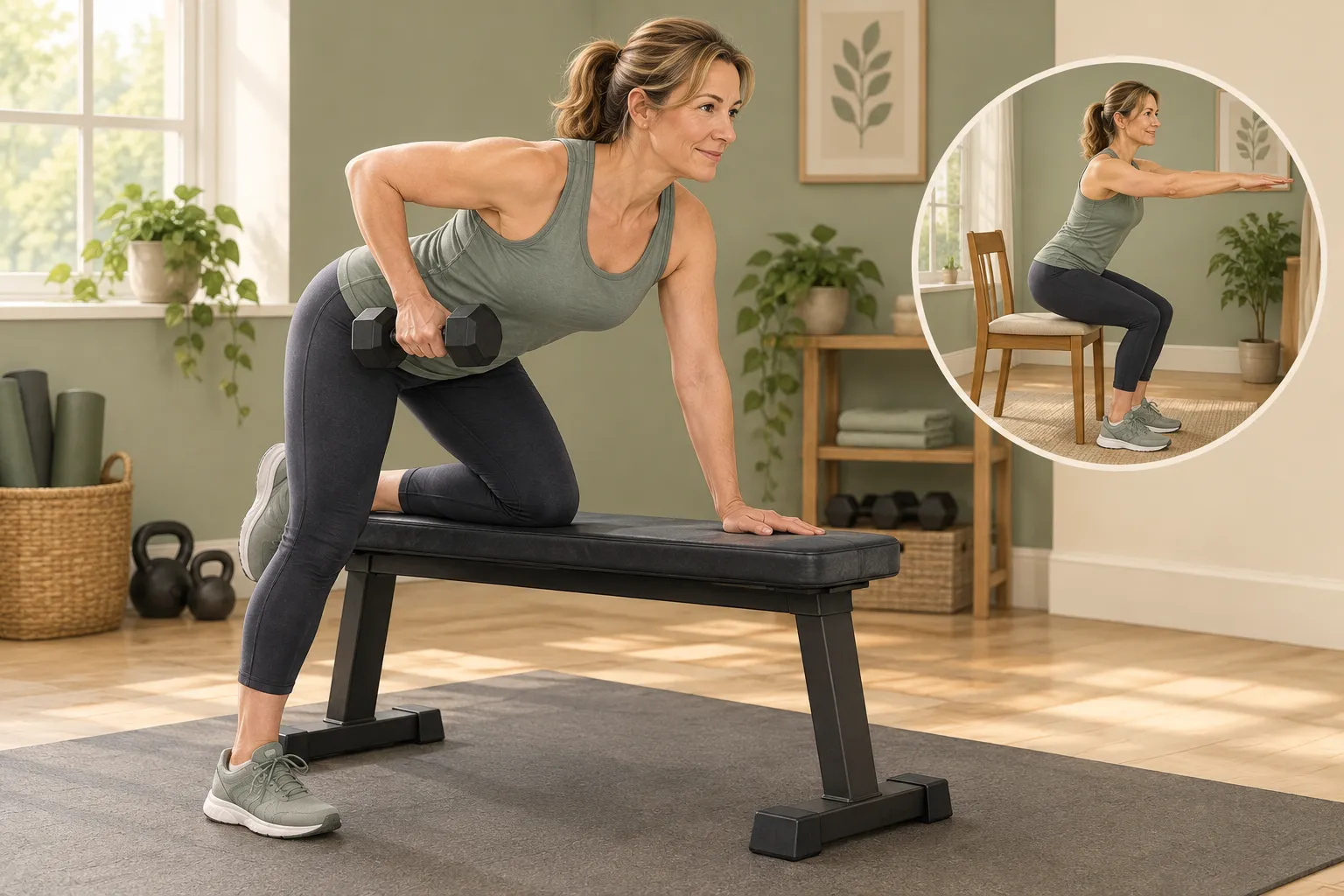
Write down each exercise, the weight you used and your repetitions. After a few weeks, that log will show your progress more clearly than the bathroom scales. You can decide whether to add creatine once the routine feels manageable.
How to take creatine, and what to expect
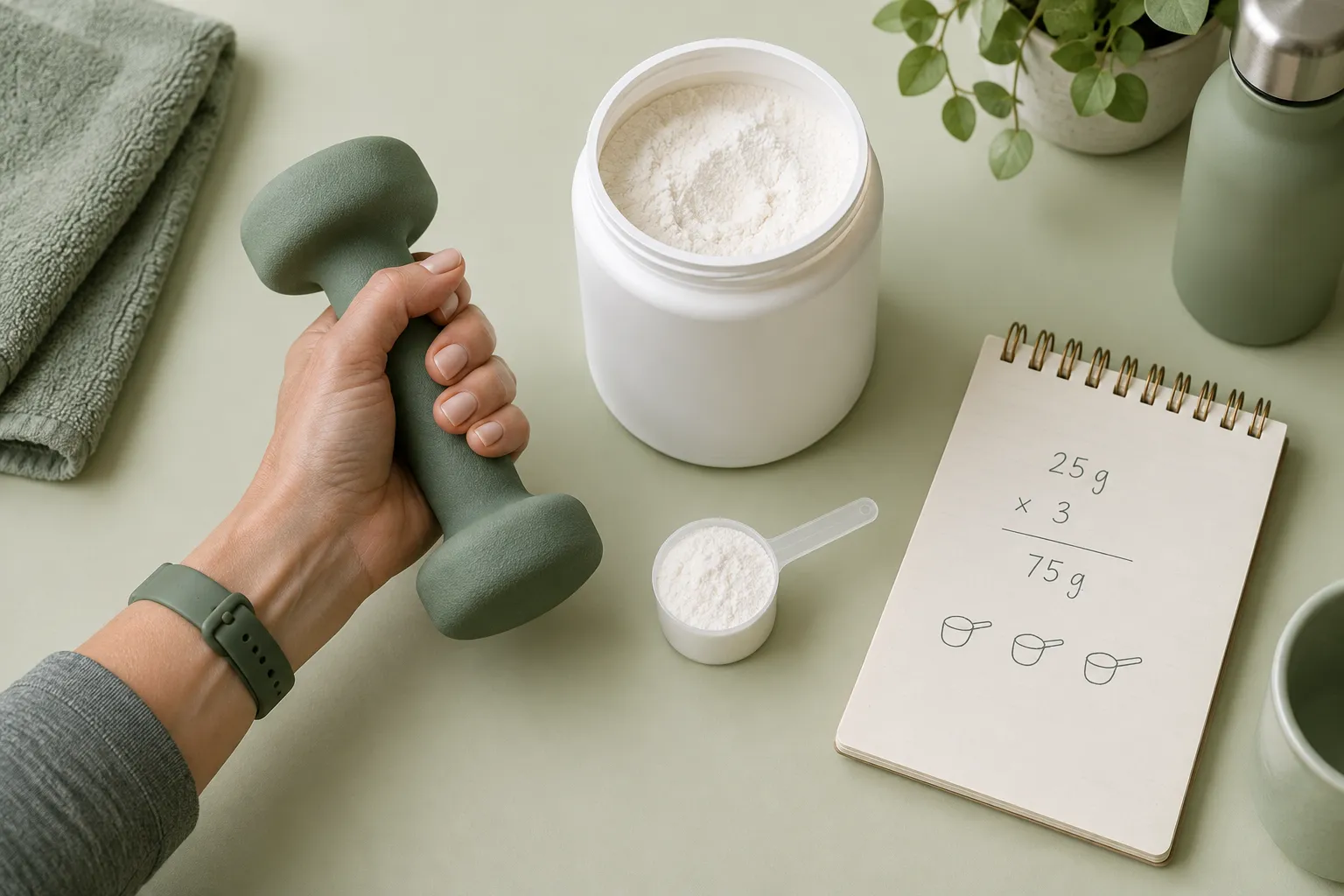
For generally healthy adults, a practical research-based approach is 3–5 g creatine monohydrate daily, including rest days. Regular intake builds stores, so choose a time you will remember. Mix the powder with a drink or food you like. Count any creatine in a workout blend towards your daily intake.
Do you need to load creatine?
No. In a study of men, 3 g/day for 28 days increased muscle creatine stores gradually; 20 g/day for six days raised them faster. The study did not involve women going through menopause. If you do not need to raise your stores quickly, a steady daily dose avoids the loading phase.
Will creatine change your weight?
Possibly. Creatine can change the amount of water held in muscle, affecting early measurements of body weight and lean mass. In a study of adults, the creatine group had a greater increase in measured lean mass after seven days of 5 g/day, before training began. That early change does not show that they had built new muscle. If the scales concern you, your training log gives you another way to follow your progress.
When to ask about safety
Creatine is no reason to push through pain or fatigue. Speak to a clinician before using it if you have kidney disease, are pregnant or breastfeeding, or have been advised to restrict supplements. Mention it if you have blood tests, too: creatine can affect creatinine, a marker used to assess kidney function. Findings in healthy adults do not give the same certainty for someone with kidney disease.
Choosing creatine monohydrate powder in the UK
InfiniVit Blitz Creatine is an unflavoured, single-ingredient powder in a 500 g pack. Each 5 g serving supplies 5 g creatine monohydrate, so the pack has 500 ÷ 5 = 100 labelled servings.
How the three formulas compare
| Product | Type | Form and amount per labelled serving | Other relevant ingredients |
|---|---|---|---|
| Blitz Creatine | Plain, unflavoured powder | 5 g creatine monohydrate in a 5 g serving | No other listed ingredient; 500 g pack, 100 servings |
| Regenerate (Post Workout) | Post-workout blend | 3.3 g creatine monohydrate in a 90 g serving | Protein and carbohydrate blends; grams per serving not available in the listing used here |
| Thunder Fuel (Pre Workout) | Pre-workout blend | 500 mg combined creatine monohydrate and creatine hydrochloride in a 5.5 g serving; separate amounts not stated | 40 mg caffeine anhydrous powder per serving, plus other ingredients |
Thunder Fuel lists 500 mg for two forms of creatine combined. Its ingredients suit a pre-workout blend rather than a plain creatine dose.
Regenerate includes protein and carbohydrate blends alongside its 3.3 g of monohydrate, in a much larger 90 g serving.
Blitz Creatine suits someone who wants to measure out creatine without those extras.
For a wider look at ingredients and claims, see Sports Nutrition Supplements: A UK Buyer’s Guide. Compare blends on the complete formula, including caffeine if you prefer to avoid stimulants, rather than judging them on the word “creatine” alone.
The practical choice
Build a strength-training routine you can repeat, then decide if creatine would be useful alongside it. InfiniVit Blitz Creatine gives you a plainly stated monohydrate dose and lets you leave out other ingredients. It does not supply the protein and carbohydrates in Regenerate or the pre-workout ingredients in Thunder Fuel. Browse InfiniVit’s Sports & Fitness Nutrition range to choose the formula that suits your routine.
FAQ
What does creatine really do?
It increases muscle creatine stores, which help supply energy for repeated short efforts. In a small trial of older women doing resistance training, the creatine group gained more strength and muscle than the placebo group. You can take it on training and rest days; a loading phase is unnecessary if you are happy to build up stores gradually.
What is the downside of taking creatine?
Your scale reading may rise early as water held in muscle changes, before you have built new muscle. A powder also adds a daily cost and habit. If you have kidney disease or other relevant medical concerns, ask a clinician before starting; findings in healthy adults do not settle every individual case.
What should you never mix with creatine?
There is no universal banned drink or food in the dosing evidence discussed here. What matters is reading the entire formula: a pre-workout may contain caffeine, and a post-workout mix may contain protein and carbohydrate. Count creatine from every product you use so you do not unintentionally double up.