 English
 Arabic
 Polish
 Russian
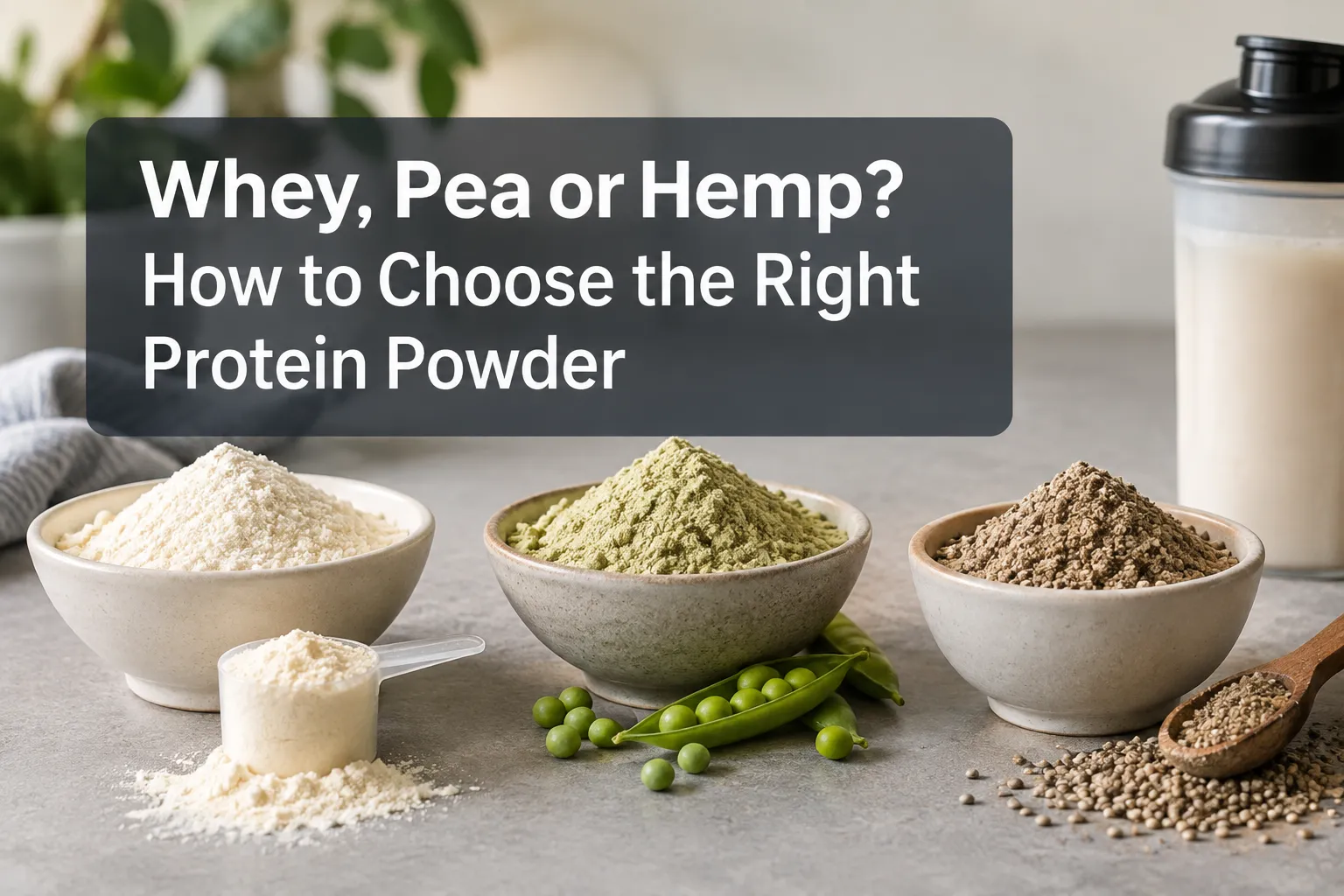
Pea protein powder is an easy way to add protein if you eat plant-based. Whey, hemp or brown rice might fit your tastes better. A scoop can be handy when breakfast is rushed or you cannot manage a meal after exercise, though what you eat across the day matters more than the type of powder.
Do you actually need a protein powder?
Often, no. You can get protein from eggs, dairy foods, beans, tofu, fish and meat. A powder is there for the days when meals alone are awkward.
The British Nutrition Foundation gives the UK Reference Nutrient Intake for adults as about 0.75 g of protein per kg of body weight each day. It is a population reference, so your own needs may differ. Very active people may need more; a registered dietitian or nutritionist can help you work out a personal target.
“0.75 g per kg of body weight per day.” – British Nutrition Foundation
Under UK-authorised protein claim wording, protein contributes to a growth in muscle mass, the maintenance of muscle mass and the maintenance of normal bones. The source can be food or a suitable powder.
Whey: the milk-based option
Whey comes from cow’s milk. If you like milk-based shakes, InfiniVit offers Whey Protein Powder in vanilla and chocolate.
Whey is not suitable for vegans or anyone with a milk allergy. If you avoid milk, plant proteins can work well. In a whey vs plant protein decision, your diet across the day is more useful to think about than any one scoop.
Plant-based options: pea protein powder, hemp and brown rice
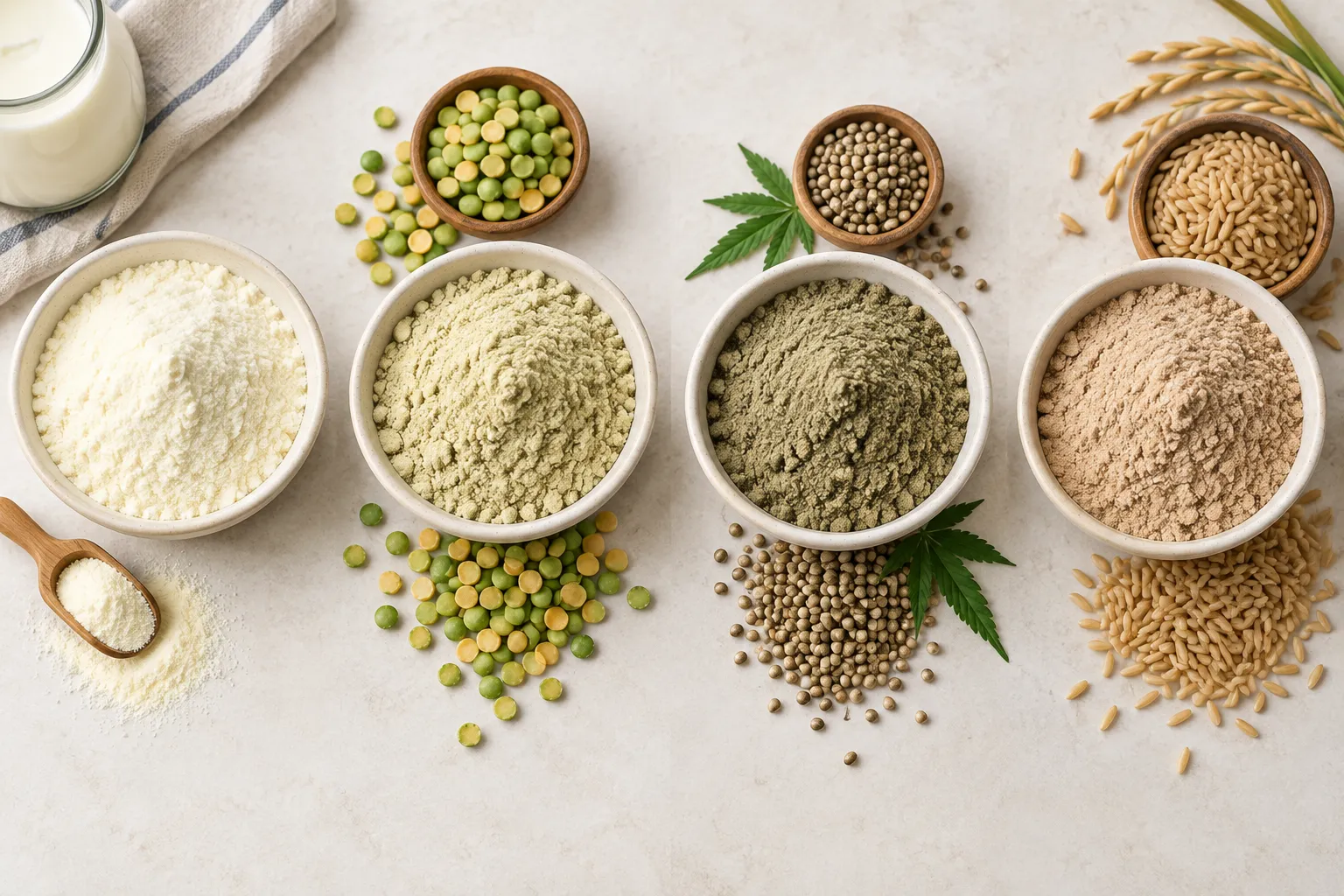
Plant powders vary in taste, ingredients and protein content. Look at the full formulation rather than choosing by the source alone.
Pea protein powder
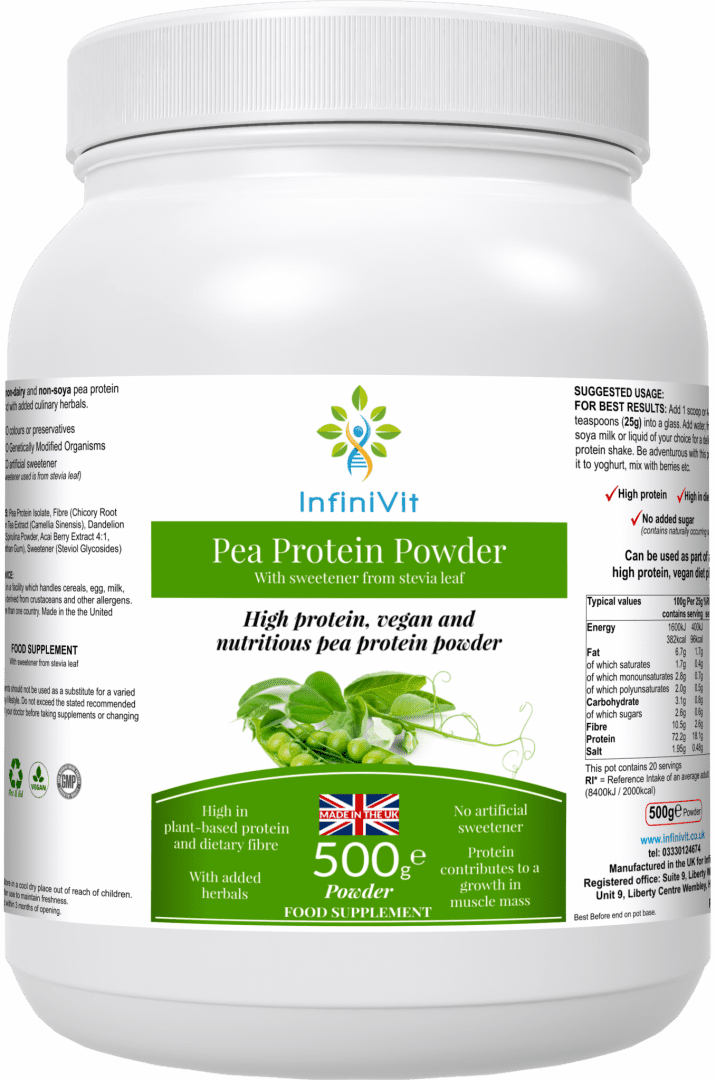
InfiniVit’s Pea Protein Powder combines pea protein isolate with chicory root fibre, green tea, dandelion, spirulina and acai, sweetened with stevia. Its product page says it suits vegetarians and vegans. If you wanted plain pea isolate, bear in mind that this one also contains botanicals.
Hemp protein powder with herbs
For something a bit different, Hemp and Herbs Protein Powder pairs hemp seed protein with a herbal blend including beetroot, cinnamon, spirulina and baobab. Its page states that it suits vegetarians and vegans and is high in dietary fibre. The longer ingredient list will not suit someone after a simpler powder.
Brown rice protein powder
InfiniVit’s Brown Rice Protein Powder is chocolate-flavoured, with chicory root fibre, green tea and guarana seed extracts. Its product page says it suits vegetarians and vegans. It could appeal if you like a rice-based chocolate shake, although the extracts make it less simple than plain rice protein.
Which one fits you?
|
If you… |
Try… |
Bear in mind |
|---|---|---|
|
Enjoy dairy and want a familiar flavoured shake |
Whey in vanilla or chocolate |
It comes from milk. |
|
Want a vegan protein powder in the UK with pea as its main ingredient |
Pea |
This is a blend with added fibre and botanicals. |
|
Fancy hemp and a more varied herbal mix |
Hemp and Herbs |
Its ingredient list is longer. |
|
Prefer a chocolate-flavour plant option based on rice |
Brown Rice |
It also contains green tea and guarana extracts. |
There is no one best powder for everyone in the UK. If your meals provide enough protein, you can leave the tubs on the shelf. If a powder would help, pick ingredients and a flavour you will enjoy using.
How to use protein powder
A shake after training is handy, and you do not need to rush to meet a strict 30-minute window. You could also stir a serving into porridge, blend it into a smoothie or use it in baking. Follow the serving instructions on the tub; powder can change a recipe’s texture.
For a busy morning, stir powder into porridge once it has cooled a little. Or blend a shake with a liquid you enjoy. Your meals across the day still count towards your protein intake.
What to check on the label
Before choosing a protein powder in the UK, read the whole pack:
-
Compare protein per serving and the serving size. A bigger scoop can make the protein figure look more impressive.
-
Read the ingredients. You might want a short list, or you might like the added ingredients in a blend. InfiniVit’s pea, hemp and rice powders are blends rather than plain single-ingredient proteins.
-
Find the allergen information. Whey contains milk; a plant source does not automatically suit every allergy, so read the specific pack.
-
Look for a clear dietary suitability statement if you need a vegan or vegetarian product.
-
Look at UK manufacturing details if they matter to you. InfiniVit’s pea product page states UK manufacture under GMP and ISO 22000 standards.
-
Choose a flavour you’ll enjoy. You are less likely to use a powder that sits in the cupboard.
The bottom line
Start with food and add a powder if it makes your day easier. Whey suits people happy with milk, while pea, hemp and brown rice offer plant-based choices with different ingredients and flavours. InfiniVit’s protein powder range lets you compare those formulations and choose one that fits your routine.
For information only, not medical advice. Supplements should be used alongside a varied, balanced diet.
FAQ
Is pea protein powder ok?
Yes, if it suits your diet and you like the ingredients, pea protein powder can be a handy way to add protein. InfiniVit’s pea powder contains fibre and botanicals as well as pea protein isolate.
What is the healthiest protein powder for vegans?
No single powder is healthiest for everyone. InfiniVit states that its pea, hemp and brown rice options suit vegans; compare the protein per serving, ingredients and flavour to find one you will use.
Is there a downside to taking protein powder?
You may not need it if food already provides enough protein, and some ingredients or allergens may not suit you. Keep ordinary meals in the picture and use powder alongside a varied diet.
Which protein powder is the healthiest?
Your diet, allergies and tastes all matter. There is no universally healthiest type; total daily protein and a varied diet matter more than whether you choose whey, pea, hemp or rice.