
 English
 Arabic
 Polish
 Russian
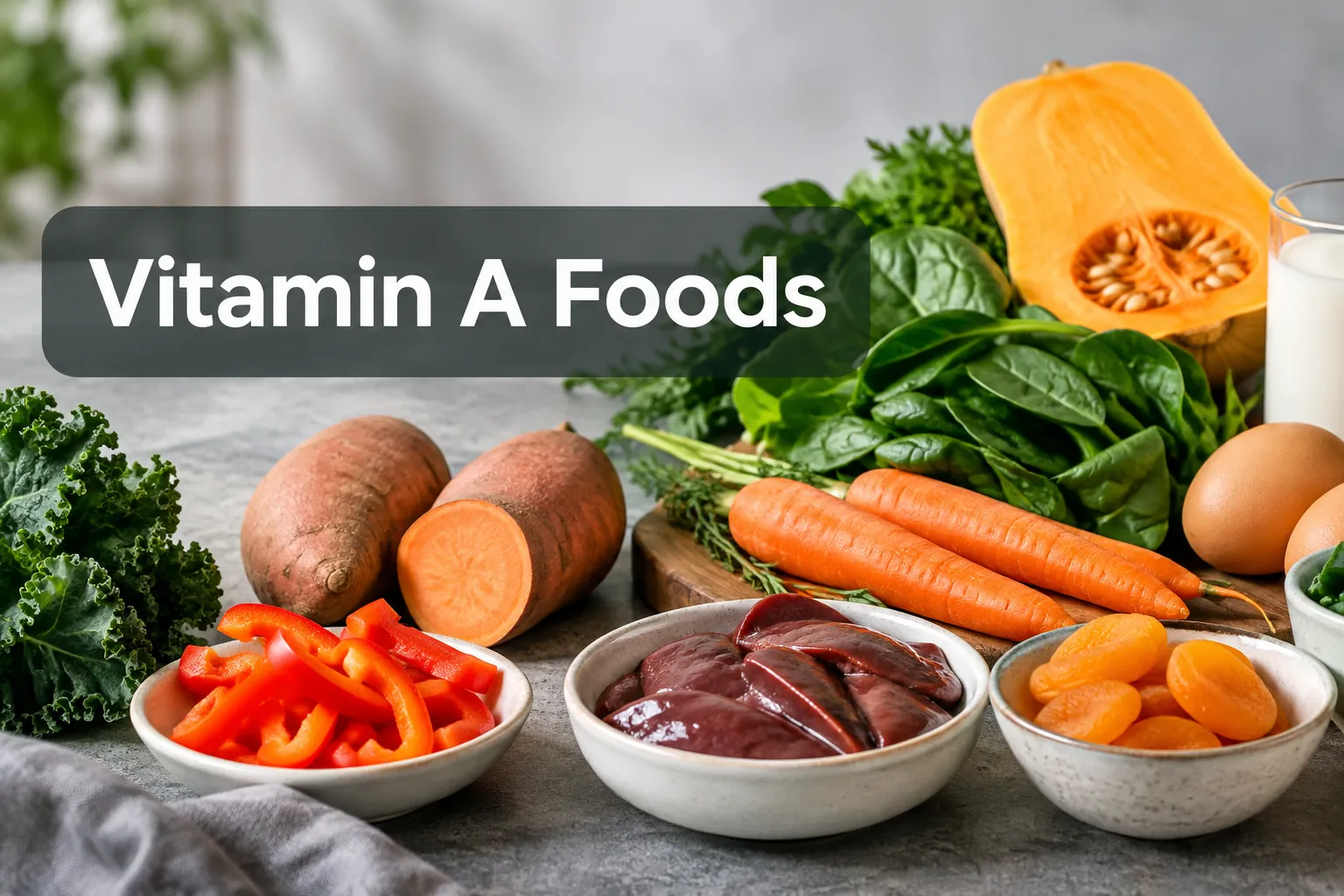
Vitamin A foods include carrots, sweet potatoes, spinach, eggs, dairy and oily fish. Plants supply carotenoids that your body converts to vitamin A; animal foods supply vitamin A in its preformed form, retinol. Most UK adults can start with varied meals. Liver and retinol-containing supplements need more care, especially if you are pregnant or planning a baby.
What counts as vitamin A in food?
Vitamin A helps maintain normal vision, immune function and the linings of the skin and body. You get it from food in two forms:
-
Animal foods such as eggs, dairy, oily fish and liver contain preformed vitamin A (retinol), which the body can use directly.
-
Plants such as carrots, sweet potatoes and spinach contain provitamin A carotenoids. Your body converts some of these pigments, particularly beta-carotene, into vitamin A.
A bright orange vegetable contributes through its carotenoids; liver supplies retinol directly. Eggs contribute too, though they are unlikely to cover a whole day’s needs on their own. With plants, you do not face the same concern about excessive preformed vitamin A that you do with liver or retinol supplements.
Vitamin A foods to put on your plate
|
Food |
Form it supplies |
A practical way to eat it |
|---|---|---|
|
Carrots |
Provitamin A carotenoids |
Roast or grate into a salad |
|
Sweet potatoes |
Provitamin A carotenoids |
Bake and top with beans or yoghurt |
|
Spinach |
Provitamin A carotenoids |
Wilt into a curry or stir into eggs |
|
Red peppers and yellow fruits, such as mango or apricots |
Provitamin A carotenoids |
Slice peppers into lunch or serve fruit with yoghurt |
|
Eggs |
Mostly preformed vitamin A |
Add to a meal with leafy greens |
|
Milk, yoghurt and cheese |
Preformed vitamin A |
Use with meals rather than relying on them alone |
|
Oily fish, such as mackerel or salmon |
Preformed vitamin A |
Serve with vegetables and potatoes |
|
Liver and liver products |
Concentrated preformed vitamin A |
Treat as an occasional food, not a daily staple |
|
Fortified low-fat spreads |
Added vitamin A |
Read the label to see what the product provides |
Carrots and spinach belong on a plant-based plate as readily as any other. The NHS also lists red peppers and yellow fruits such as mango and apricots as sources of beta-carotene. If you eat animal foods, pair greens with eggs or oily fish to include both forms of vitamin A in the same meal.
Does preparation make a difference?
Add a little olive oil to roast carrots, or serve yoghurt alongside a sweet potato. Dietary fat helps the body absorb beta-carotene. A balanced meal will do; there is no need for a special vitamin A recipe.
How much vitamin A do UK adults need?
For adults aged 19 to 64, the NHS gives daily amounts of 700 micrograms (µg) for men and 600 µg for women. A varied, balanced diet should provide what you need. There is no need to get the full amount from one food or supplement.
Food tables sometimes express vitamin A as retinol equivalents (RE) to account for the conversion of carotenoids. A weight of beta-carotene cannot be compared directly with the same weight of retinol. As a reference, UK food analysis puts boiled whole egg at 120 µg retinol equivalents per 100 g. Eggs help, but add other vitamin A foods to your day.
Simple meals that make vitamin A practical
You can fit vitamin A foods into an ordinary week without relying on liver or a high-dose capsule:
-
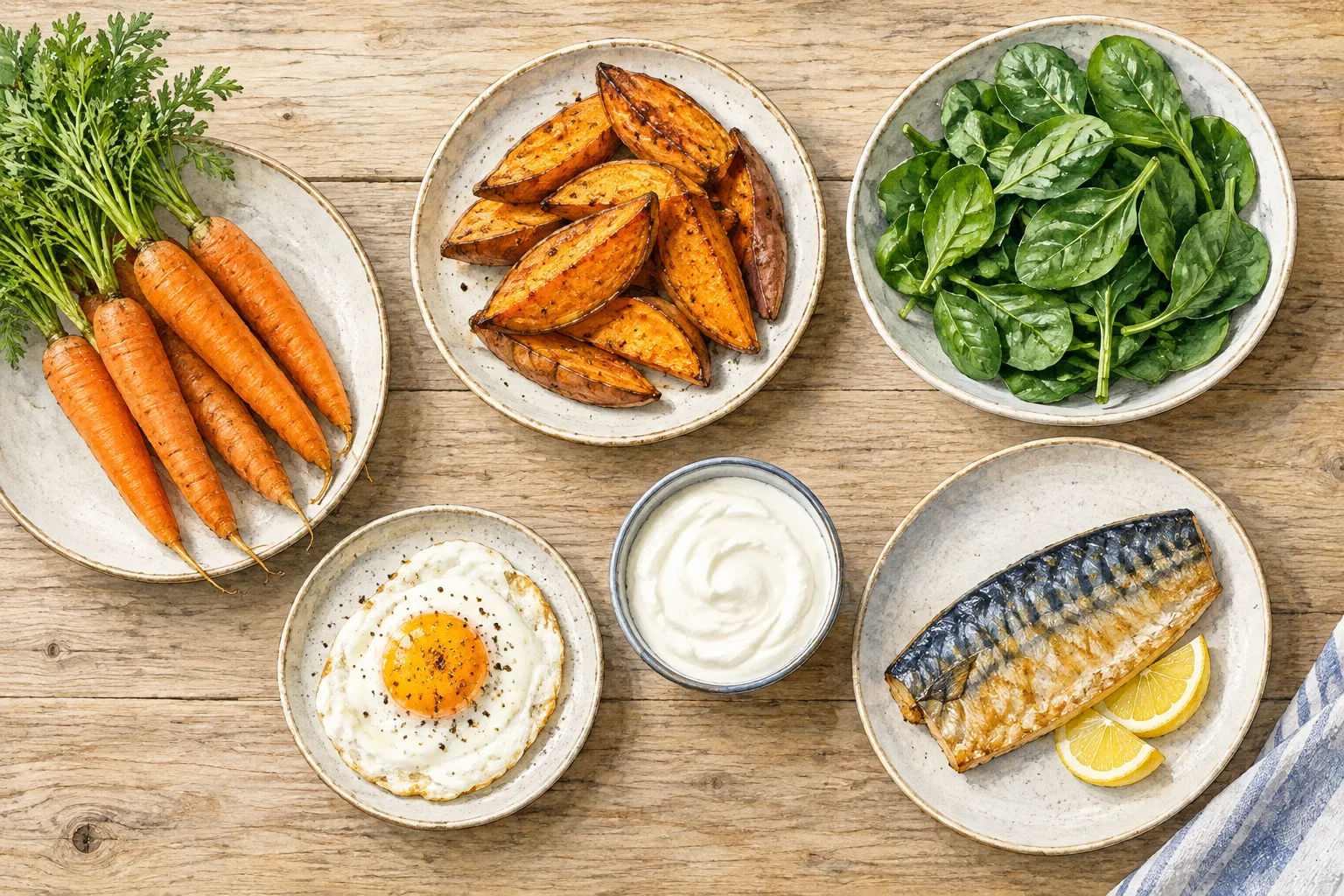
Breakfast: Eggs with wilted spinach and wholegrain toast. The eggs provide preformed vitamin A; spinach contributes carotenoids.
-
Lunch: A baked sweet potato with yoghurt and a bean filling. The potato provides carotenoids, and the yoghurt adds some preformed vitamin A.
-
Dinner: Oily fish with roast carrots and potatoes, dressed with a little olive oil. This combines both forms, with fat alongside the vegetables.
-
Plant-based option: Chickpea and spinach curry with roasted carrots. Use some oil in the meal to help absorb carotenoids.
Adjust portions to suit your appetite and vary the sources through the week.
When liver and supplements need extra care
Liver contains a great deal of retinol. The NHS advisesnot eating liver or liver products, such as pâté, more than once a week. If you eat it weekly, the NHS also advises against vitamin A supplements. Read multivitamin labels, where vitamin A may sit alongside other nutrients.
“Do not eat liver or liver products, such as pâté, more than once a week.” – NHS
If you take a supplement containing vitamin A, the NHS says your total from food and supplements should not exceed 1.5 mg (1,500 µg) a day. This warning concerns preformed vitamin A; you can still eat carrots and spinach. Fortified foods count alongside supplements and meals. For help reading a product, use InfiniVit’s UK multivitamin label checklist.
If you are pregnant or thinking about pregnancy
If you are pregnant or thinking about having a baby, the NHS advises avoidingliver and liver products and supplements containing vitamin A. Too much vitamin A could harm your baby. The general adult supplement limit above does not make retinol supplements suitable for pregnancy. Carrots, sweet potatoes and spinach remain useful: the body converts their carotenoids as needed. If you need a pregnancy supplement, ask your midwife, GP or pharmacist which product is appropriate instead of choosing a general multivitamin by its headline claims.
Choosing food first
Build meals around vegetables, adding eggs, dairy or oily fish if you eat them. Familiar foods can provide vitamin A without putting liver on the weekly menu or adding retinol by default. InfiniVit takes a carefully formulated, transparent approach to supplements; that still leaves the question of whether added vitamin A is right for you. Read who actually needs supplements in the UK if you are weighing that decision, then browse InfiniVit’s range with your needs in mind. Food comes first, and pregnancy or another health concern calls for individual advice before supplementing.
If you are looking for a different nutrient, Vitamin D Foods: What to Eat in the UK covers vitamin D separately.
FAQ
What foods have the highest vitamin A?
Liver is a concentrated source of preformed vitamin A, which is why it needs particular care. Carrots, sweet potatoes and spinach are useful sources of carotenoids that the body can convert to vitamin A; eggs, dairy and oily fish add preformed vitamin A.
How do I increase vitamin A?
Add carrots, spinach or sweet potatoes to regular meals, ideally with some dietary fat. If you eat animal foods, eggs, dairy and oily fish can also contribute. Do not rely on frequent liver meals or start a retinol supplement without considering the NHS safety advice.
Is 2 eggs A day enough vitamin A?
Eggs contribute vitamin A, but two eggs alone are unlikely to provide an adult’s full daily amount. UK analysis lists 120 µg of retinol equivalents per 100 g of boiled whole egg, compared with NHS daily amounts of 600 µg for women and 700 µg for men aged 19 to 64. Add vegetables and vary your sources.
How do I get 100% vitamin A?
Aim for a varied diet with carotenoid-rich vegetables and, if you eat them, some eggs, dairy or oily fish. You do not need one food to supply your whole day’s vitamin A, and concentrated liver or retinol supplements are not the default route.