
 English
 Arabic
 Polish
 Russian
The best supplements to take for energy depend on what is making you tired. B vitamins, iron and magnesium support normal bodily functions, yet taking extra is unlikely to make you feel more awake if you get enough already. A supplement can help with a dietary gap or a deficiency identified by a clinician. Unexplained tiredness that persists needs an assessment before another bottle of pills.
What can an energy supplement actually do?
Food supplies your body with energy. Nutrients help you use it and maintain functions such as making healthy red blood cells. The GB nutrition and health claims register distinguishes normal energy-yielding metabolism from reduction of tiredness and fatigue. These claims do not promise that extra nutrients will make a well-nourished person feel awake straight away.
“Contributes to the reduction of tiredness and fatigue.” – GB nutrition and health claims register
Some products contain caffeine, which may make you feel alert for a short time. It will not correct low nutrient intake and can disrupt sleep if taken too late. A label that promises a rapid lift deserves a look at its stimulant ingredients.
Best supplements to take for energy: match the reason
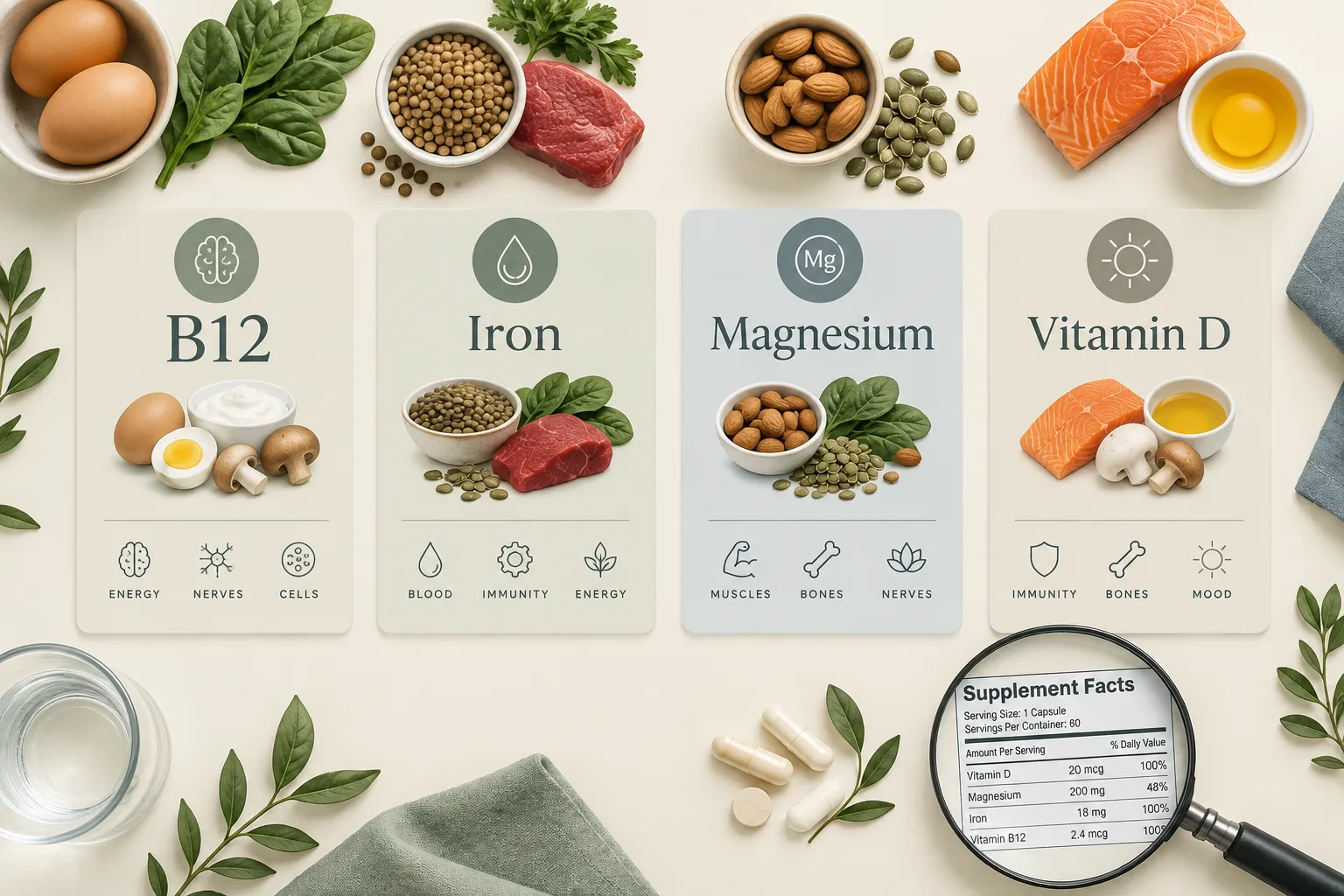
The top energy supplements depend on your circumstances. If you avoid animal foods, B12 deserves a look. Heavy periods may call for an iron assessment. Poor sleep calls for neither nutrient as a substitute for rest.
|
Option |
When it may be relevant |
What it does not establish |
Main caution |
|---|---|---|---|
|
B vitamins, particularly B12 |
Low intake or a diagnosed deficiency; B12 deserves attention if you avoid animal foods |
A high-dose B complex is not an instant energy treatment |
Check combined B6 intake across products and ask about suspected B12 deficiency |
|
Iron |
Confirmed low iron or iron-deficiency anaemia, assessed with appropriate tests |
Tiredness alone does not prove iron deficiency |
Do not start high-dose iron on a hunch; it can interact with medicines |
|
Magnesium |
A dietary shortfall or a specific recommendation from a healthcare professional |
It is not a general-purpose fatigue cure |
Supplementary magnesium can cause digestive effects and affect medicine absorption |
|
Vitamin D |
Meeting UK seasonal intake advice or treating a confirmed low level under guidance |
It has no UK-authorised claim to reduce tiredness and fatigue |
Avoid stacking high-dose products |
|
Herbal or stimulant blends |
A clearly specified, non-medical preference for short-term alertness |
A proprietary blend does not demonstrate a fatigue benefit |
Caffeine and herbs may interact with medicines or worsen sleep |
B vitamins: useful when intake or status is low
Several B vitamins contribute to normal energy-yielding metabolism. B12 and B6, along with folate, also carry authorised claims for reducing tiredness and fatigue. The claims describe what these nutrients do at suitable amounts. They do not support mega-dosing.
If you follow a vegan diet, pay particular attention to B12. Tiredness alongside tingling, numbness, a sore tongue or balance problems warrants medical advice; a general B-complex tablet is not enough to investigate the cause. A clinician can assess whether you need deficiency treatment and why the deficiency developed. Compare the B6 in any multi with your other products: the NHS advises no more than 10 mg a day of supplemental B6 unless a doctor advises otherwise. You can also compare B complex versus multivitamin if you are deciding between the two.
Iron: only when there is a reason to take it
Iron contributes to normal oxygen transport and carries an authorised claim for reducing tiredness and fatigue. Heavy menstrual bleeding, pregnancy or a limited diet can make your iron status worth discussing with a clinician. A blood test can help establish whether low iron or anaemia explains the tiredness and guide treatment.
Iron supplements can upset the stomach, and taking iron without a reason can be harmful. Ferrous sulfate can interact with levothyroxine and some antibiotics; a pharmacist can advise on spacing doses. A multivitamin containing a little iron is not interchangeable with a treatment course for iron-deficiency anaemia.
Magnesium: support for normal function, not a quick fix
Magnesium contributes to normal energy-yielding metabolism and to reducing tiredness and fatigue. You can get it from nuts, seeds, pulses and whole grains. A supplement may help with a dietary shortfall; extra magnesium will not solve fatigue caused by short sleep, illness or an untreated condition.
Look for elemental magnesium per daily serving on the label. The larger number beside the compound name is not the amount of magnesium itself. Large supplemental amounts can cause diarrhoea, and magnesium may interfere with absorption of certain antibiotics and bisphosphonates. If you take either medicine, the timing of your doses matters.
Vitamin D: important, but not an energy claim
In the UK, the NHS advises adults to consider 10 micrograms (400 IU) of vitamin D daily in autumn and winter. Vitamin D supports other established functions, but it has no authorised fatigue-reduction claim. Suspected deficiency, bone pain or muscle symptoms may warrant assessment. Taking extra vitamin D for an energy lift will not answer what is causing the tiredness. For the wider label decision, see how to choose a vitamin D supplement.
Herbal blends, caffeine and other popular extras
You may see ginseng, rhodiola or CoQ10 in supplements for more energy. None gives the finished blend the authorised nutrient claims carried by certain vitamins and minerals. Evidence for one ingredient at one dose cannot tell you what a different mixture will do.
Creatine has a place in short, intense exercise performance; it is not a remedy for day-to-day unexplained tiredness. Vitamin C from fruit and vegetables helps with iron absorption from plant foods. Its presence on an “energy” label does not establish that the formula treats fatigue.
If a blend contains caffeine or another stimulant, read the amount per serving alongside your intake from coffee, tea or energy drinks. Sleep problems, palpitations, pregnancy, anxiety and medicines all warrant extra caution. Herbs can interact with medicines even when the label says “natural”. Herbal supplement claims deserve a closer look than the blend’s name.
How to choose a supplement safely
Before buying supplements to increase energy, consider whether you might have a nutrient gap or want to feel alert right now. A specific gap may justify a targeted product. If you keep reaching for something stimulating, look at sleep, workload and your caffeine habits too.
-
Read the whole daily serving. Check the quantity of each active ingredient and its percentage nutrient reference value (NRV), not just the name on the front. A named ingredient in a multi-ingredient blend may be present in a small amount.
-
Add up overlaps. A multivitamin, a B complex and an “energy” blend can repeat the same nutrients. Pay particular attention to B6, iron and vitamin D.
-
Keep medicines in the picture. Iron and magnesium can affect how some medicines are absorbed; herbs and stimulants can have their own interactions. Ask a pharmacist before combining a new formula with prescriptions.
-
Match the product to a defined purpose. Prefer a clear ingredient list and amounts over promises to “beat fatigue”. Food supplements complement a varied diet; they cannot diagnose or treat a cause of persistent tiredness.
InfiniVit’s energy, stress, sleep and brain support range includes a magnesium formula and herbal products. Read each label against your own diet and circumstances rather than choosing the blend with the strongest-sounding name.
When tiredness needs a GP appointment
The NHS advises a GP appointment if unexplained tiredness lasts a few weeks, affects daily life or comes with other symptoms. Sleep, stress, low mood and infection may be involved; so can thyroid conditions, diabetes, anaemia or medicines. A conversation and, where appropriate, tests give you more to go on than a series of supplement trials.
Seek urgent medical advice for serious symptoms such as chest pain, significant breathlessness, fainting or a rapidly worsening condition. If fatigue comes with persistent digestive symptoms, read Gut Health and Energy: When Fatigue Needs a Check for that separate question.
Everyday ways to support energy
Eat enough at regular meals, drink fluids, make room for movement and keep a consistent sleep routine. A brief food diary may show that you skip lunch on busy days or eat from a narrow range of foods. Caffeine can help you feel alert for a while, but it will not repay lost sleep.
The bottom line
The energy supplements worth considering address a nutritional need at a suitable amount. B vitamins and magnesium support normal metabolism; iron calls for a more targeted decision. If fatigue persists, seek medical assessment rather than treating a stimulant blend as a solution. To complement your routine, browse InfiniVit’s energy and stress range and choose by the ingredients you need, not a promise of an instant boost.
FAQ
What supplements give you the most energy?
No supplement reliably gives everyone “the most” energy. Iron may be appropriate when tests show deficiency, while B12 or other nutrients may matter when intake or status is low; caffeine-containing products may feel stimulating without addressing the cause of tiredness.
Can vitamin D help with fatigue?
Vitamin D matters for health and UK seasonal supplementation advice, but it does not carry a UK-authorised claim to reduce tiredness and fatigue. If fatigue persists or you suspect a deficiency, ask your GP about assessment rather than assuming vitamin D is the answer.
How to feel more energetic?
Start with regular meals, adequate sleep, fluids and activity you can sustain. If tiredness continues or limits your life, see a GP; a targeted supplement makes most sense when there is a specific dietary gap or diagnosed deficiency.
Is there a pill that will give me energy?
Caffeine can produce short-term alertness, but it is not a treatment for persistent fatigue and may disrupt sleep. Nutrient supplements support normal functions and may help correct low intake or deficiency, but they do not replace food or medical assessment.
What drains energy from your body?
Too little sleep or food, stress and illness can leave you feeling drained. Anaemia, thyroid problems, diabetes and some medicines can also contribute, which is why unexplained or persistent tiredness is worth discussing with a GP.