
 English
 Arabic
 Polish
 Russian
The best time of day to take vitamins is one you can stick to. Start with the product label. Have fat-soluble vitamins with food, give iron some space from tea and calcium, and make sure your supplements fit around any medicines. For most other products, the choice between morning and evening is yours.
If the bottles are multiplying in your kitchen, start with the meals you already eat. You probably need fewer separate times than you think.
The few timing rules that matter
Supplements do not share one ideal time of day. The meal or drink you take them with may make more difference than the clock.

|
Supplement type |
Best with |
Space away from |
Evidence strength |
|---|---|---|---|
|
Vitamins A, D, E and K; omega-3 |
A meal with some fat |
No special time-of-day rule |
Good rationale for taking fat-soluble nutrients with food; clock time is flexible |
|
Iron |
Water, or vitamin C-rich food; food if it upsets your stomach |
Tea, coffee, dairy, calcium supplements and some medicines |
Strong reason to consider food and medicine interactions |
|
Higher-dose calcium, zinc or magnesium |
Food if the label advises it or it improves tolerance |
Iron and other higher-dose minerals where practical; some medicines |
Spacing is prudent for larger separate doses, not a ban on ordinary mixed formulas |
|
Fibre powder |
Plenty of water |
Medication and other supplements by around two hours |
Practical spacing rule; medicine-specific advice takes priority |
|
Multivitamin or B-vitamin blend |
Breakfast or another regular meal |
Follow the label if it contains iron or other minerals |
Morning is convenient, not a universal absorption requirement |
|
Live cultures |
As directed on the product |
Any separation stated on its label |
Instructions depend on the product |
Never rearrange a prescribed medicine to fit this table. Use your pharmacist’s medicine-specific interval.
Take fat-soluble vitamins and omega-3 with a meal
Vitamins A, D, E and K are fat-soluble. Take them with a meal containing some fat, such as egg, yoghurt or olive oil. Omega-3 also fits with food and may be gentler on your stomach.
You need not add lots of fat or start eating breakfast. Lunch or dinner works too. Check whether your multivitamin already contains vitamin A before adding more.
Give iron its own window
If you take iron with your morning tea or coffee, move the iron to another slot. Tea, coffee, dairy and calcium supplements can reduce its absorption. You can take it with vitamin C-rich food, such as fruit, to help with absorption.
For ferrous sulfate, the NHS advises a two-hour gap from tea, coffee, eggs and dairy. Follow the directions for your own iron product rather than applying that gap to every formulation.
Iron can cause stomach side effects. Food may help if taking it on an empty stomach makes you sick, though it can reduce absorption. Follow your clinician’s directions. If tiredness has prompted you to consider iron, ask your GP whether a blood test is appropriate.
Space larger mineral doses and fibre
Calcium, iron, zinc and magnesium can compete for absorption when you take them as separate higher-dose products. Put them at different meals where practical. You can still take a mixed multivitamin as directed without adding several high-dose minerals beside it.
Take fibre with plenty of water and leave around two hours between it and medication or other supplements as a general rule. Digest Fibre Plus fibre powder can have its own slot rather than sharing one with tablets. Ask a pharmacist about any medicine with specific timing instructions.
Give medication instructions priority
Levothyroxine and certain antibiotics can interact with calcium, iron, magnesium and zinc. The gap may be several hours. For example, NHS England advises a four-hour gap between levothyroxine and calcium or iron supplements. A pharmacist can explain the timing for your exact medicine; the fibre rule of around two hours does not apply to every prescription.
Keep your prescribed medicine at the time advised. When you speak to a pharmacist, bring the labels or a list of your supplements, including powders and multivitamins.
Best time to take vitamins: morning or evening?
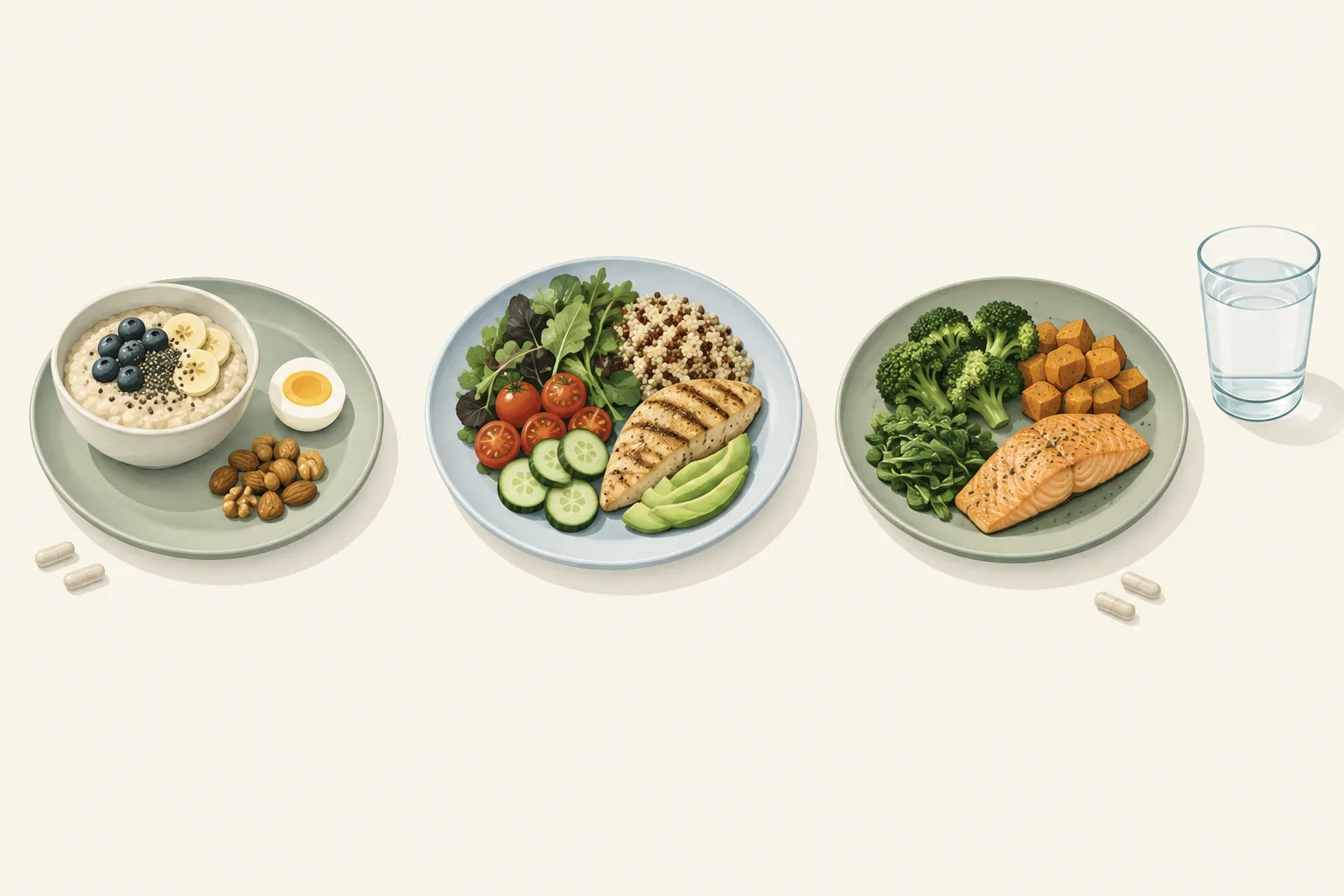
For most vitamins, there is no proven morning or bedtime window. A regular meal helps you remember; the suggestions below are habits, not promises of better results.
Multivitamins and B vitamins: breakfast is convenient
Breakfast is often the best time to take multivitamins if you tend to feel queasy taking them without food. A meal also suits any fat-soluble vitamins in the formula. You could pair OptiVita multivitamin with breakfast if its label directions suit your routine.
Breakfast is a common choice for B-vitamin blends too, though they do not need to be taken in daylight. If an evening dose works for you and does not disturb your sleep, follow the label. A multivitamin may already supply B vitamins and minerals, so look at its contents before adding standalone products.
Magnesium: evening is an option, not a requirement
Magnesium can go with an evening meal if that is easy to remember. Bedtime is not required. Food may help with stomach discomfort; give separate iron or calcium another meal where practical. Medication instructions come first.
With food or on an empty stomach?
Food can make supplements easier on the stomach. The exceptions depend on the label: some iron schedules call for an empty stomach, while fat-soluble vitamins are better taken with a meal. Live-culture products have different directions, so use the instructions on yours.
If a supplement keeps upsetting your stomach, ask for advice rather than putting up with it. A different time or a meal might help.
Build a routine around real meals
Choose the products you actually need and read their labels. One regular meal may cover most of them. Add another slot for iron, fibre, higher-dose minerals or a medicine interaction.
Follow a divided-dose schedule if the label calls for one. Replenor capsules call for one capsule three times daily with meals. Breakfast, lunch and dinner spread the intake through your day; taking all three capsules together would not follow the directions.
An example day, not a prescription
This example shows spacing in practice. It does not suggest you need all these products, and any product or medicine instructions take priority.
|
When |
Example action |
Why it fits |
|---|---|---|
|
Breakfast |
Take a labelled multivitamin with a meal containing some fat |
Convenient daily cue; food suits fat-soluble vitamins |
|
Mid-morning or lunch |
If you have been advised to take separate iron, take it away from tea, coffee, dairy and calcium; pair with fruit if suitable |
Keeps a common absorption conflict out of the way |
|
Afternoon |
Take fibre powder with plenty of water, around two hours away from medication and other supplements |
Gives fibre a separate place in the routine |
|
Evening meal |
Take a separate magnesium product if its label directs it and it fits your medication schedule |
Keeps a larger mineral dose away from the iron slot |
If a product calls for three doses with meals, add one at each meal. You need not copy every row above.
To keep the plan workable:
-
Link each dose to a meal or another daily cue you already have.
-
Use a weekly pill organiser if it helps, but keep packaging or a photo of the label so you can still see the directions.
-
Keep supplements visible in a suitable place, out of children’s reach and stored as the pack instructs.
-
If you miss a dose, return to the labelled schedule; do not double up to catch up unless a healthcare professional tells you to.
When to get individual advice
If you are pregnant, breastfeeding, taking medication or managing a health condition, speak to your GP or pharmacist before adding supplements. Ask about iron, vitamin A and any minerals you plan to take alongside a prescription. You may find that some products do not belong in your routine at all.
UK rules regulate supplements as foods, not medicines. Keep eating a varied diet and seek medical care when you need it; a well-timed dose cannot make an unnecessary product useful.
Keep the routine simple
Pick a meal you rarely miss, then add a separate slot for iron or fibre if you need one. Keep medication instructions and the product label in charge. Consistency matters more than choosing between 8 am and 8 pm.
At InfiniVit, we favour carefully formulated products with clear directions. Explore the InfiniVit products linked above, or email info@infinivit.co.uk if you have a question about how to take one.
FAQ
Are vitamins better to take at night or in the morning?
For most vitamins, either time works. Take them when you will remember, following the label; a meal is often more comfortable and is useful for fat-soluble vitamins.
Which vitamins should not be taken at night?
There is no general ban on taking vitamins at night. Some people prefer a B-vitamin blend or multivitamin with breakfast, particularly if taking it later does not suit them; meal timing and medication instructions matter more than the clock.
What vitamins should not be taken together?
Vitamins do not usually need separate time slots just because they are different vitamins. The more useful caution is to separate a standalone iron dose from calcium supplements, and to follow medicine-specific instructions for mineral-containing products.
What are the five supplements you should never take together?
There is no universal list of five forbidden pairs. What matters is the dose, the product and any medication: iron is best kept away from calcium, tea and coffee, while larger mineral doses and fibre may need their own slots.
Is it bad to take vitamins everyday?
A daily schedule is appropriate for a product whose label calls for daily use, if it is suitable for you. Avoid doubling up on the same nutrients across products, and ask a GP or pharmacist for advice if you are pregnant, take medication or have a health condition.