
 English
 Arabic
 Polish
 Russian
Weight Management Supplements: What to Know
If you are looking at weight management supplements, the first thing to know is that most people are not really searching for a “magic product” – they are searching for clarity. The category is crowded with bold promises, vague language, and before-and-after marketing that can make it hard to separate realistic nutritional support from overhyped claims.
At InfiniVit, we believe adults deserve a more evidence-aware, honest approach. Supplements may have a place within a wider wellbeing plan, but they are not substitutes for a balanced diet, appropriate calorie intake, physical activity, sleep, or medical support where needed. The best weight management supplements, if they are useful at all, are usually the ones that support consistency, nutrition, and routine rather than pretending to override physiology.

Why this category causes so much confusion
Weight management is emotionally charged, commercially powerful, and biologically complex. That combination creates ideal conditions for exaggerated claims.
Many products are framed as if they can do the hard work for you. In reality, outcomes usually depend far more on eating patterns, food environment, stress, sleep, activity levels, and long-term adherence than on any capsule or powder. A more realistic approach is to ask:
-
What category does this supplement belong to?
-
What is it actually supposed to support?
-
Is the claim nutritional, physiological, or just marketing language?
-
Does it make sense alongside your diet and routine?
-
Is it safe for you personally?
This is especially important if you are also exploring broader daily nutrition support such as what supplements you should take daily or trying to understand where a supplement fits within your overall routine.
What competitor content often gets right – and what it misses
Most high-ranking content on this topic tends to repeat a few familiar points:
-
supplements should be used with diet and exercise
-
some ingredients are more common than others
-
evidence is mixed
-
safety matters
That advice is reasonable, but it often stays too general. Important gaps usually include:
|
Content Gap |
Why It Matters |
|---|---|
|
Distinguishing supplement categories from outcomes |
Shoppers need to know whether a product is about fibre, protein, stimulants, or botanicals, not just whether it is sold for “weight loss.” |
|
Explaining what “support” really means |
Support may mean convenience, satiety from food structure, or nutrient intake – not direct fat loss. |
|
Discussing nutrient sufficiency during dieting |
Adults reducing calories may miss protein, fibre, or micronutrients. |
|
Addressing medication interactions and stimulant tolerance |
Many articles underplay real safety issues. |
|
Calling out pseudo-scientific language |
Terms like “boost metabolism” and “melt fat” often say little and imply too much. |
This guide aims to fill those gaps with a more practical, science-led framework.
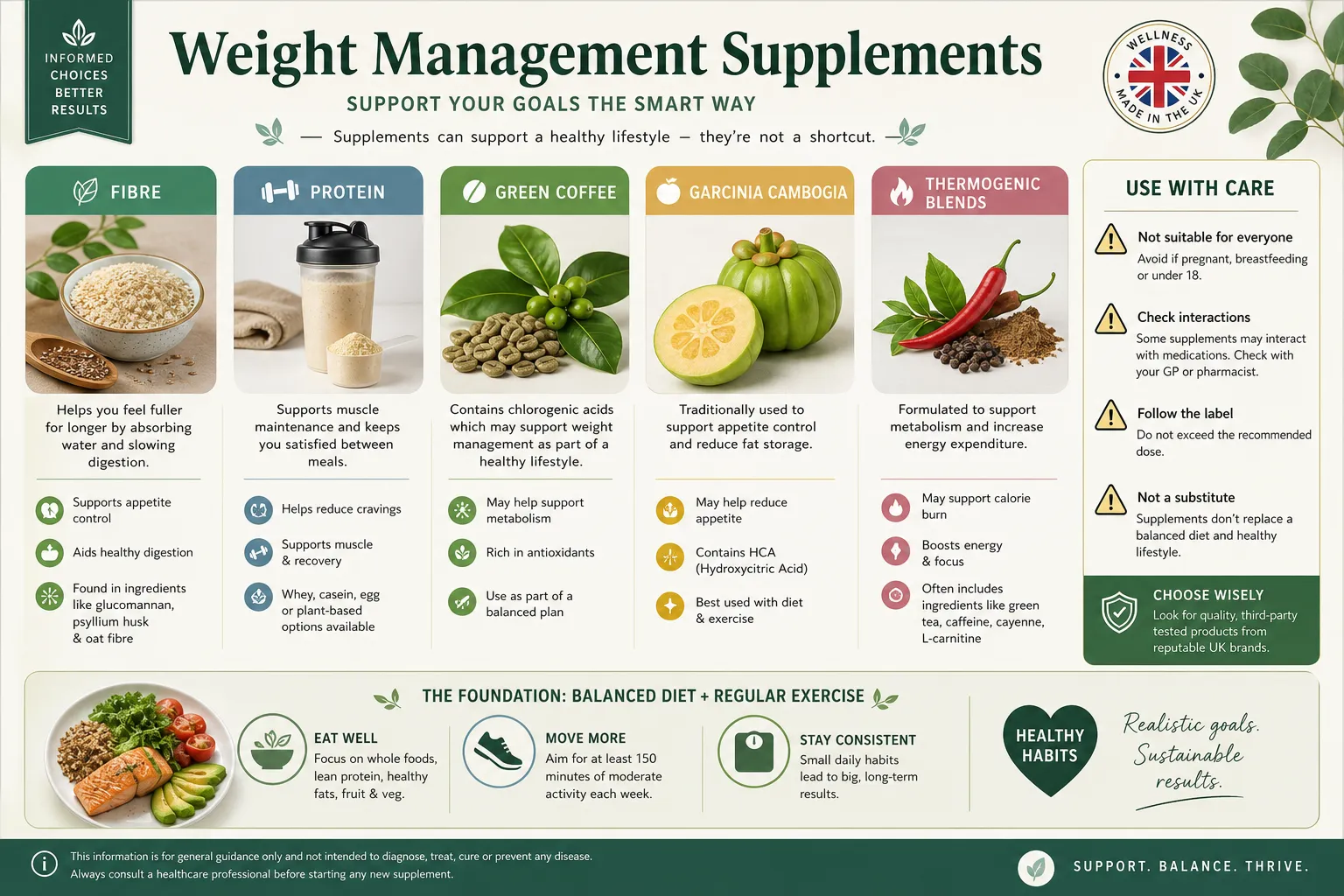
The main categories of weight management supplements
Not all weight management supplements are trying to do the same job. Some are marketed around appetite, some around energy, some around meal structure, and some simply ride trend ingredients.
Fibre-based products
Fibre products are among the more sensible categories to understand because fibre has a clear nutritional role. Fibre can help support normal bowel function, and fibre-rich eating patterns are often easier to sustain than highly processed, low-volume diets.
This does not mean a fibre supplement causes fat loss by itself. It may simply help some adults improve dietary structure, especially if their usual intake is low.
If this is an area you want to understand more deeply, our guides on fibre for digestion and the ultimate fibre supplement explain where fibre supplements may fit and where whole foods should still come first.
Protein powders and meal support products
Protein products are often grouped into weight management because they can help people build more structured meals, especially when life is busy. Protein contributes to the growth and maintenance of muscle mass, which is an authorised and well-established nutrition claim. That matters because preserving lean mass is an important consideration during periods of lower calorie intake.
Used appropriately, protein supplements may help with convenience and dietary planning. They are not a shortcut around poor habits, and they are not inherently “slimming.”
Thermogenic blends
Thermogenic formulas are often marketed with language about heat, intensity, or “metabolism.” In practice, these products commonly contain stimulant ingredients such as caffeine, sometimes combined with plant extracts.
A product such as ThermoThin is best understood as an example of the thermogenic blend category, not as proof of weight-loss outcomes. Adults considering this type of product should focus less on hype and more on stimulant tolerance, sleep quality, blood pressure, anxiety sensitivity, and whether they already consume significant caffeine.
Green coffee formulations
Green coffee is another ingredient category shoppers frequently encounter. Marketing often centres on plant compounds or “natural” positioning, but “natural” does not automatically mean meaningful, necessary, or risk-free.
Green Coffee is an example of this ingredient category. If you are considering products like this, the key question is not whether the name sounds promising, but whether the formulation, dose, caffeine content, and overall rationale fit sensibly within your wider nutrition plan.
Garcinia formulations
Garcinia products have been widely promoted in the past, often with claims that outran the evidence. That is a useful reminder that popularity and credibility are not the same thing.
Garcinia is one example of a garcinia-based formulation. As with other botanicals in the category, it is best approached cautiously, with realistic expectations and careful attention to safety, quality, and interactions.
“Fat burner” blends with multiple actives
These tend to combine stimulants, herbs, and trendy compounds under aggressive branding. They may look more advanced because the label is longer, but more ingredients do not automatically mean more benefit.
In fact, highly stacked formulas can make it harder to judge:
-
what each ingredient is doing
-
whether there is overlap with other products
-
whether side effects are coming from caffeine, herbs, or combinations
-
whether the dose of any single ingredient is even meaningful
What supplements can realistically support
The most honest answer is that supplements may support behaviours and nutritional foundations, not replace them.
They may support routine and consistency
Some adults find it easier to stick to an eating plan when they have practical tools available, such as a protein powder for a time-pressured breakfast or a fibre product to help improve dietary balance.
They may help fill nutritional gaps during calorie reduction
When people eat less, they may also consume fewer essential nutrients. This is one reason quality matters. A thoughtful formulation should be built around real nutritional logic, not just exciting packaging.
At InfiniVit, our broader approach is science-led and quality-first: premium ingredients, advanced blends where appropriate, and manufacturing standards aligned with UK GMP and ISO9001 expectations. That does not change the limits of supplements, but it does matter when you are choosing between mass-market formulas and products made with greater care.
They may support exercise performance or recovery indirectly
For some people, better training consistency supports better long-term weight management. That could make sports nutrition, hydration, or protein products relevant – not because they directly reduce body fat, but because they support the habits that matter most.
What supplements cannot realistically do
This is where expectations need grounding.
Most supplements cannot:
-
override a long-term calorie surplus
-
compensate for ultra-processed eating patterns
-
replace physical activity
-
fix poor sleep or chronically high stress
-
work independently of routine and adherence
-
deliver dramatic body composition change on their own
They also should not be described as if they mimic prescription medicines or produce GLP-1-like effects unless there is robust regulatory and clinical justification for that claim. For consumer wellness products, that kind of implication is usually inappropriate.
“No evidence that any of these food supplements provide adequate treatment for weight loss.” – NutritionFacts.org citing Poddar et al. and Gibson-Moore
That does not mean all supplements are pointless. It means their role is usually supportive and limited, not transformational.
How to judge a weight management supplement more intelligently
Before buying, assess the product like a sceptical adult, not like an advert viewer.
1. Check the product type before the claims
If it is a fibre supplement, evaluate it as fibre.
If it is a protein powder, evaluate it as protein.
If it is a stimulant blend, evaluate it as a stimulant blend.
This instantly cuts through a lot of confusing marketing.
2. Read the full label
Look for:
-
active ingredients and amounts
-
caffeine content
-
serving size
-
suggested use
-
warnings
-
other products in your routine that may overlap
3. Watch for red-flag language
Be cautious around phrases like:
-
melt fat
-
shred effortlessly
-
hack metabolism
-
clinically proven fat incineration
-
miracle appetite control
-
fast results without diet or exercise
These phrases are usually a sign that the marketing is stronger than the substance.
4. Think in terms of your whole routine
Ask:
-
Are you skipping meals and then overeating later?
-
Is protein too low?
-
Is fibre too low?
-
Is sleep undermining hunger control?
-
Are stress and convenience driving food choices?
Often the solution is behavioural structure first, supplements second.
5. Choose quality over theatrics
A trustworthy wellness brand should emphasise manufacturing quality, transparent communication, and appropriate claims. That is central to the InfiniVit philosophy: premium formulations, careful sourcing, and responsible product positioning rather than sensational shortcuts.
If you want a broader framework for evaluating labels and standards, our guide on how to judge supplement quality in the UK is a useful next read.
A practical comparison of common supplement categories
|
Category |
Common Shopper Expectation |
More Realistic Interpretation |
Main Cautions |
|---|---|---|---|
|
Fibre supplements |
“Helps me lose weight” |
May support dietary fibre intake and routine |
Can cause digestive discomfort if introduced too quickly |
|
Protein powders |
“Makes me slimmer” |
May help structure meals and support muscle maintenance |
Can be unnecessary if diet already covers protein needs |
|
Thermogenic blends |
“Burns more calories” |
Often stimulant-led; effects may be modest or inconsistent |
Jitters, sleep disruption, anxiety, overlap with caffeine |
|
Green coffee products |
“Natural weight-loss aid” |
Trend ingredient with variable formulations |
Evidence often overstated; may contain caffeine |
|
Garcinia products |
“Appetite or weight support” |
Historically over-marketed ingredient category |
Mixed evidence, exaggerated claims common |
|
Multi-ingredient “fat burners” |
“Stronger because it has more actives” |
Complex blends may be harder to assess |
Ingredient stacking, side effects, poor transparency |
Safety matters more than marketing
Weight management supplements are sometimes purchased in a highly motivated state – before a holiday, after weight gain, or during a difficult health phase. That can make shoppers more vulnerable to risk-taking.
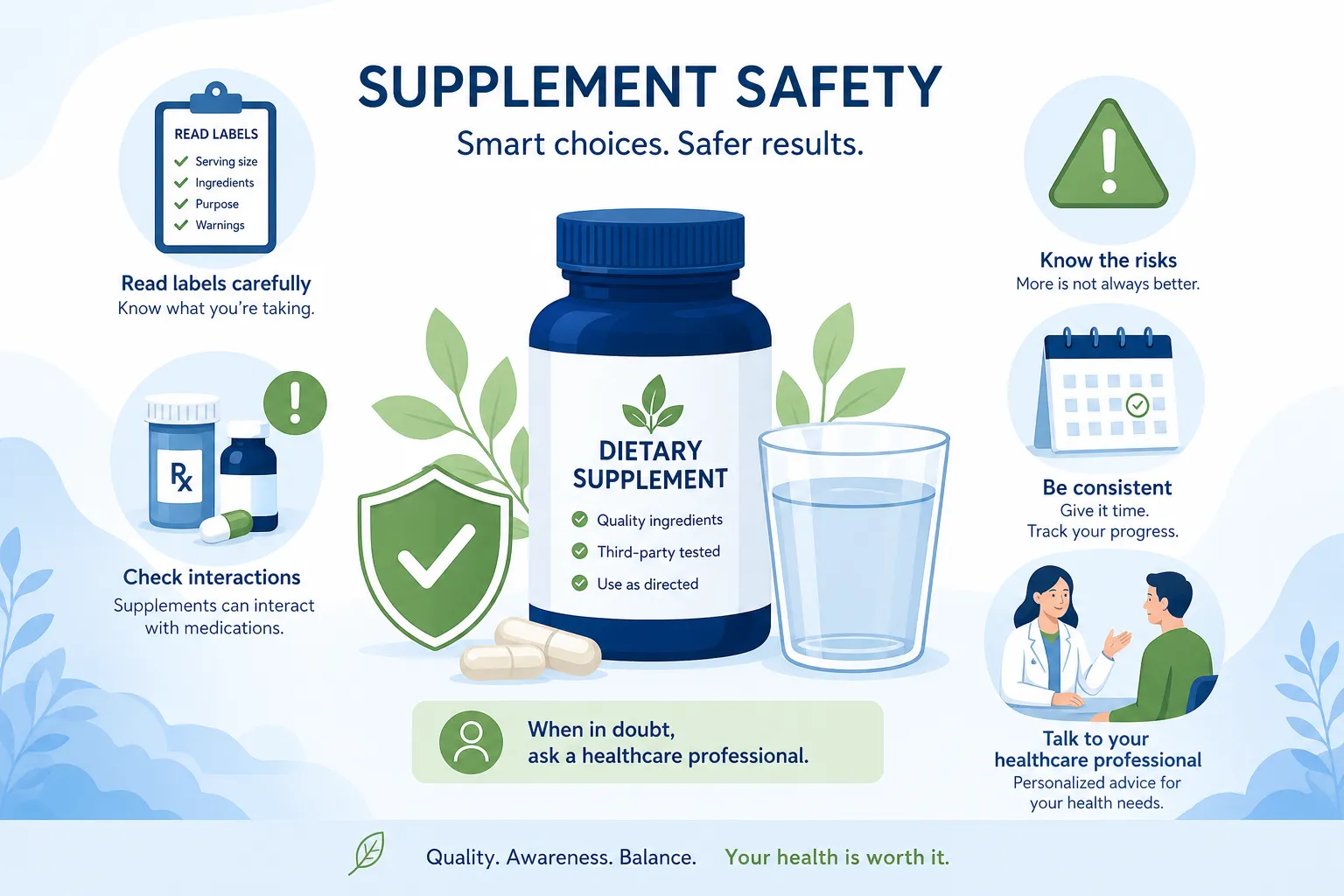
Be especially careful if you:
-
take prescription medicines
-
have high blood pressure
-
are sensitive to caffeine
-
have anxiety or panic symptoms
-
have digestive conditions
-
are pregnant or breastfeeding
-
have a history of disordered eating
-
are under medical supervision for diabetes or obesity
Common safety issues people overlook
Ingredient stacking
You may be taking caffeine from coffee, pre-workout, energy drinks, and a thermogenic blend without realising the total amount.
Timing
Stimulant-heavy products taken later in the day can affect sleep, which may indirectly worsen appetite regulation and energy balance.
“Natural” assumptions
Botanical ingredients can still interact with medicines or cause side effects.
Undereating
Some people become so focused on “weight-loss products” that they neglect overall nutrition quality. Poor energy intake, low protein, and low micronutrient intake can make a plan harder to sustain.
The role of diet and exercise: still the centre of the picture
No supplement changes the fact that weight management works best when the basics are in place:
-
a balanced eating pattern
-
suitable calorie intake for your needs
-
adequate protein and fibre
-
regular physical activity
-
enough sleep
-
realistic timelines
-
repeatable habits
For many adults, improvement starts not with a supplement shelf but with food quality, movement, and consistency. If that is the stage you are in, resources such as start losing weight can be more valuable than another trend-driven product.
A better way to think about “support”
A useful mindset shift is to stop asking, “What supplement will make me lose weight?” and start asking, “What would make my routine easier to maintain well?”
That might be:
-
more fibre-rich meals
-
a better breakfast pattern
-
enough protein across the day
-
fewer liquid calories
-
less reactive snacking
-
better planning for stressful workdays
-
a supplement chosen for a genuine nutritional reason, not an emotional promise
That is a calmer, more sustainable approach – and usually a more effective one too.
Why product quality still matters, even when claims are modest
Even when you take an appropriately cautious view, supplement quality still matters. If you choose to use any wellness product, you want:
-
clear labelling
-
sensible formulation logic
-
appropriate ingredient selection
-
reliable manufacturing standards
-
a trustworthy retailer or brand
-
customer support when you need guidance
InfiniVit’s approach is designed around exactly that: elevated daily nutrition, broad wellness coverage, carefully developed formulas, and options suitable for different dietary preferences including vegan, vegetarian, halal, kosher, and organic choices where available. The goal is not to oversell what supplements can do, but to offer cleaner, more thoughtful choices for adults who care about quality.
Final verdict
Weight management supplements can be easy to buy and hard to interpret. The safest and most useful way to approach them is to treat them as adjuncts, not answers.
The best weight management supplements are rarely the ones making the loudest promises. More often, they are the products that fit a genuine nutritional purpose, sit sensibly alongside diet and movement, and come from a brand that respects evidence, quality, and consumer trust.
If you want support from a UK wellness brand that prioritises premium ingredients, science-led formulation, transparent communication, and high manufacturing standards, explore InfiniVit’s range with realistic expectations and a long-term mindset. Good supplements can support a smart plan – but they should never pretend to be the whole plan.
FAQ
Do weight management supplements actually work?
Some may offer limited supportive value, such as helping with dietary structure or nutrient intake, but they do not reliably produce meaningful weight loss on their own. The biggest drivers of results are still overall diet, calorie intake, physical activity, sleep, and consistency.
What two supplements should never be taken together?
There is no single universal pair, because risk depends on the ingredients and the person taking them. A common issue is stacking stimulant-based products such as thermogenic blends with other high-caffeine supplements, so always check labels and speak to a healthcare professional if you take medication or have a medical condition.
What supplements are recommended for taking Mounjaro?
No supplement is automatically recommended for everyone taking Mounjaro. The priority is usually overall nutritional adequacy – for example, enough protein, fibre, and key nutrients if food intake is reduced – and any supplement choice should be discussed with a qualified healthcare professional.
What is the most effective supplement for losing weight?
There is no single most effective supplement that consistently causes weight loss across the board. Products in this category are often over-marketed, and realistic outcomes usually depend much more on sustainable eating habits, movement, and adherence than on a capsule or powder.
Which supplement burns the most fat?
No over-the-counter supplement should be assumed to burn fat in a meaningful standalone way. Marketing often exaggerates stimulant or botanical blends, but any real-world effect is typically modest, inconsistent, or difficult to separate from changes in diet and activity.
What is the ultimate weight control supplement?
There is no ultimate weight control supplement. A better approach is to focus on a repeatable routine built around balanced nutrition, appropriate calorie intake, activity, sleep, and, where relevant, carefully chosen supplements that support those foundations rather than pretending to replace them.