
 English
 Arabic
 Polish
 Russian
Digestive Health Supplements: What Actually Helps?
Trying to choose between probiotics, fibre, digestive enzymes and “gut health” blends can feel unnecessarily confusing. Many supplements for digestion and gut health sit side by side on a product page, yet they do very different jobs. If your goal is to make a smarter choice rather than buy another generic fix, the key is to match the supplement category to the digestive pattern you are actually noticing.
For many people, the best starting point is not a supplement at all, but a food-first review: fibre intake, hydration, meal pattern, alcohol, stress, activity level and how often ultra-processed or high-fat foods appear in the week. Only after that does it make sense to ask whether probiotics, fibre or digestive enzymes belong in the picture.
At InfiniVit, we believe better supplement choices come from clearer education. That means explaining what each category is for, where it may fit, where it may not, and why quality, formulation and manufacturing standards matter if you do decide to shop for gut support supplements in the UK.
The biggest mistake shoppers make
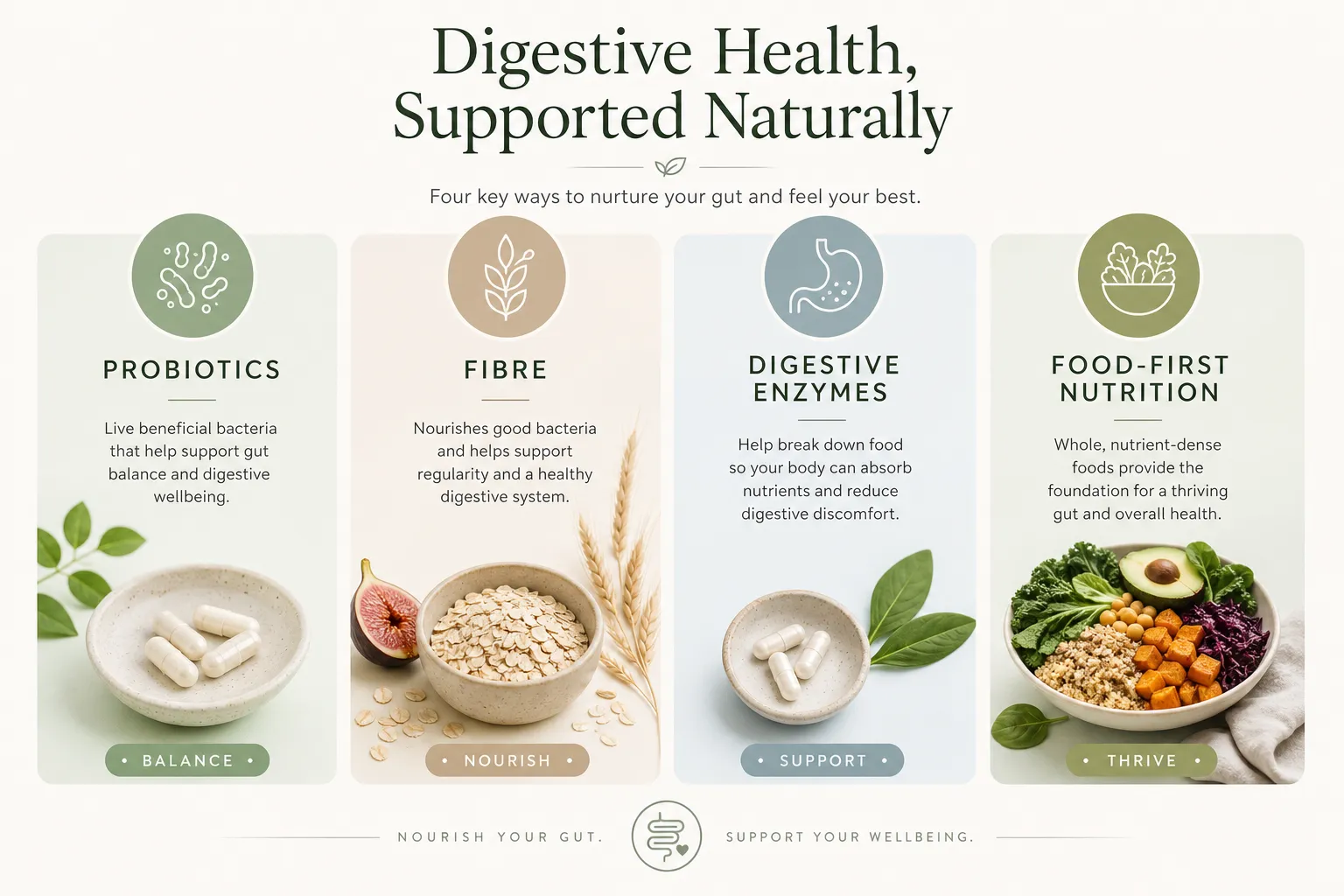
The most common buying mistake is assuming all dietary supplements for digestive health are interchangeable. They are not.
-
Probiotics focus on live microorganisms.
-
Fibre supplements help increase fibre intake and can influence stool consistency and regularity.
-
Digestive enzymes help break down components of food.
-
Food-first changes shape the day-to-day digestive environment everything else sits on.
That is why “best” is the wrong question. The better question is: best for what situation?
This is also why a decision-making guide is more useful than another broad roundup of supplements for gut health and digestion.
Start here: a simple decision framework
Before comparing categories in detail, use this quick filter.
|
What you’re mainly noticing |
First thing to review |
Supplement category that may be relevant |
|---|---|---|
|
Low fruit, veg, pulses, oats or wholegrain intake |
Total daily fibre and fluid intake |
Fibre |
|
Irregular eating, recent travel, routine disruption or after antibiotics |
Overall diet quality and whether a probiotic is appropriate |
Probiotics |
|
Trouble with specific foods, especially around digestion of food components |
Whether the issue seems meal-specific |
Digestive enzymes |
|
Sluggish digestion after heavy, rich or fried meals |
Meal size, fat intake, pace of eating |
Food-first changes first |
|
General digestive discomfort without a clear pattern |
Food diary, hydration, stress, caffeine, alcohol |
Food-first changes before supplements |
A useful next step is learning how antibiotics affect the gut, because context matters when deciding whether a probiotic category is worth exploring.
Food-first changes: the route many people skip too quickly
Before spending money on gut health supplements UK shoppers should often ask a basic question: is the diet giving the digestive system what it needs to work well?
Digestive comfort is heavily influenced by:
-
fibre intake
-
fluid intake
-
meal timing
-
portion size
-
fat intake
-
caffeine and alcohol
-
stress load
-
movement and exercise
The NHS guidance is clear that a fibre-rich diet and good fluid intake are central to digestive health. Fatty and fried foods can be harder to digest for some people, while caffeinated or fizzy drinks may aggravate digestive discomfort in others.
“Aim for the recommended dietary intake of 30g of fibre a day.” – NHS
That single point explains why so many people reach for supplements when the more obvious gap is simply inadequate daily fibre.
When food-first is probably the better starting point
Choose the food-first route first if:
-
your diet is low in plant foods
-
you often skip meals or eat quickly
-
discomfort appears after very rich or fried meals
-
water intake is low
-
your routine has been disrupted by stress, travel or poor sleep
-
you have not yet identified any clear trigger pattern
What food-first changes usually look like
-
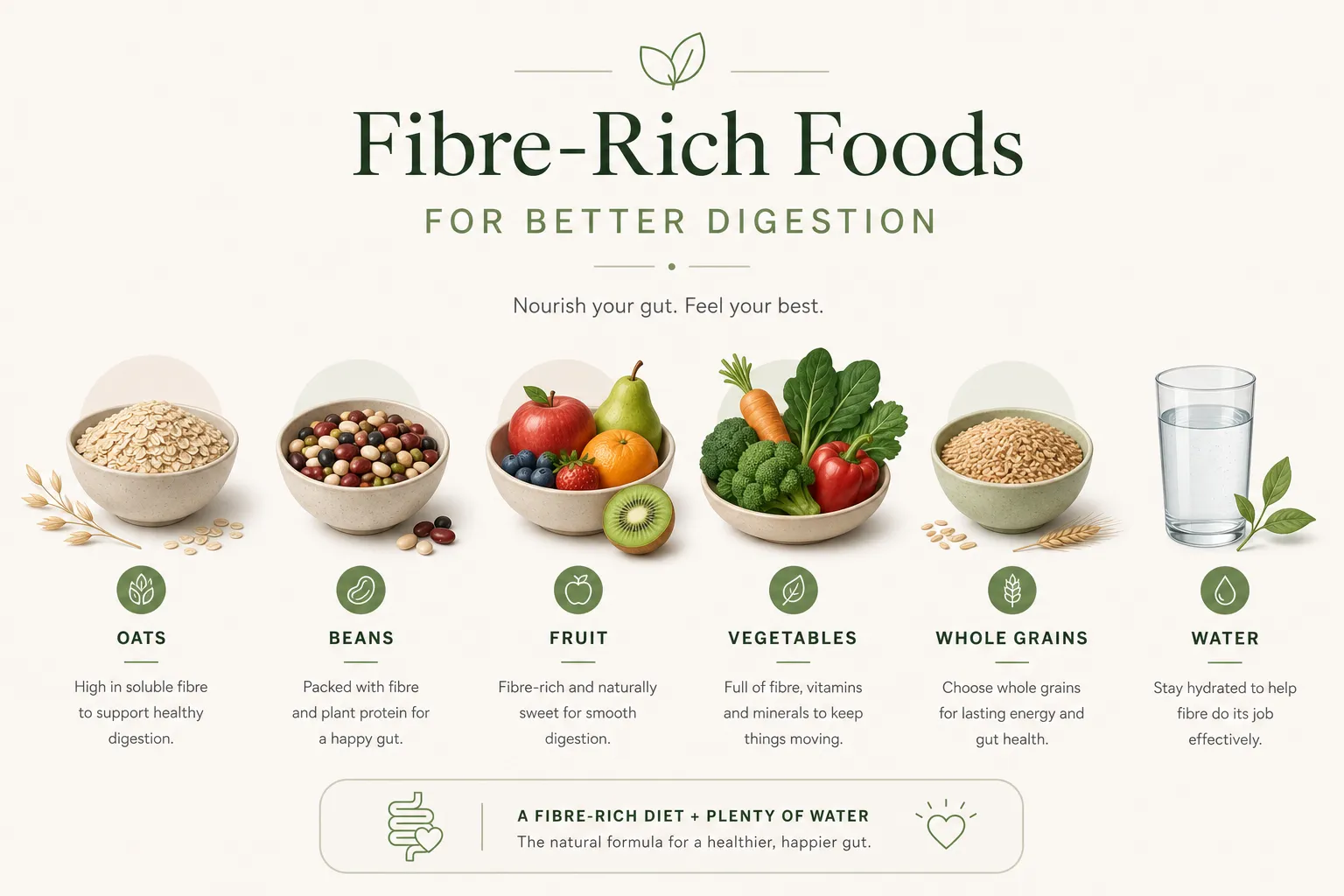
Increase fibre gradually rather than all at once.
-
Add oats, beans, lentils, fruit, vegetables, seeds and wholegrains.
-
Drink more water alongside added fibre.
-
Reduce very greasy or heavily processed meals.
-
Slow your eating pace.
-
Keep a simple food and symptom diary for 1 to 2 weeks.
If you want a practical primer on this area, our guide to fibre for digestion can help you think beyond supplements alone.
Probiotics: when they make sense, and when they do not
Probiotics are often the first thing people think of when browsing gut support supplements. But “probiotic” is a broad category, not a guarantee of a specific outcome in every situation.
What probiotics are
Probiotics are live microorganisms. They are different from digestive enzymes and different from fibre. They do not directly digest your food for you, and they do not replace the need for a balanced diet.
The NHS notes that probiotics may be helpful for some people in some situations, but the evidence does not support every sweeping claim made around them. That is an important distinction in a market full of exaggerated promises.
When a probiotic category may be worth considering
A probiotic may be more relevant if:
-
your digestive routine feels “off” after travel, routine disruption or a diet wobble
-
you have recently taken antibiotics and are rebuilding normal habits
-
you want a live-bacteria product as part of a broader gut-health plan
-
your food-first basics are already reasonably strong
When probiotics may not be the most logical first choice
A probiotic may not be the most obvious route if:
-
your issue appears mainly linked to low fibre intake
-
you react to specific foods and suspect a food-component issue
-
you are looking for immediate results from one capsule alone
-
your meals are consistently low in whole plant foods
What to look for in a probiotic supplement
For better-quality supplements for gut health and digestion, look for:
-
clearly named strains
-
sensible dosing information
-
storage guidance
-
quality manufacturing standards
-
transparent labelling
-
suitability for your dietary preferences, if relevant
A practical example of this category is InfiniBio MAX, which illustrates what a dedicated probiotic product looks like within a wider digestive wellness range.

Fibre supplements: often more relevant than people realise
When shoppers search for digestive health supplements, they often jump straight to bacteria-based products and overlook the category with the clearest day-to-day lifestyle role: fibre.
Why fibre matters
Fibre helps support normal bowel function as part of a healthy diet. But many adults simply do not get enough of it. If your diet is short on wholegrains, pulses, fruit and vegetables, a fibre supplement can sometimes be a practical bridge while you improve the food pattern itself.
This is especially true for busy professionals, frequent travellers and anyone whose meals are convenience-led during the week.
When fibre may be the better fit
A fibre supplement may be more relevant if:
-
your diet is low in plant foods
-
you want support increasing daily fibre intake
-
your eating pattern is inconsistent
-
you are trying to build a more regular routine gradually
How to use fibre more effectively
The biggest mistake with fibre is adding too much too fast. A better approach is:
-
start low
-
increase gradually
-
drink more water
-
give your routine time to adapt
This matters because fibre and water work together. Increasing one without the other is rarely ideal.
For readers comparing fibre options in more depth, psyllium husk and its benefits is a useful related topic, especially when thinking about soluble fibre formats.
What to look for in a fibre supplement
Look for products that make it easy to understand:
-
the type of fibre used
-
the serving size
-
how to introduce it gradually
-
whether it fits your broader routine
-
whether it is suitable for vegan or vegetarian preferences if needed
A practical example in this category is Multi Fibre Complex, which shows what a fibre-focused digestive product can look like when designed as part of a targeted wellness range.
Digestive enzymes: useful in the right context, misunderstood in the wrong one
Digestive enzymes are probably the most misunderstood option in this whole space. They sound like a universal digestive shortcut, but that is not how they work.
What digestive enzymes do
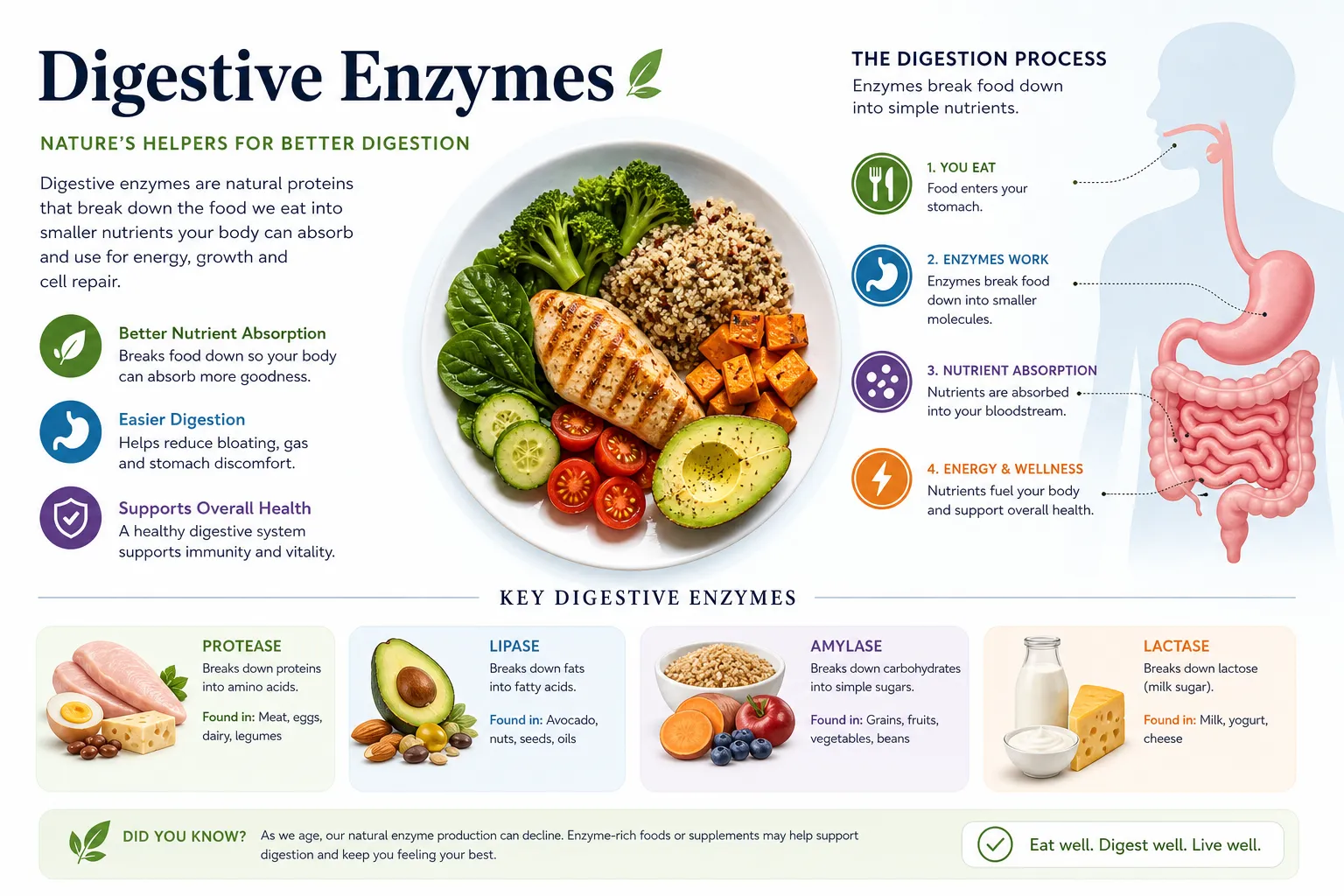
Digestive enzymes are proteins involved in breaking down food components such as carbohydrates, fats and proteins. Your body naturally makes digestive enzymes, with the pancreas playing a major role.
Johns Hopkins explains that healthy people generally do not need enzyme supplements routinely, and that prescription enzyme therapy is used in specific medically diagnosed cases rather than as a general wellness trend.
When digestive enzymes may be the more relevant category
Digestive enzymes may make more sense when:
-
issues seem tied to specific meals rather than your whole week
-
you notice a pattern with certain food components
-
you are looking at meal-specific support rather than broad gut-health support
-
you understand that enzymes do not replace fibre or probiotics
When digestive enzymes are not the answer
Digestive enzymes are less likely to be the best fit if:
-
the underlying issue is an overall poor diet pattern
-
you need more fibre and fluid
-
you are expecting them to “fix” every digestive concern
-
symptoms are ongoing, unexplained or worsening
“Overall, a healthy person really doesn’t need to take digestive enzyme supplements.” – Johns Hopkins Medicine
That quote is valuable because it keeps expectations realistic. Enzymes have a role, but it is narrower than marketing often suggests.
What to look for in digestive enzyme products
Choose products with:
-
clear enzyme disclosure
-
straightforward serving guidance, usually around meals
-
transparent labelling
-
reputable manufacturing standards
A practical example of this category is Digestive Enzymes Plus, which illustrates a dedicated enzyme-based option rather than a broad gut blend.
Probiotics vs fibre vs digestive enzymes: side-by-side
Here is the comparison many readers actually need.
|
Category |
Main role |
Best thought of as |
Usually makes more sense when |
Usually makes less sense when |
|---|---|---|---|---|
|
Probiotics |
Live microorganisms |
A microbiome-focused option |
Routine disruption, post-antibiotic context, general gut-balance interest |
The real issue is low fibre intake or poor food habits |
|
Fibre |
Helps increase dietary fibre intake |
A foundational nutrition support |
Diet is low in plant foods, routine is inconsistent |
The issue is clearly meal-specific rather than diet-wide |
|
Digestive enzymes |
Help break down food components |
A meal-specific support category |
Symptoms seem linked to particular meals or food components |
You want a broad “gut reset” without fixing the basics |
|
Food-first changes |
Improves the whole digestive environment |
The default first step |
There is no clear supplement fit yet |
You have already addressed basics and need more targeted support |
What competitor-style articles usually miss
Many ranking articles cover “top gut supplements” but gloss over the actual buying decision. They often fail to explain:
-
that low fibre intake may be the most obvious gap
-
that probiotics, fibre and enzymes are not substitutes for one another
-
that enzymes are not automatically necessary for healthy people
-
that food pattern and hydration often deserve first attention
-
that product quality and formulation standards matter as much as the category itself
This is where a science-led, decision-focused approach matters. At InfiniVit, we see premium supplementation as part of a broader wellness strategy, not a shortcut around basics. That is why quality markers such as UK manufacturing partnerships, GMP and ISO9001-led standards, transparent formulations and dietary preference options matter when evaluating products in any category.
How to choose higher-quality digestive support products
Not all gut health supplements UK shoppers find online are equal. A thoughtful formula should be supported by careful sourcing, clear labelling and realistic communication.
Look for these quality markers
-
transparent ingredient listing
-
no exaggerated disease-style claims
-
clear category purpose
-
reputable manufacturing
-
suitability for your dietary needs
-
science-led formulation logic rather than trend-chasing
If you want a broader framework for comparing supplement standards, our guide on how to judge supplement quality in the UK is worth reading before you buy.
When to pause the supplement search and get advice
Supplements should not be used to self-manage persistent or concerning digestive symptoms indefinitely.
Speak to a healthcare professional if you have:
-
unexplained weight loss
-
blood in the stool
-
persistent abdominal pain
-
ongoing digestive changes that do not settle
-
symptoms that are worsening rather than improving
This matters because not every digestive concern belongs in the supplements aisle.
Final verdict
If you are comparing supplements for digestion and gut health, the smartest choice depends on the pattern behind your symptoms rather than the popularity of the category.
-
Choose food-first changes when the basics are clearly not in place.
-
Choose fibre when intake is low and daily structure needs support.
-
Consider probiotics when you want microbiome-focused support within a broader wellness plan.
-
Consider digestive enzymes when the issue appears meal-specific or tied to certain food components.
The real win is not finding the trendiest product. It is understanding what each category is designed to do and choosing accordingly. That is the approach InfiniVit stands for: premium-quality, science-led wellness support built on trust, clarity and higher standards, so customers can shop with more confidence and less confusion.
FAQ
Do digestive supplements actually work?
They can help, but only when the supplement category matches the reason you are taking it. Fibre, probiotics and digestive enzymes all have different roles, so results depend on choosing the right type and not expecting one product to do everything.
Do supplements actually help gut health?
Some can, especially when used alongside a balanced diet, good hydration and consistent habits. In many cases, food-first changes and better fibre intake should be reviewed before relying on a supplement alone.
Is it worth taking gut health supplements?
It can be worth it if you have identified a clear need, such as low fibre intake, interest in a probiotic category or a meal-specific reason to consider enzymes. It is less worthwhile if the basics of diet, fluids and routine have not been addressed first.
What are signs you need digestive enzymes?
Digestive enzymes are usually more relevant when symptoms seem linked to specific meals or food components rather than your digestion overall. If symptoms are persistent, unexplained or worsening, seek professional advice instead of self-diagnosing.
Is there a downside to taking digestive enzymes?
Yes, they can be the wrong tool for the job if the real issue is low fibre intake, poor eating habits or an unrelated digestive concern. They may also create false confidence if used in place of getting proper advice for ongoing symptoms.