
 English
 Arabic
 Polish
 Russian
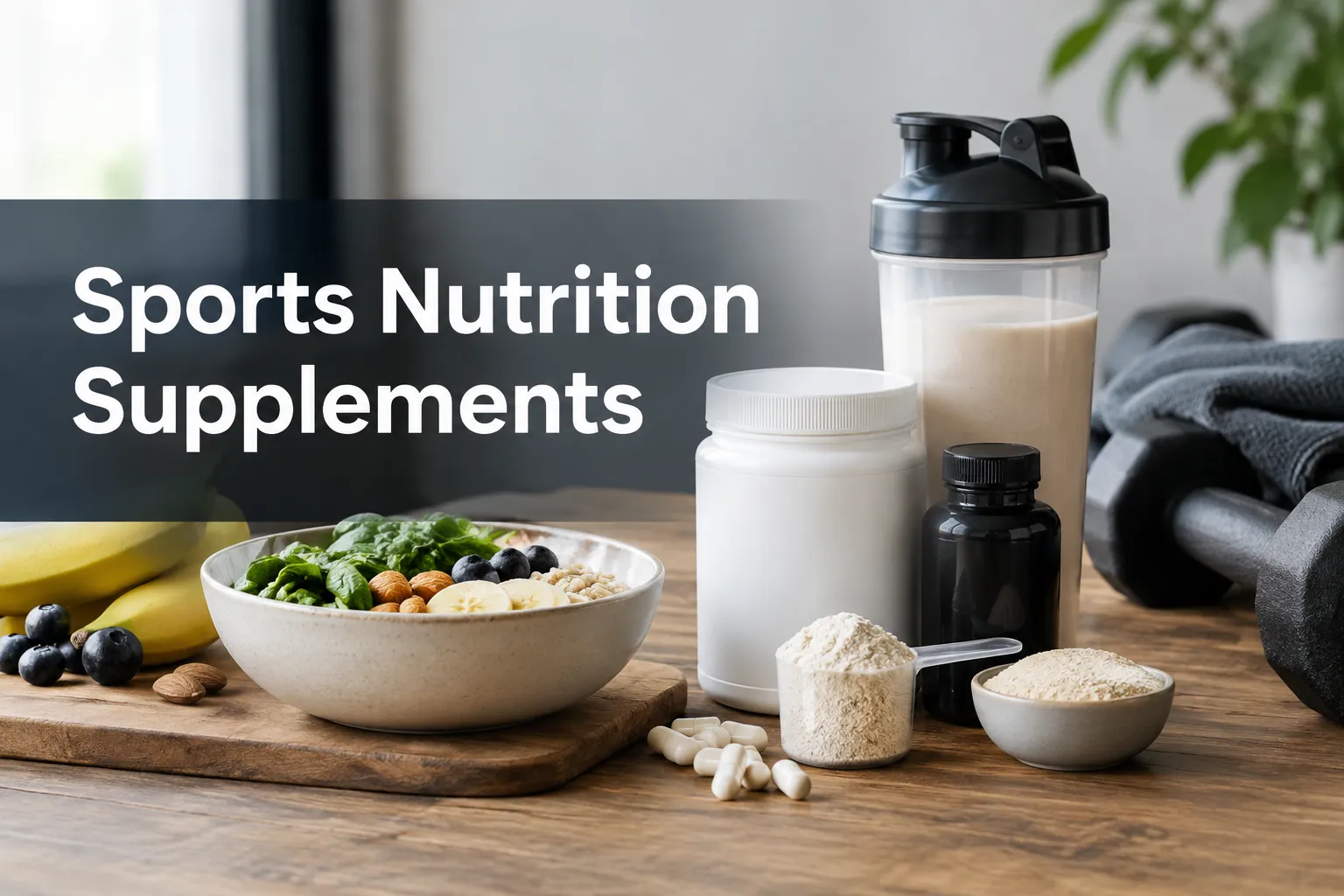
Sport nutrition starts with enough food, fluid and a training plan you can sustain. Buy a supplement to solve a specific problem: you need an easy protein portion, a measured creatine intake or a portable drink for a long, sweaty session. Most UK gym-goers can skip the large stack of powders. Athletic performance depends on the whole routine, not the label of one product.
The video runs through common supplements. Your diet and the product label still decide whether any of them belongs in your basket.
Start with your diet, not a supplement shelf
Look at what your meals already provide before comparing sports nutrition supplements. Protein foods, carbohydrate-rich meals, fruit and vegetables, and fluids do most of the everyday work. A shake helps on a busy day, but it cannot make up for eating too little over time.
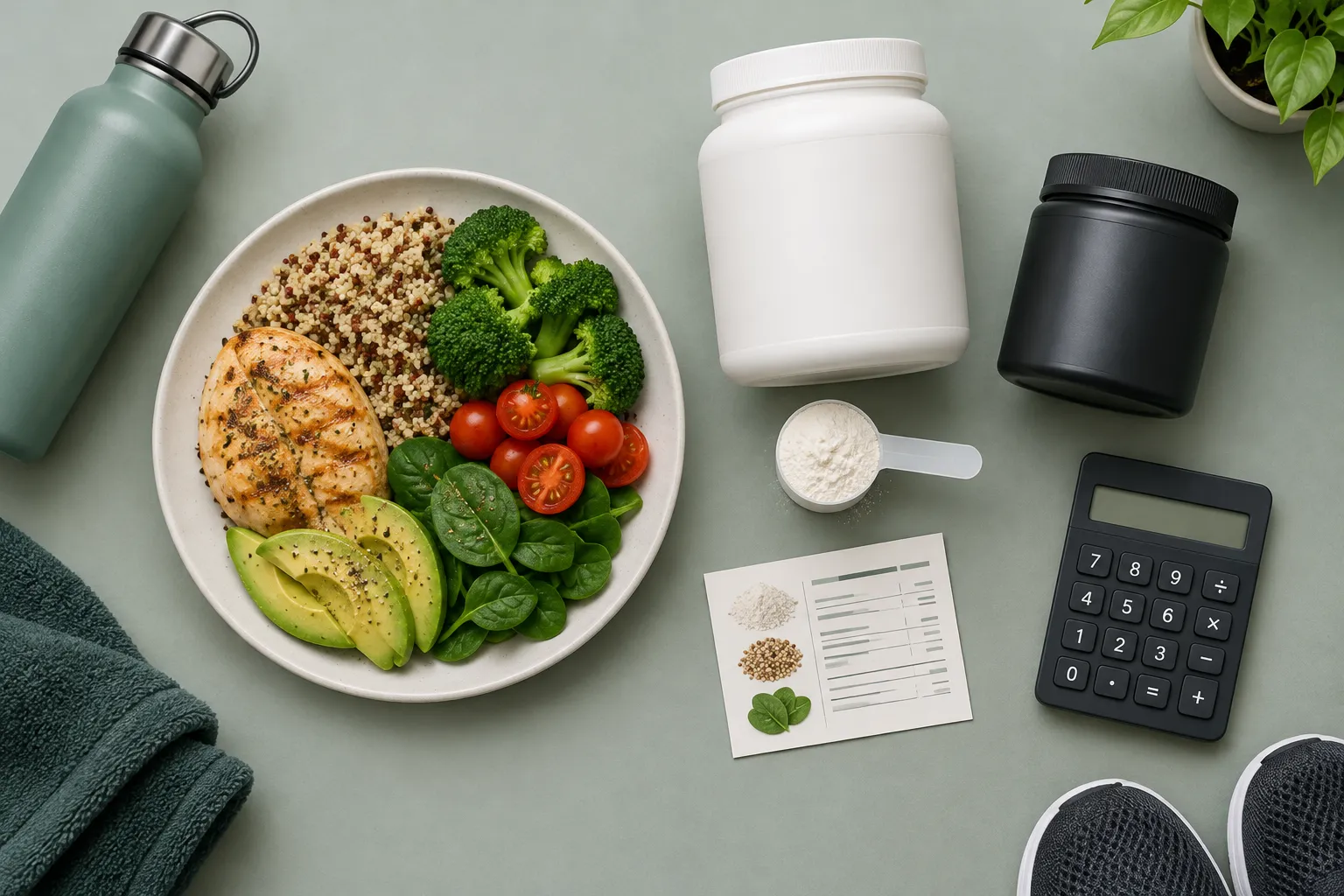
Consider a day when work takes up the time you would normally use for a protein-containing meal: a powder could help. If you start a short workout well fed, water and your next meal may be enough. During a longer endurance session, portable carbohydrate and fluid become more useful.
|
Your situation |
Food-first option |
When a supplement may be useful |
|---|---|---|
|
You miss protein at breakfast or after training |
Yoghurt, eggs, tofu or a sandwich |
A measured protein shake when a meal is inconvenient |
|
You feel under-fuelled during a long session |
Eat a carbohydrate-containing meal beforehand |
A portable carbohydrate drink or gel when carrying food is impractical |
|
You train in heat or sweat heavily |
Drink to thirst and eat normal meals |
An electrolyte drink if replacing fluid and sodium is difficult |
|
You want a daily creatine routine |
Meat and fish supply some creatine |
A clearly dosed creatine monohydrate product for a consistent intake |
Sport nutrition: match the supplement to the job
The term sport nutrition covers products that do different jobs. Match the ingredient to the need you identified rather than buying on the strength of a tub’s front label.
Protein powders: convenience, not a replacement for meals
Compare grams of protein per serving rather than scoop weight. Whey comes from dairy; pea, brown rice and hemp powders may suit a plant-based diet. Read the protein amount, allergens, flavouring and serving count on the pack. A blend’s value still depends on what each portion supplies.
“Athletes participating in strength and endurance sports have a higher requirement for protein (approximately 1.4-2.0 g/kg/day)” – British Dietetic Association
Powder earns its place when a protein-containing meal is difficult to fit in. InfiniVit’s Whey Protein Powder is a dairy option; its Pea Protein Powder and Hemp and Herbs Protein Powder offer plant-based choices. Compare their protein amounts and ingredient lists. If your meals already meet your needs, a second shake is a convenience.
Creatine: choose the form and the amount
Creatine monohydrate has a substantial evidence base. Decide on it separately from protein powder, which supplies dietary protein. Look for the grams of creatine monohydrate in the daily serving; the total weight of a flavoured scoop could include other ingredients. A single-ingredient powder makes the dose and cost easier to calculate.
If you have a medical condition, take medication or are pregnant, seek individual clinical advice before starting a new supplement. Follow the product directions rather than doubling a serving because you missed a day.
Pre-workout and caffeine: account for the whole day
Pre-workout blends can combine caffeine with other ingredients. If you want the caffeine, count the stated milligrams per serving alongside your coffee, tea, energy drinks and other supplements that day. Taking a stimulant late may disrupt sleep. Two equally sized scoops can also contain different amounts of caffeine.
An ingredient list marked “proprietary blend” gives you little basis for comparing individual amounts. If caffeine is all you want, coffee is another option.
BCAAs and post-workout blends: look for a real gap
Branched-chain amino acid products supply selected amino acids. A meal or complete protein supplies a wider range of nutrition. If you already eat enough protein across the day, compare a BCAA serving with the cost of complete protein. For a post-workout blend, look at the protein, carbohydrate and other ingredient amounts, then consider whether you would prefer a meal.
You can assess InfiniVit’s Regenerate post-workout product on the same basis. A suitable meal may be the better choice for you.
Hydration products: match them to the session
For everyday gym sessions, water and normal meals are often sufficient. Drinks marketed for hydration vary: some provide electrolytes, some carbohydrate, and some both. Read the sodium and carbohydrate figures on the prepared serving, not just the number of tablets or sachets. A zero-sugar electrolyte drink is not a fuel source for a long session.
Compare labels and cost per useful serving
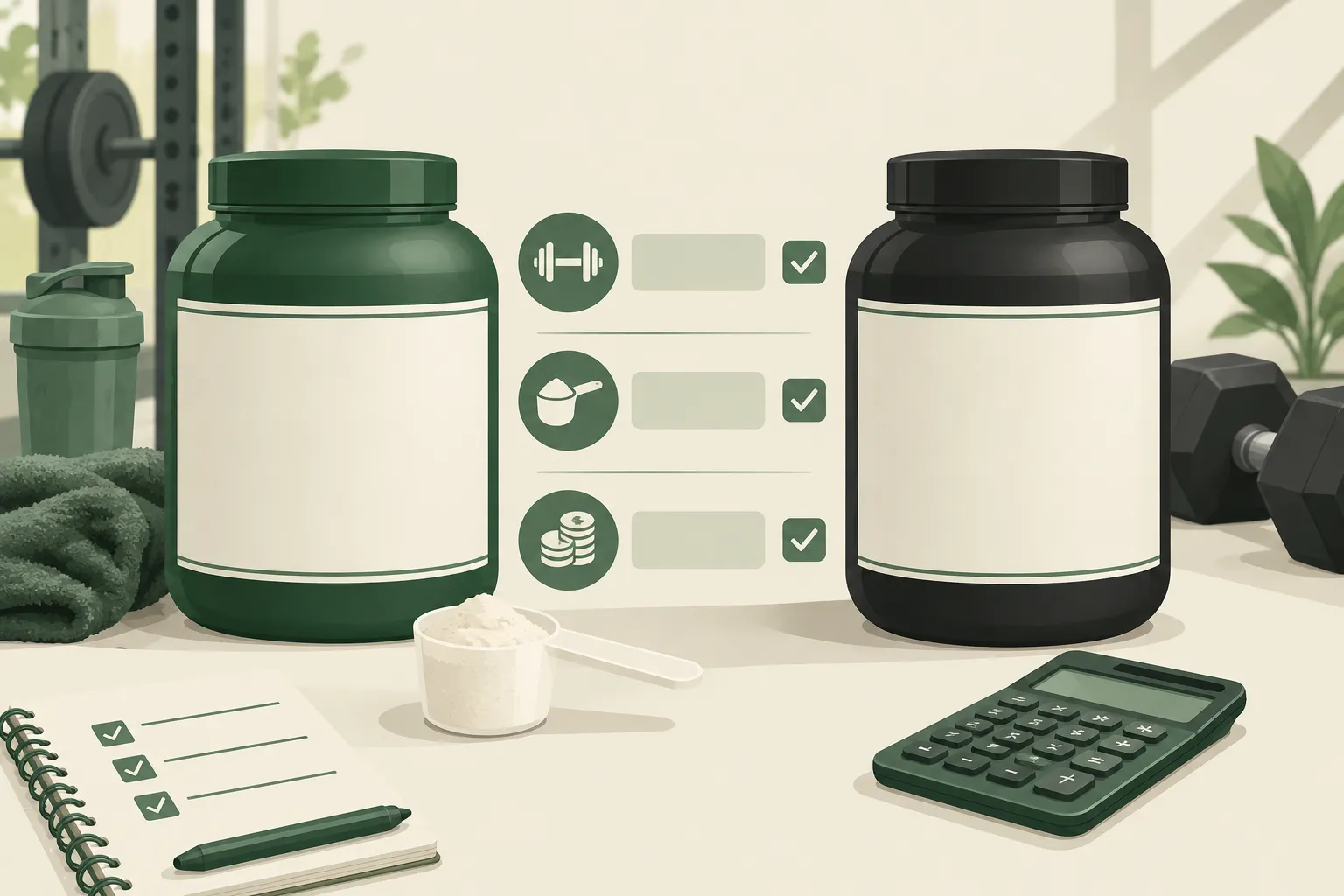
Two tubs can share a price and deliver different amounts of protein or creatine. Work out the cost of the ingredient you need before choosing a flavour or pack size.
|
Product |
Useful comparison |
Calculation |
|---|---|---|
|
Protein |
Cost per 25 g of protein |
Pack price ÷ total grams of protein × 25 |
|
Creatine |
Cost per 5 g of creatine monohydrate |
Pack price ÷ total grams of creatine monohydrate × 5 |
|
Caffeinated pre-workout |
Cost per labelled serving at the caffeine amount you intend to use |
Pack price ÷ number of those servings |
|
Hydration mix |
Cost per prepared drink with the stated sodium and carbohydrate |
Pack price ÷ number of prepared drinks |
Suppose a £30 tub contains 600 g of protein in total. That works out to £1.25 per 25 g (£30 ÷ 600 × 25). The numbers illustrate the calculation; they are not a product price. Price per scoop can conceal a much smaller protein portion.
For a blend, calculate from the ingredient you want rather than the full mixture’s weight. Use the labelled protein across the pack for a protein comparison, or separate the creatine weight from flavourings and other ingredients. That is how a cheap-looking scoop can turn out to cost more per useful portion.
Read the serving instructions, allergen declaration and suitability information too. “Plant-based” does not cover every allergy, and the weight of a powder tells you little about its protein content. If you need vegan, halal, kosher or organic products, use the suitability details for that product; one label cannot speak for a whole range.
Quality standards and anti-doping are different questions
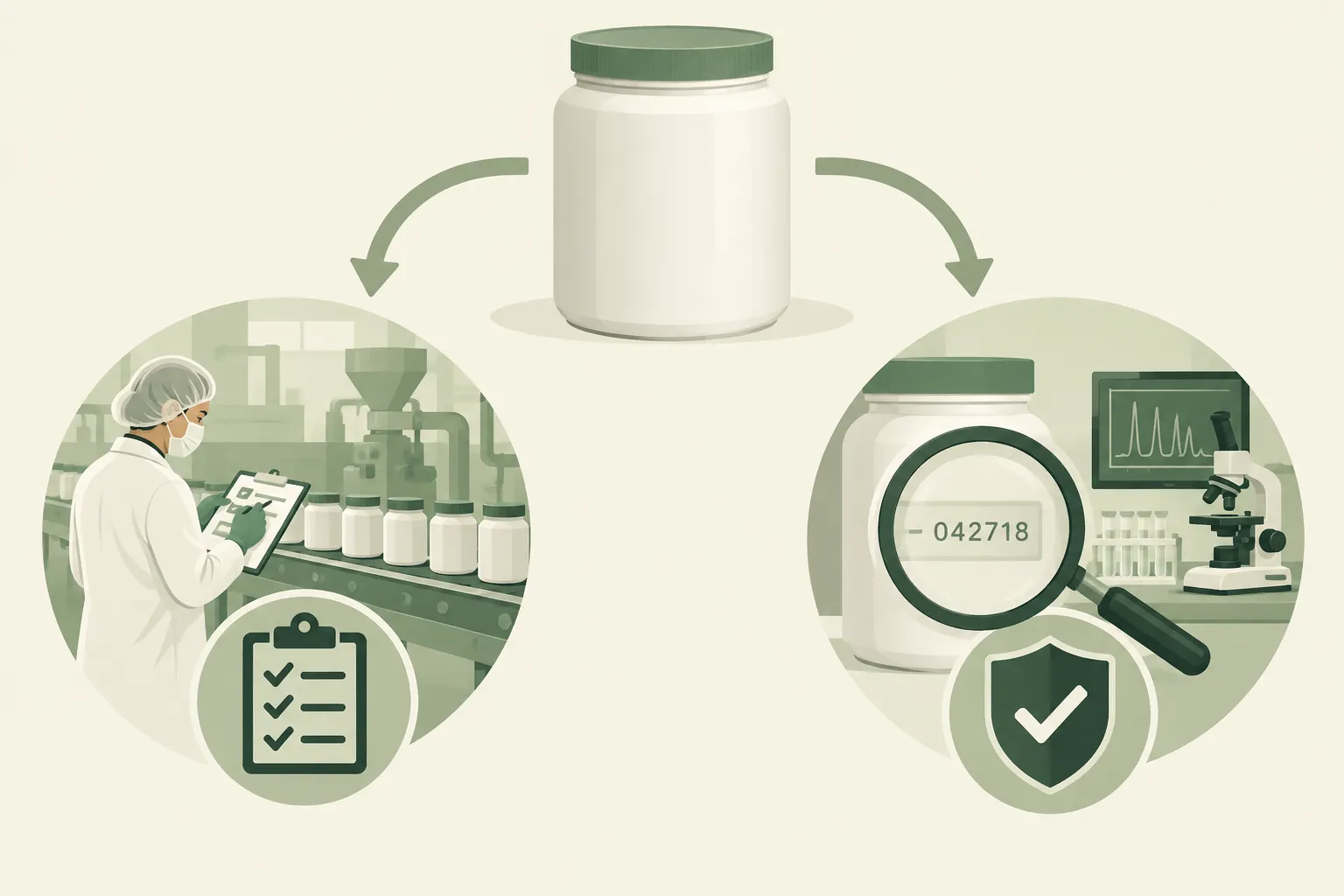
GMP and ISO 9001 concern production practices and quality management. Neither tells you whether anyone screened the batch in your hand for substances banned in sport. Contamination is possible even when the label looks straightforward.
“Athletes are responsible for prohibited substances found in their system, regardless of how they got there or whether they intended to cheat.” – UK Anti-Doping
If anti-doping rules apply to you, first decide whether you need the supplement. If you do, look for independent batch testing and match the record to the number on your pack, as UK Anti-Doping advises. Testing reduces risk without guaranteeing zero risk. Keep the packaging and batch details, and talk through supplement use with your team dietitian or governing-body support service. A general manufacturer quality statement is not an anti-doping certificate.
A factory can follow a quality system even when a product has no independent screening for banned substances. UK Anti-Doping’s supplement-risk guidance recommends batch testing as a way to reduce, never eliminate, the risk for athletes who decide to take a supplement.
Other buyers can judge a product more easily when it states ingredient doses, allergens and clear claims. Grand promises and undisclosed blend amounts deserve a closer look, regardless of the packaging. InfiniVit’s guide to judging supplement quality in the UK explains manufacturing claims in more detail.
A sensible UK buying order
-
Identify the problem: is it finding time for a meal, keeping a daily creatine routine, managing caffeine, or carrying fluid and fuel for a long session?
-
Try solving it with food and drink. If that works consistently, you do not need a powder.
-
Compare the relevant amount on each label: protein or creatine in grams, caffeine in milligrams, or sodium and carbohydrate in the prepared drink.
-
Calculate cost per useful portion, then consider allergens and dietary suitability.
-
If anti-doping rules apply, scrutinise the product and batch record. General manufacturing assurances cannot replace that step.
The verdict is to buy for a clear gap, not for a bigger supplement cupboard. InfiniVit is worth considering if you want to compare whey and plant-based powders alongside other wellness options in one shop. Start with the product whose ingredients and serving suit your diet; keep your money for meals if food already does the job.
FAQ
What is sports nutrition?
Sports nutrition is the use of food, fluids and, when useful, supplements to meet the demands of exercise. For most people, regular meals and adequate fluid come before powders or drinks.
What is the best sports nutrition brand?
There is no single best brand for every diet, budget and training need. Compare the ingredient amount, cost per useful serving and dietary suitability; if you are under anti-doping rules, assess independent testing for the exact product and batch.