
 English
 Arabic
 Polish
 Russian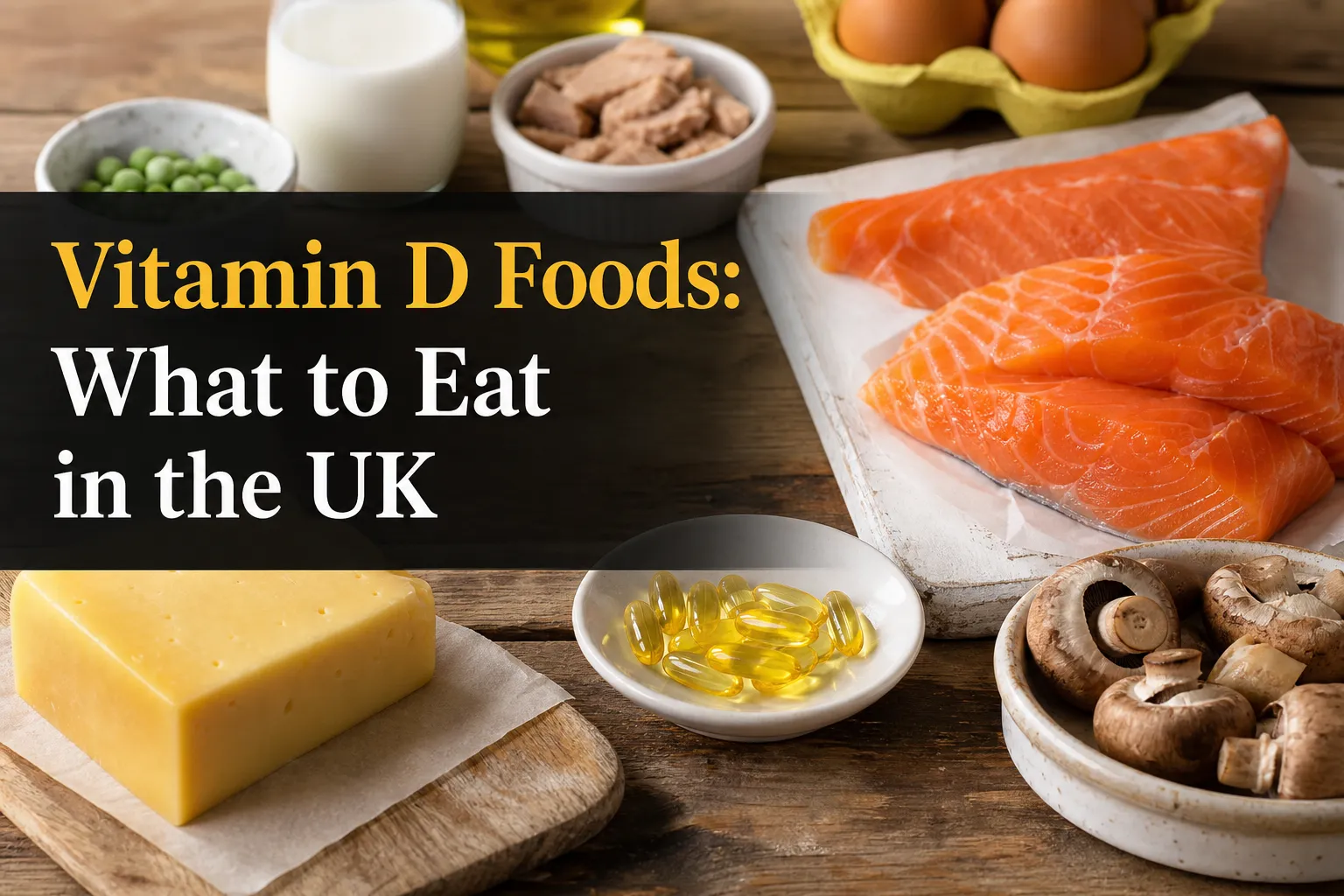
Vitamin D Foods: What to Eat in the UK
If you want to improve your vitamin D intake through food first, the honest answer is simple: you can help your intake with the right foods, but it is not always easy to reach recommended levels from diet alone in the UK. That is why a practical approach matters more than a perfect one.
Vitamin D supports the normal function of the immune system and contributes to the maintenance of normal bones, teeth and muscle function. But unlike nutrients that are easy to build into every meal, vitamin D is found naturally in only a small number of foods. In the UK, sunlight also plays a major role for part of the year, which changes how much pressure your diet needs to carry.
This guide focuses on realistic vitamin D foods, what counts as a meaningful source, where fortified foods can help, and when food alone may still leave a gap.
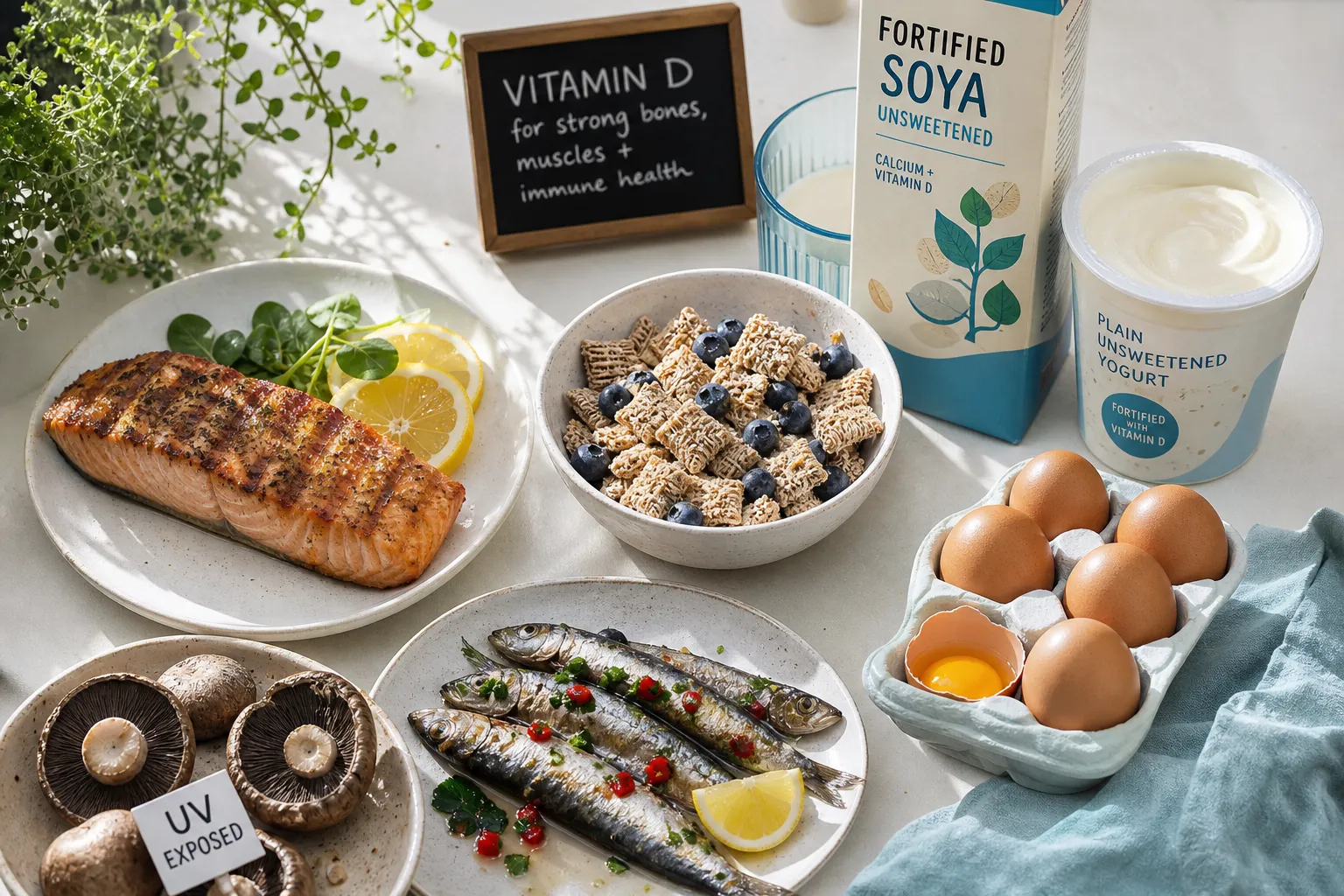
The key thing to know before planning your diet
Vitamin D is unusual because food is only one part of the picture. According to the NHS, from late March or early April to the end of September, most people in the UK should be able to make the vitamin D they need from sunlight. Between October and early March, that becomes much harder, so diet and fortified foods matter more.
That seasonal reality is why many people search for vitamin D food sources expecting a long list, then discover the list is actually quite short.
A useful mindset is this:
-
aim to include natural sources regularly
-
use fortified foods strategically
-
understand that food-first is sensible, but not always sufficient on its own
For a broader overview of sunlight, guidance, and daily needs, see our guide to vitamin D benefits for UK adults.
How much vitamin D do you need?
NHS guidance states:
-
Adults and children from age 1 year: 10 micrograms (mcg) a day
-
Babies up to 1 year: 8.5 to 10 micrograms a day
It is also worth knowing the conversion:
-
10 mcg = 400 IU
That daily target helps put foods into perspective. Some foods contribute well, but many provide only a modest amount per portion.
Why vitamin D foods are harder to get right than people expect
Many articles list eggs, meat and mushrooms as if they all contribute equally. In practice, they do not.
The biggest content gap in most guides is portion realism. A food may technically contain vitamin D, but that does not mean it delivers enough to make a major difference in your day.
Here is the practical hierarchy:
-
Oily fish are the strongest natural food sources.
-
Fortified foods can help top up intake in a predictable way.
-
Eggs, red meat and liver contribute smaller amounts.
-
Mushrooms can vary greatly depending on whether they were exposed to UV light.
The best vitamin D foods in a UK diet
Oily fish
Oily fish are among the most useful natural high vitamin D foods available in the UK.
Common options include:
-
salmon
-
sardines
-
mackerel
-
herring
-
trout
These foods are valuable because they can provide meaningful amounts in a normal portion, not just on paper.
The British Heart Foundation notes approximate amounts per 100g such as:
|
Food |
Approximate vitamin D per 100g |
|---|---|
|
Herring, grilled |
16.1 mcg |
|
Salmon, steamed |
9.3 mcg |
|
Mackerel, grilled |
8.5 mcg |
|
Sardines, canned in brine |
3.3 mcg |
A salmon or mackerel meal can therefore make a serious contribution towards the 10 mcg daily target.
Eggs
Egg yolks contain vitamin D, but in smaller amounts than many people assume. One egg provides roughly 1.7 mcg.
That makes eggs useful, but not a complete solution on their own. They work best as part of a wider pattern rather than as your main strategy.
Mushrooms exposed to UV light
Mushrooms are often mentioned in lists of vitamin D3 foods, but this needs clarification. Mushrooms exposed to UV light provide vitamin D2, not vitamin D3.
That does not make them unhelpful. It simply means they are a different form of vitamin D. If the pack says the mushrooms are “high in vitamin D” or UV-exposed, they can contribute far more than standard mushrooms. If it does not, the vitamin D content may be minimal.
This is especially useful for people following plant-based diets, where naturally occurring vitamin D sources are more limited.
Red meat
Red meat contains small amounts of vitamin D, but usually less than 1 mcg per 100g. It can contribute a little, though it is not one of the strongest vitamin d food sources.
In other words, it belongs in the “small helper” category rather than the “build your intake around this” category.
Liver
Liver contains vitamin D, but again not usually in standout amounts compared with oily fish. It may suit some diets, but it is not ideal for everyone, and pregnant women are generally advised to avoid it because of its high vitamin A content.
Fortified foods: where many UK diets quietly make progress
Fortified foods deserve more attention than they usually get. In a real UK eating pattern, they are often what turns a low-vitamin-D day into a decent one.
Common fortified options may include:
-
breakfast cereals
-
fat spreads
-
plant milks
-
yogurts or yogurt alternatives
-
some juices
The important point is that fortification varies by brand and product, so there is no shortcut around checking the label.
In the UK, cow’s milk is generally not fortified with vitamin D, unlike in some other countries. That catches many people out.
How to use fortified foods well
A sensible approach is to build one or two fortified items into your regular routine, such as:
-
fortified cereal at breakfast
-
fortified plant milk in porridge, coffee or smoothies
-
fortified spread on toast
-
fortified yogurt as a snack
On their own, these may not guarantee 10 mcg every day. Together, they can make your intake much more consistent.
If you are trying to build a stronger overall daily routine, our article on what supplements should you take daily also explains how to think about nutrients in the context of everyday habits, not just isolated foods.
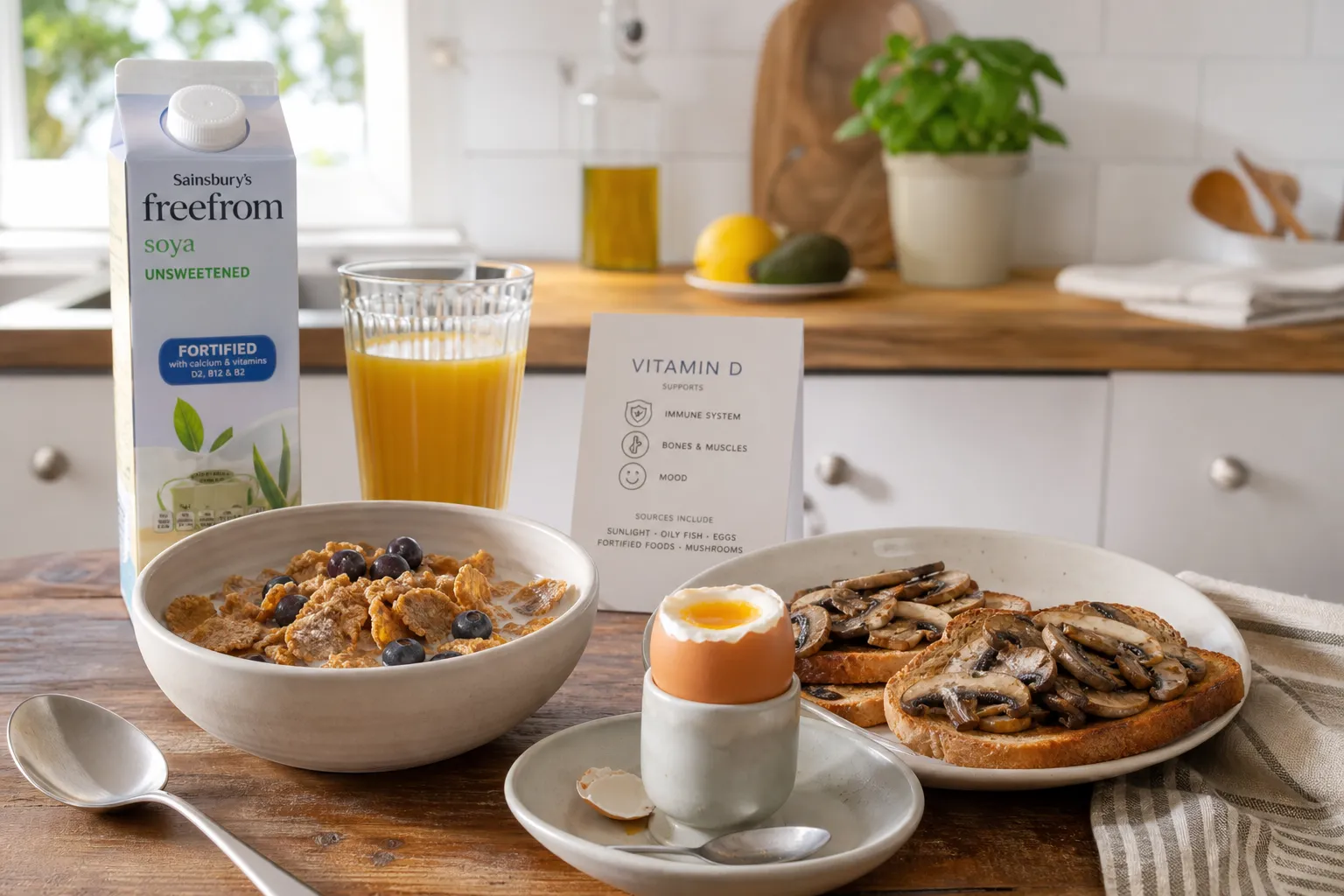
A realistic look at what a day of vitamin D eating might provide
Here is what a food-first day could look like.
|
Meal |
Example |
Likely vitamin D contribution |
|---|---|---|
|
Breakfast |
Fortified cereal with fortified plant milk |
Low to moderate |
|
Lunch |
Eggs on toast |
Low |
|
Snack |
Fortified yogurt alternative |
Low to moderate |
|
Dinner |
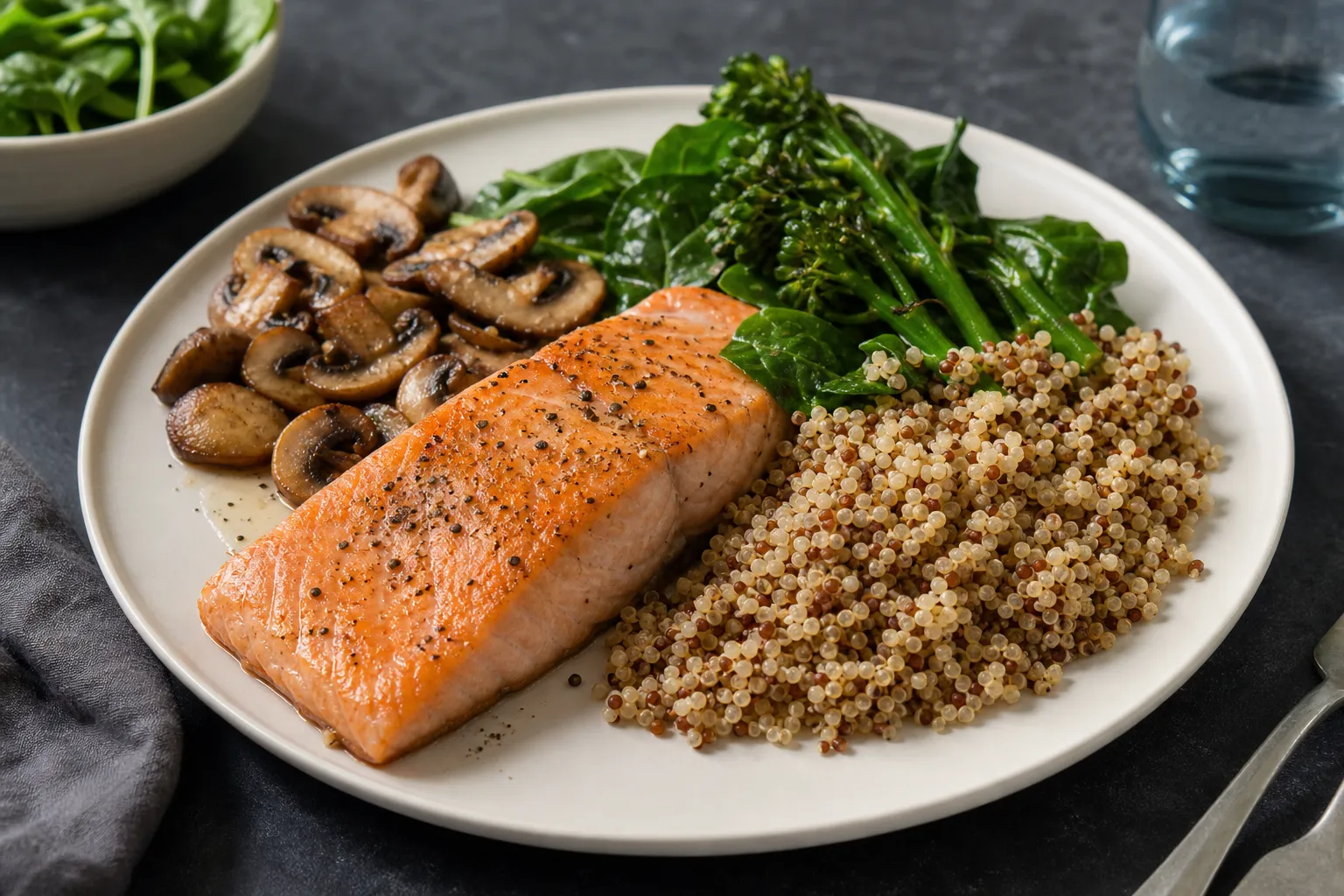
Salmon with mushrooms and greens |
Moderate to high |
This shows why dinner often does the heavy lifting. Without oily fish or a particularly well-fortified combination of foods, many days still fall short.
Can you get enough vitamin D from food alone?
Sometimes yes, often not consistently.
That is the most honest answer.
A person who regularly eats oily fish and uses several fortified foods may be able to come close or meet the target on some days. But many people in the UK do not eat oily fish often enough, and fortification is not universal across everyday foods.
This is one reason national guidance continues to emphasise seasonal vitamin D advice.
“Data from the National Diet and Nutrition Survey … shows that mean vitamin D intakes from dietary sources were below the RNI (10µg or 400 IU per day) in all age groups.” – GOV.UK, Office for Health Improvement & Disparities
That is a powerful reminder that the problem is not usually knowing that vitamin D matters. It is that normal UK eating patterns do not always supply enough of it.
Natural foods vs fortified foods: which matters more?
Both matter, but they play different roles.
Natural foods are best for concentrated intake
If your goal is to raise intake meaningfully through meals, oily fish is your strongest option. This is where the most substantial natural vitamin D comes from.
Fortified foods are best for repeatability
Fortified foods help because they are easier to repeat daily. You may not eat salmon three or four times a week, but you might have the same cereal, spread or milk alternative every morning.
That makes them useful from a behaviour point of view, even if each item contributes only a moderate amount.
Vitamin D2 and vitamin D3 in foods
People often look specifically for vitamin d3 foods, but in real diets both forms may appear.
Vitamin D3 foods
Vitamin D3 is typically found in foods of animal origin, including:
-
oily fish
-
egg yolks
-
meat
-
liver
Vitamin D2 foods
Vitamin D2 is more likely to come from:
-
UV-exposed mushrooms
-
foods fortified with vitamin D2
Government review work suggests vitamin D3 may be somewhat more effective than D2 in raising blood vitamin D levels, but both forms can contribute to vitamin D status.
For a practical guide to daily timing and routine, you may also like the best time to take vitamin D in the UK.
The food sources most people overestimate
A useful way to avoid frustration is to know which foods are commonly overstated.
Eggs
Helpful, but modest.
Red meat
Contains some vitamin D, but usually not enough to transform intake.
Standard mushrooms
Often low unless specifically UV-exposed.
Cow’s milk in the UK
Often assumed to be fortified, but usually is not.
These are still worth including if they suit your diet. They just should not be mistaken for powerhouse sources.
The foods most people underestimate
Sardines
Affordable, convenient and nutrient-dense.
Herring and mackerel
Often overlooked compared with salmon, but excellent contributors.
Fortified plant milks
Very practical if used daily.
Fortified cereals and spreads
Not glamorous, but often useful in real life.
A practical UK food strategy for vitamin D
If you want to improve your intake without overcomplicating it, this is a sensible framework:
1. Eat oily fish regularly
Aim to include options like salmon, sardines, mackerel or herring across the week if they fit your diet.
2. Check labels on fortified foods
Do not assume. Look for the actual vitamin D amount per serving.
3. Use repeatable habits
A fortified breakfast is easier to sustain than a perfect but inconsistent plan.
4. Be realistic about smaller sources
Eggs and meat help, but they are supporting players.
5. Think seasonally
Food becomes more important when sunlight contribution drops.
Who may find food-first especially challenging?
Some groups may find it harder to rely on food alone, including:
-
people who rarely eat fish
-
people following vegan diets
-
people with limited diet variety
-
people who do not use fortified foods regularly
-
people with higher risk of low vitamin D status due to minimal sunlight exposure or darker skin
This does not mean a food-first approach is pointless. It means expectations should be realistic.
“The low uptake of vitamin D supplements in the UK suggests that recommendations for vitamin D supplement intake are not reaching the UK population.” – GOV.UK, Office for Health Improvement & Disparities
What an evidence-led, food-first approach looks like
At InfiniVit, we believe wellness guidance should be practical, transparent and grounded in credible standards. That means being honest when a nutrient is easy to cover through food, and equally honest when it is not.
With vitamin D, the evidence points to a balanced conclusion:
-
food absolutely helps
-
some foods are genuinely useful
-
fortified foods matter more than many people realise
-
a UK diet can support vitamin D intake, but often does not fully cover it every day
That kind of nuance is far more helpful than pretending every food list solves the problem.
Final thoughts
If you want to improve vitamin D intake through diet, focus on what makes the biggest real-world difference: oily fish, UV-exposed mushrooms, and well-chosen fortified foods.
The strongest natural vitamin D foods are not endless, but they are workable. The key is to stop treating all sources as equal. Salmon, mackerel and herring do far more than red meat or standard mushrooms, while fortified foods often provide the consistency that natural sources alone cannot.
For many people in the UK, the smartest food-first plan is not chasing perfection. It is building a routine that regularly includes the best available sources, understanding where the limits are, and making seasonal adjustments when needed.
FAQ
What food is extremely high in vitamin D?
Oily fish is the standout food category, especially herring, salmon and mackerel. In a typical UK diet, these are among the most effective natural sources of vitamin D and can make a meaningful contribution toward daily intake.
What drink is high in vitamin D?
There are very few naturally vitamin D-rich drinks, but some fortified plant milks, yogurts drinks and juices can help. In the UK, it is important to check the label because fortification varies and cow’s milk is generally not fortified with vitamin D.
What are 5 signs of vitamin D deficiency to not ignore?
This article focuses on food sources rather than deficiency symptoms, so it is best not to self-diagnose from a checklist alone. If you are concerned about possible low vitamin D, especially during winter or if you are in a higher-risk group, seek advice from a qualified healthcare professional and refer to NHS guidance.
How to boost vitamin D quickly?
The most practical food-first approach is to combine oily fish with fortified foods such as certain cereals or plant milks. However, because vitamin D is found naturally in only a small number of foods, diet alone may not always be enough in the UK, especially outside sunnier months.