
 English
 Arabic
 Polish
 Russian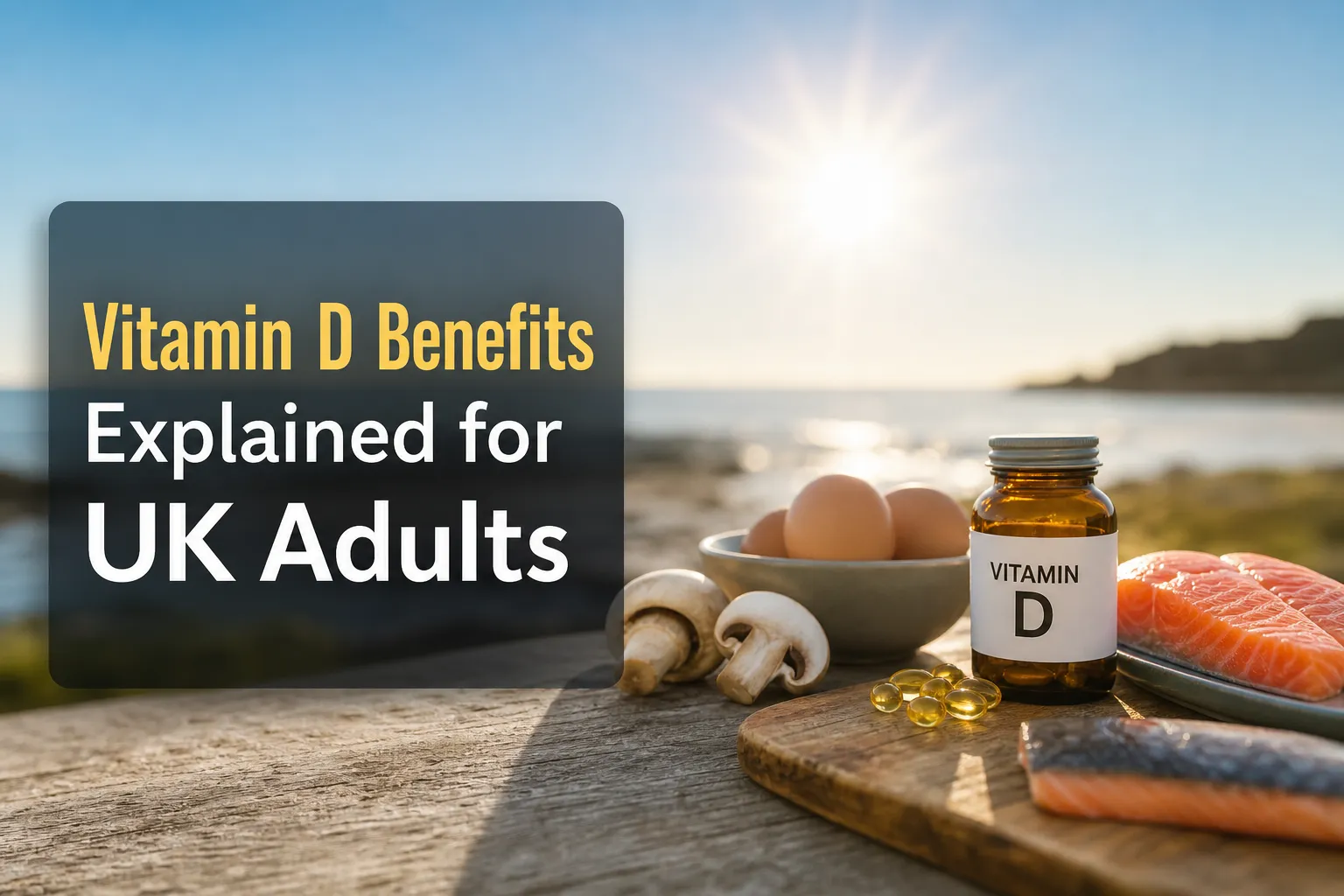
Vitamin D Benefits Explained for UK Adults
Vitamin D is one of the most talked-about nutrients in everyday wellness, but it is also one of the most misunderstood. Many adults in the UK want to know what vitamin D is good for, whether a daily supplement is worthwhile, and how to tell the difference between sensible support and overblown promises.
In simple terms, vitamin D helps your body handle calcium and phosphate properly. That matters because vitamin D contributes to the maintenance of normal bones, normal teeth and normal muscle function. For UK adults, that foundation is the right place to start. Before discussing wider interest in vitamin D3 benefits, it is important to understand that its core, established role is in musculoskeletal health.
For people balancing busy routines, indoor work, training schedules, plant-forward diets or limited winter sunlight, vitamin D often becomes part of a practical daily nutrition plan. If you are thinking about the benefits of taking vitamin D, this guide explains what is evidence-based, who may benefit most, and where expectations should remain realistic.
What Vitamin D Actually Does in the Body
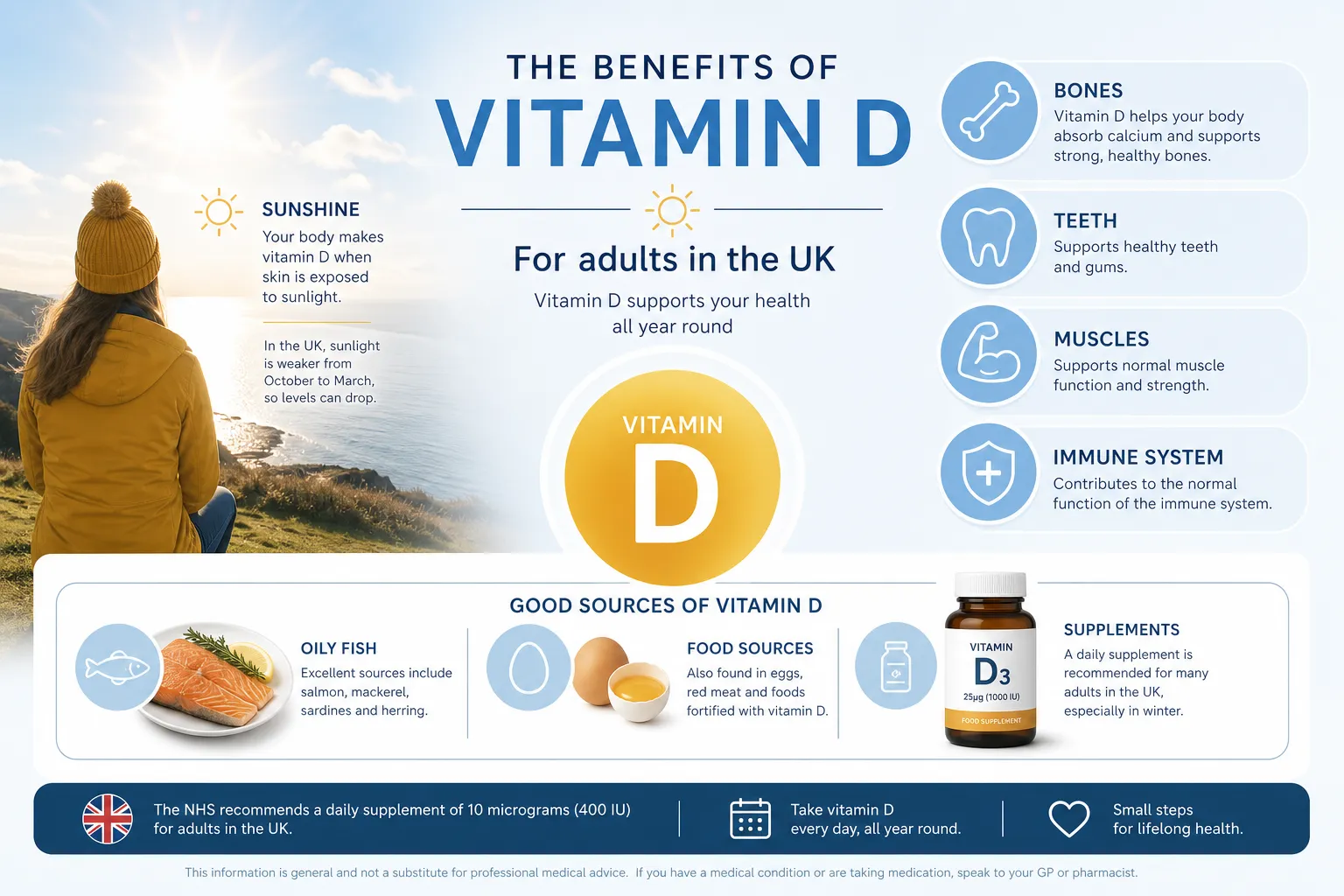
Vitamin D is a fat-soluble vitamin that your body can make when skin is exposed to sunlight. It can also come from food and supplements. Once available in the body, it helps regulate calcium and phosphate, two minerals that are essential for maintaining healthy bones and teeth.
This is why most reliable guidance puts bone health first. Much of the public conversation around vitamin d benefits jumps straight to mood, immunity or energy, but the most firmly established role is more basic and more important: structural support for the body.
The best-established vitamin D benefits
For adults, the clearest and most compliant way to understand vitamin D supplement benefits is through these recognised functions:
-
Vitamin D contributes to the maintenance of normal bones
-
Vitamin D contributes to the maintenance of normal teeth
-
Vitamin D contributes to normal muscle function
-
Vitamin D contributes to normal absorption and utilisation of calcium and phosphorus
-
Vitamin D contributes to the normal function of the immune system
These are meaningful everyday functions, especially in a country where sunlight is not reliable year-round.
Why UK adults often think about it more in colder months
In the UK, sunlight exposure changes dramatically across the year. From late spring to early autumn, many people can make enough vitamin D from sunlight. From autumn into winter, that becomes much harder.
“Government advice is that everyone should consider taking a daily vitamin D supplement during the autumn and winter.” – NHS
That single point explains why vitamin D comes up so often in UK wellness conversations: it is not just a niche concern. Seasonal limitation is built into life here.
Why Bone, Teeth and Muscle Support Come First
A lot of articles lead with sweeping claims. A better approach is to focus on what matters most for day-to-day health and what is supported by established evidence.
Bones
Bones are living tissue that constantly remodels. Vitamin D supports this process by helping the body absorb and use calcium properly. Without enough vitamin D, the body cannot make the best use of dietary calcium.
This matters at every adult life stage, but especially for:
-
adults with low dietary calcium intake
-
postmenopausal women
-
older adults
-
people spending little time outdoors
-
people following restrictive diets without careful planning
Teeth
Teeth rely on adequate mineral availability too. Vitamin D supports normal teeth through its role in calcium and phosphorus metabolism. It is not a substitute for brushing, flossing or dental care, but it is part of the bigger nutritional picture.
Muscles
Vitamin D also contributes to normal muscle function. That is particularly relevant for active adults, older adults, and anyone interested in maintaining strength, mobility and resilience. People often ask what vitamin d good for beyond bones; muscle support is one of the clearest answers.
For a broader look at nutritional routines, our guide on what supplements you should take daily can help place vitamin D in the context of a balanced approach.
Who Is Most Likely to Benefit from Taking Vitamin D?
Not every adult has exactly the same need for supplementation all year, but some groups are more likely to benefit from consistent intake.
People in the UK during autumn and winter
This is the broadest group. Because sunlight is weaker and days are shorter, even health-conscious adults can struggle to maintain intake through lifestyle alone.
People who spend most of their time indoors
Remote workers, office workers, shift workers, carers and housebound adults may have limited sun exposure even in brighter months.
People with darker skin tones
Higher melanin levels can reduce the skin’s ability to make vitamin D from sunlight. That means some adults may need to be more mindful year-round.
Older adults
The skin becomes less efficient at producing vitamin D with age. Older adults may also spend less time outdoors, increasing the likelihood of lower status.
People who cover most of their skin outdoors
Cultural clothing practices, occupational gear, or consistent sun-avoidance habits can all reduce vitamin D production from sunlight.
People whose diets contain few vitamin D sources
This can include some vegans, vegetarians, people avoiding fortified foods, or anyone who rarely eats oily fish or eggs.
Those already concerned about deficiency risk
If you have been advised that you are at risk, or if your clinician has raised it before, supplementation may form part of a sensible plan.
Sunlight, Food or Supplements: What Matters Most?
The best approach is usually to think in layers rather than choosing just one source.
Sunlight
During sunnier months, sunlight helps many people maintain vitamin D levels. But sunlight is variable. Time outdoors, weather, skin tone, clothing, sunscreen use, and geography all matter.
It is also worth keeping expectations measured. “Getting outside more” is healthy advice in general, but it does not guarantee adequate vitamin D status for everyone.
Food
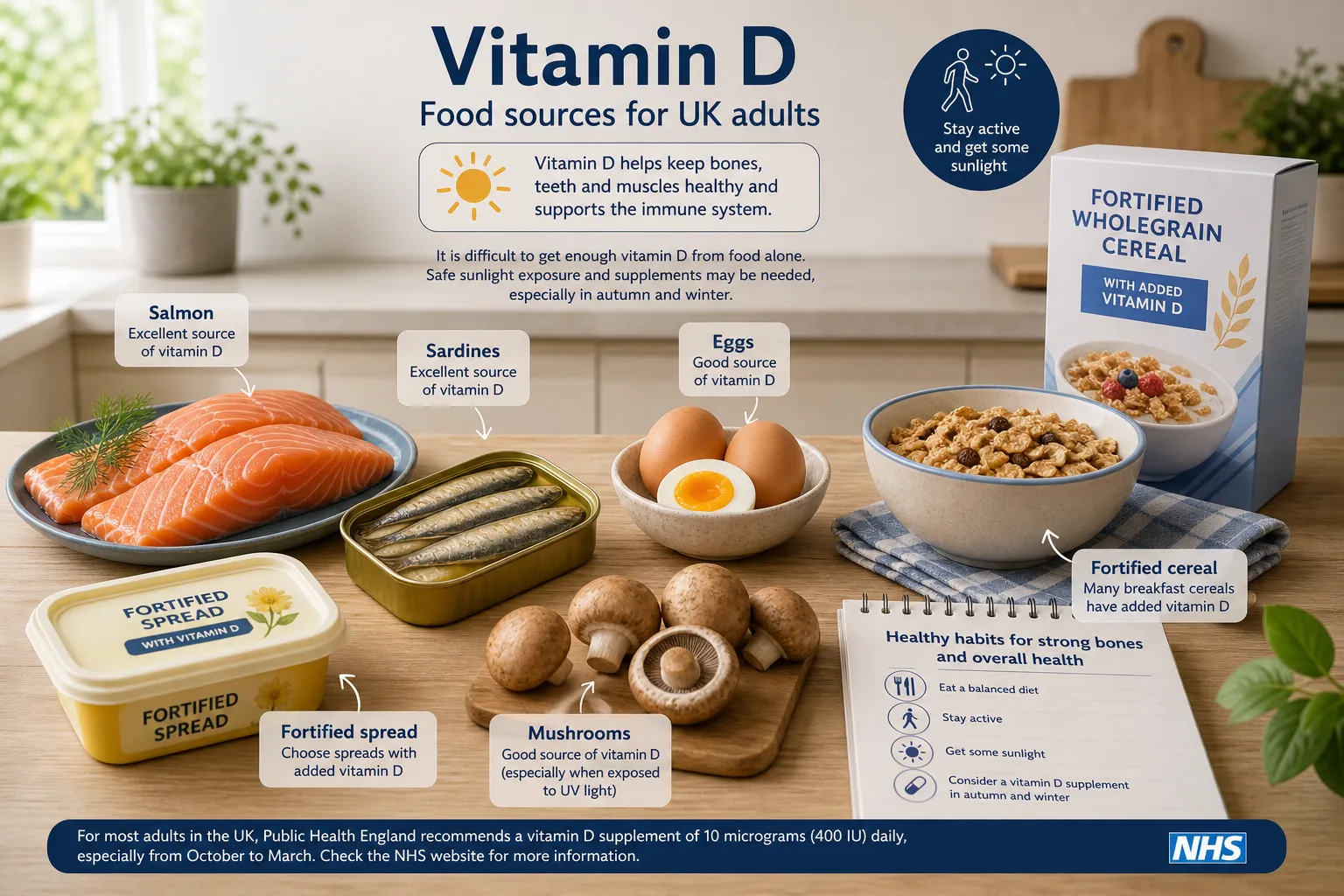
Food sources help, but vitamin D is not abundant in the average UK diet. Natural sources exist, yet many people do not eat them consistently enough to rely on food alone.
Supplements
This is where practical everyday support often comes in. A supplement can offer a more consistent intake when sunlight and diet are not enough, especially during the colder half of the year.
For many adults, that is the most realistic explanation of vitamin d3 benefits in daily life: not as a miracle product, but as a convenient, measured way to support normal nutritional status when circumstances make adequacy harder.
Food Sources of Vitamin D for UK Adults
Although supplementation is common, it is still useful to build your meals around foods that provide at least some vitamin D.
Common dietary sources
|
Food |
Vitamin D contribution |
Notes |
|---|---|---|
|
Oily fish such as salmon, sardines, herring and mackerel |
Higher |
One of the richest natural sources |
|
Egg yolks |
Modest |
Useful, but usually not enough alone |
|
Red meat |
Small |
Can contribute a little |
|
Liver |
Small to moderate |
Not suitable for everyone; pregnant women should avoid it |
|
Fortified breakfast cereals |
Varies |
Check label |
|
Fortified fat spreads |
Varies |
Common UK fortified option |
|
Fortified plant drinks or dairy alternatives |
Varies |
Check packaging carefully |
|
Mushrooms exposed to UV light |
Varies |
Some provide useful amounts |
A realistic note on diet alone
Many “vitamin d benefits” articles mention food but underplay the practical challenge: even good diets do not always provide enough. That is why public health advice in the UK includes routine seasonal supplementation rather than relying on food alone.
If you are building a more nutrient-aware way of eating overall, our article on how to get healthy offers a useful broader foundation.
How Much Vitamin D Do UK Adults Need?
For adults and children over 4 years old, UK guidance commonly refers to 10 micrograms (mcg) per day, especially during autumn and winter. That equals 400 IU.
Quick conversion table
|
Micrograms (mcg) |
International Units (IU) |
|---|---|
|
10 mcg |
400 IU |
|
25 mcg |
1,000 IU |
|
50 mcg |
2,000 IU |
|
100 mcg |
4,000 IU |
If supplement labels seem confusing, this conversion is often the missing piece.
A useful benchmark for status
“Levels of 50 nmol/L (20 ng/mL) or more are sufficient for most people.” – NIH Office of Dietary Supplements
That kind of context can help make blood-test discussions easier to understand, though interpretation should always sit with a healthcare professional.
Everyday Supplementation: Sensible, Seasonal and Consistent
For many adults, the conversation is not really about whether vitamin D is beneficial in theory. It is about whether taking it daily is a sensible habit.
The answer is often yes, particularly in autumn and winter, because routine low-dose supplementation can be more practical than trying to “catch up” through food or sporadic sun exposure.
What to look for in a vitamin D supplement
A thoughtful supplement routine should prioritise:
-
an appropriate daily dose
-
clear labelling in mcg and/or IU
-
reliable quality standards
-
suitability for your dietary preferences
-
consistency over hype
At InfiniVit, we believe premium supplementation should feel trustworthy and straightforward: science-led formulations, careful sourcing, transparent communication, and UK manufacturing standards that support confidence rather than confusion.
Where appropriate, some adults prefer a combined formula such as InfiniVit’s Liposomal Vitamins D3 + K2, as vitamin K contributes to the maintenance of normal bones.
For more guidance on choosing well, see our article on how to judge supplement quality in the UK.
When Expectations Should Stay Realistic
This is one of the biggest content gaps in many competing articles: they often imply that vitamin D supports almost everything.
A more responsible view is this:
-
Vitamin D has clear, important established functions
-
It is worth taking deficiency risk seriously
-
It is not a cure-all
-
Taking more is not automatically better
-
Supplements should not replace medical assessment when symptoms are significant or persistent
Common exaggerations to avoid
Vitamin D is often discussed alongside mood, immunity, heart health, or general wellbeing. These are active research areas, but broad lifestyle claims should be treated cautiously. A good wellness article should separate established nutritional functions from emerging or mixed evidence.
That does not make vitamin D unimportant. It makes it important to discuss properly.
Signs and Concerns Around Low Vitamin D
Low vitamin D can be easy to miss because symptoms may be vague. Tiredness, aches or low mood can have many causes, so self-diagnosis is unreliable.
Possible signs of low vitamin D
Some people with low vitamin D may experience:
-
bone discomfort
-
muscle weakness
-
general aches and pains
-
tiredness
These symptoms are non-specific, so they do not confirm deficiency on their own.
When to speak to a healthcare professional
It may be worth professional advice if:
-
symptoms persist
-
you belong to a higher-risk group
-
you have a condition affecting nutrient absorption
-
you are unsure whether your supplement dose is appropriate
-
you are considering higher-dose use beyond standard guidance
A blood test may sometimes be recommended, but routine testing is not necessary for everyone.
Can You Take Too Much Vitamin D?
Yes. More is not always better.
Taking excessive vitamin D supplements over time can lead to too much calcium building up in the body. That can be harmful. Importantly, toxicity is usually linked to supplements taken inappropriately, not normal sun exposure.
Upper safety considerations
UK guidance commonly warns adults not to exceed 100 micrograms (4,000 IU) per day unless advised by a healthcare professional.
Simple safety principles
-
Stay within guidance unless clinically advised otherwise
-
Avoid combining multiple products without checking totals
-
Be careful with high-strength products
-
Ask for advice if you take medicines that may interact with supplements
This is especially relevant for adults using broad wellness stacks, sports formulas or bone-support routines where overlap can happen.
Vitamin D, Lifestyle and the Bigger Wellness Picture
One of the most useful ways to think about vitamin D is as part of a wider health framework. Good nutrition rarely depends on one nutrient alone.
A strong routine may also include:
-
a varied, balanced diet
-
regular movement and resistance exercise
-
adequate protein intake
-
enough calcium from food
-
sleep and stress management
-
careful supplement selection when needed
That is where a quality-led brand matters. At InfiniVit, our approach is not built around exaggerated promises. It is built around premium ingredients, purposeful formulation, trusted UK manufacturing, and helping adults make better-informed choices across everyday wellness.
Final Verdict
The main benefits of taking vitamin D are not mysterious or trendy. They are practical, foundational and especially relevant in the UK: vitamin D contributes to the maintenance of normal bones, normal teeth and normal muscle function, while also supporting normal calcium use and normal immune function.
For many UK adults, the smartest approach is calm and consistent: eat well, get sensible daylight exposure when possible, and consider a daily supplement during autumn and winter or year-round if you are more likely to have low exposure. If you want a dependable place to start, InfiniVit offers carefully considered, high-quality wellness support designed for adults who value substance over hype.
FAQ
Does the NHS recommend vitamin D supplements?
Yes. The NHS advises everyone to consider a daily vitamin D supplement during autumn and winter, because sunlight in the UK is usually not strong enough for the body to make enough vitamin D in those months. Some people at higher risk may be advised to take it throughout the year.
What breakfast is high in vitamin D?
A breakfast with fortified cereal, fortified milk or plant drink, and eggs can help provide some vitamin D. Oily fish such as salmon can also be a stronger source, although it is less common at breakfast in the UK.
Is 2 eggs a day enough vitamin D?
Usually not on their own. Eggs contain some vitamin D, but two eggs a day are unlikely to reliably meet typical daily needs, especially in autumn and winter, which is why food alone is often not enough for many UK adults.