
 English
 Arabic
 Polish
 Russian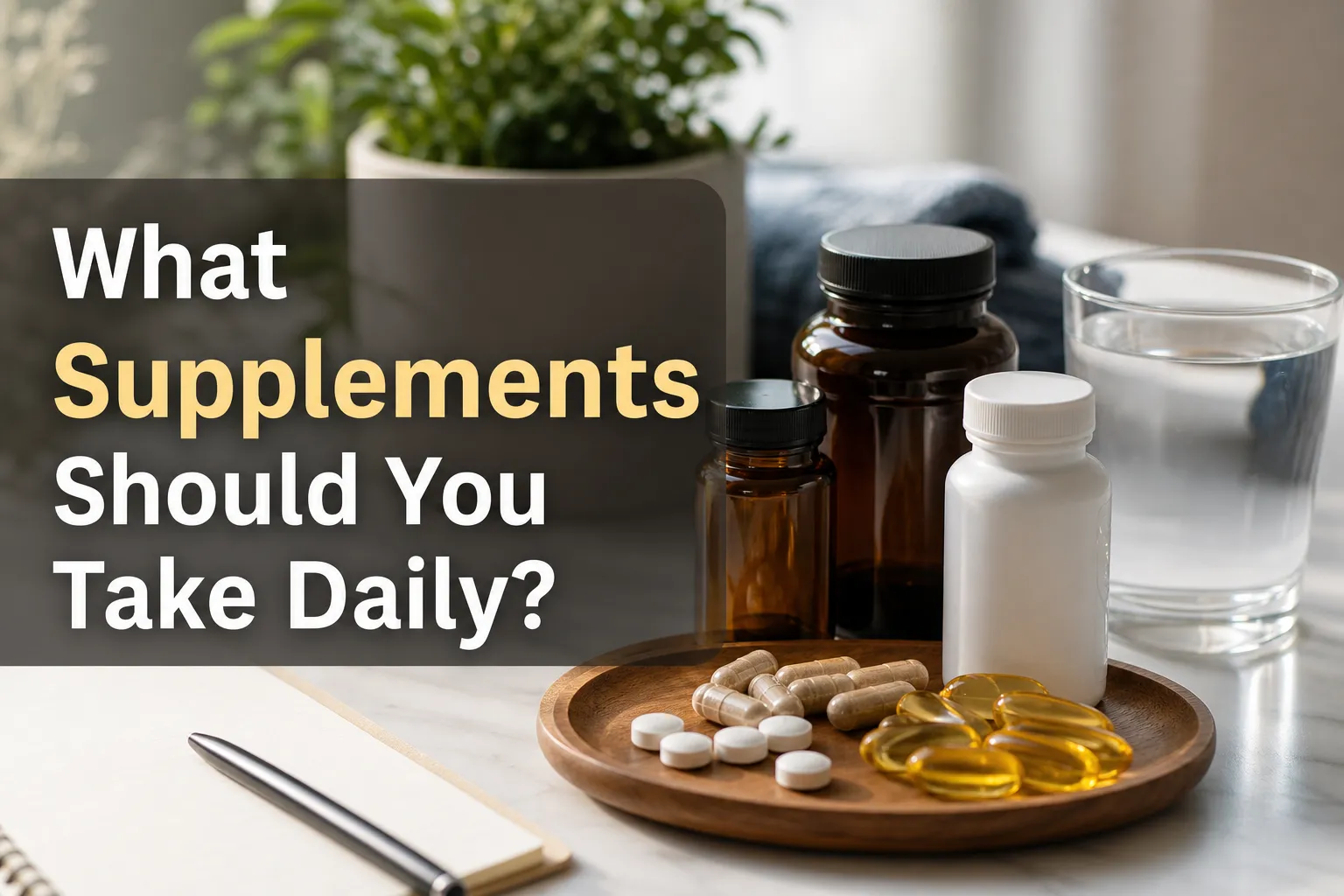
What Supplements Should You Take Daily?
If you have ever wondered which supplements you should be taking each day, the honest answer is: it depends. There is no single universal stack that suits every adult. Your needs are shaped by your diet, age, sex, life stage, sunlight exposure, medications, health goals, and whether you have been advised about a deficiency.
For many UK adults, the question is not “What supplements do I need no matter what?” but rather:
-
Which nutrients am I most likely to miss?
-
Which recommendations are based on UK public-health guidance?
-
When is food enough?
-
When is a targeted supplement more sensible than buying a big tub of everything?
This guide is designed to give a balanced, practical answer. We will focus on the shortlist people ask about most often: vitamin D, vitamin B12, folate, omega-3, magnesium, probiotics, and multivitamins. Just as importantly, we will also cover when not to buy a supplement at all.

The short answer: what most adults should consider first
If you want the practical overview before the detail, start here:
|
Supplement |
Daily for everyone? |
Who may want to consider it most? |
Notes |
|---|---|---|---|
|
Vitamin D |
Often seasonally, and some year-round |
Most UK adults in autumn/winter; higher-risk groups all year |
UK guidance gives this the strongest general relevance |
|
Vitamin B12 |
No |
Vegans, some vegetarians, older adults, some people on certain medicines |
Especially relevant if intake or absorption is low |
|
Folate |
No, except specific groups |
Women who are pregnant or planning pregnancy |
Not a blanket supplement for all adults |
|
Omega-3 |
No |
People who do not eat oily fish, or those wanting dietary support |
Food first where possible |
|
Magnesium |
No |
People with low intake or specific needs |
Not automatically necessary for everyone |
|
Probiotics |
No |
Selected people depending on gut context |
Not an essential nutrient |
|
Multivitamin |
No |
People with restricted diets or convenience needs |
Best viewed as optional, not universal |
Start with food and lifestyle before supplements
A supplement should support your routine, not replace the foundations.
Before buying anything, ask yourself:
-
Is my diet varied enough?
-
Am I missing a food group?
-
Do I have a life stage or lifestyle reason for needing extra support?
-
Am I trying to solve a problem that really needs a dietary change, sleep improvement, or medical advice instead?
A well-planned diet often covers a large part of daily nutrition needs. Supplements can still be useful, but the most worthwhile ones are usually targeted, not random.
If you want a better framework for deciding what a high-quality product looks like, this guide on how to judge supplement quality in the UK can help you separate thoughtful formulations from generic shelf-fillers.
Vitamin D: the closest thing to a broad UK daily recommendation
Vitamin D deserves special prominence because UK guidance is clearer here than for most other supplements.
Vitamin D contributes to normal absorption and utilisation of calcium and phosphorus, and it contributes to the maintenance of normal bones, teeth, and muscle function. In the UK, sunlight exposure is a major factor because we cannot rely on year-round sun to make enough vitamin D through skin exposure.
What UK adults need to know
The NHS advises that everyone should consider a daily vitamin D supplement during the autumn and winter. Some groups may need to consider it throughout the year, including people who:
-
are not often outdoors
-
usually wear clothes that cover most of their skin outdoors
-
have darker skin tones, including many people with African, African-Caribbean or South Asian backgrounds
Children, babies, and certain other groups have separate guidance, and women who are pregnant or breastfeeding should also make sure vitamin D intake is appropriate.
How much vitamin D?
For adults and children over 4, the commonly referenced amount is 10 micrograms (400 IU) daily.
When a supplement may be useful
If you want a convenient daily option in this category, Liposomal Vitamins D3 + K2 is one example of a focused bone-health formulation for adults who prefer a premium, more intentional everyday approach.
For a deeper look at uses, practical dosing context and wider considerations, see The Power of Vitamin D.
Vitamin B12: important for some people, unnecessary for others
Vitamin B12 is one of the most common nutrients people ask about when deciding which supplements I should be taking, especially if they eat little or no animal food.
Vitamin B12 contributes to normal energy-yielding metabolism, normal psychological function, normal red blood cell formation, and the normal functioning of the nervous system. But that does not mean every adult should automatically take it.
Who is more likely to need B12 support?
A B12 supplement may be particularly relevant if you:
-
follow a vegan diet
-
eat very little animal food
-
are an older adult
-
have certain digestive or absorption issues
-
take medicines that can affect B12 absorption, such as some acid-reducing medicines or metformin
Food first vs supplement
B12 is naturally found mainly in animal-derived foods. That means vegans usually need fortified foods, a supplement, or both. Some vegetarians may also benefit, depending on dietary pattern.
If you eat a balanced omnivorous diet and have no known issue with absorption, you may not need a separate B12 supplement at all.
Folate: highly relevant in one life stage
Folate is not a daily must-have for all adults, but it becomes especially important for women who are pregnant or planning pregnancy.
Who should pay closest attention?
Women trying to conceive or in early pregnancy are often advised to take folic acid in line with UK pregnancy guidance. This is not a one-size-fits-all recommendation for the whole adult population, but it is one of the clearest examples of a supplement being genuinely useful for a defined group.
When folate is not automatically necessary
If you are not in that life stage and your diet contains folate-rich foods such as leafy greens, beans, lentils and fortified foods, a separate folate supplement may not be necessary unless advised by a professional.
Omega-3: helpful for some diets, not mandatory for everyone
Omega-3 is often treated as a basic daily supplement, but that oversimplifies things.
Food sources come first
If you regularly eat oily fish such as salmon, sardines, mackerel or herring, you may already be getting meaningful omega-3 intake from food. In that case, a supplement is not automatically needed.
If you do not eat oily fish, or you prefer the convenience of a consistent daily intake, a supplement can be a reasonable option.
Who may want to consider omega-3?
-
people who rarely or never eat oily fish
-
some vegetarians or flexitarians whose intake is low
-
adults looking to complement a health-conscious routine with a quality oil supplement
Choosing the format
If you want to supplement, Antarctic Krill Oil can suit those looking for a premium omega option, while Omega 3-6-9 Blend may appeal to people who prefer a broader fatty-acid blend.
You can also read more about dietary fats and supplement formats in Discover the Benefits of Omega 3, 6 and 9.
Magnesium: popular, but not a universal daily requirement
Magnesium has become one of the most talked-about supplements on the market. That popularity does not mean everyone needs it.
Magnesium contributes to normal muscle function, normal functioning of the nervous system, normal psychological function, electrolyte balance, and a reduction of tiredness and fatigue.
Who might benefit from reviewing magnesium intake?
You may want to look more closely at magnesium if:
-
your diet is low in nuts, seeds, legumes, whole grains and leafy greens
-
you want nutritional support around muscle function or fatigue
-
your routine or food choices make consistent intake less likely
Should everyone take magnesium?
No. Many people can meet their needs through food. A supplement makes more sense when dietary intake is poor, when convenience matters, or when a practitioner has suggested you may benefit.
If magnesium is relevant to your routine, Tri-Magnesium Matrix is an example of a more considered multi-form magnesium product rather than a basic one-note option.
Probiotics: useful in some situations, but not an essential daily nutrient
Probiotics should not be lumped in with core vitamins as though everybody must take them. They are not a universal daily requirement.
When probiotics may be worth considering
A probiotic may be helpful if you are:
-
reviewing your gut-health routine
-
looking for support after dietary disruption
-
exploring ways to complement a broader digestive-health plan
But probiotics are highly strain-specific, and not every product is equally relevant for every person.
Diet still matters more
Often the more useful first question is whether your diet includes enough fibre and plant variety to support the gut environment in the first place. In many cases, people jump straight to probiotics when the bigger issue is a low-fibre diet.
For readers exploring this area further, our guides on best supplements for gut health and bloating and probiotics benefits offer more detail.
Which kind of probiotic product?
Where a probiotic does fit, examples within the InfiniVit range include InfiniBio Maintenance, InfiniBio MAX, and InfiniBio PLUS, each suited to people who want a more targeted gut-health option rather than a generic supermarket pick.
Do you actually need a daily multivitamin?
This is one of the most useful questions in the whole discussion.
A multivitamin can be convenient, but it is not automatically necessary, and it is not always the smartest first choice.
A multivitamin may make sense if:
-
your diet is inconsistent
-
you travel often
-
you skip meals
-
you follow a restricted eating pattern
-
you want broad, low-level nutritional coverage rather than several separate products
A multivitamin may not be the best choice if:
-
you only have one likely gap, such as vitamin D in winter
-
you already eat well and have no obvious risk factors
-
you are duplicating nutrients from several products
-
you need a clinically directed nutrient strategy rather than a general formula
If you prefer a broad-spectrum everyday option, OptiVita can be viewed as an example of an everyday multivitamin formulation for adults who want practical nutritional coverage. It should be seen as one option, not as something everyone needs to take.
Which supplements are most relevant by diet and life stage?
This is where broad advice becomes more useful.
Vegans and some vegetarians
Often worth reviewing:
-
vitamin B12
-
vitamin D
-
omega-3 intake
-
sometimes iron, iodine or other nutrients depending on diet pattern
Older adults
Often worth reviewing:
-
vitamin D
-
vitamin B12
-
overall protein and dietary adequacy
-
whether appetite, medications or absorption issues are affecting intake
Women who are pregnant or planning pregnancy
Often worth reviewing:
-
folate/folic acid
-
vitamin D
-
any midwife or GP advice specific to individual needs
People with restricted diets or poor appetite
Often worth reviewing:
-
whether a simple multivitamin is practical
-
whether a specific deficiency risk is more important than a broad formula
-
whether food fortification, meal planning or professional advice would help more
Fitness-focused adults
Many active adults assume they need a long list of supplements. In reality, the basics still matter most: overall diet quality, total protein intake, hydration, sleep, and recovery. Supplements can support those foundations, but they do not replace them.
A simple decision framework: should you buy a supplement at all?
Use this quick checklist before purchasing:
|
Question |
If yes |
If no |
|---|---|---|
|
Is there UK public-health guidance for me to take it? |
Consider it seriously |
Move to the next question |
|
Does my diet make low intake likely? |
A supplement may help |
Food may be enough |
|
Am I in a special life stage? |
Check targeted guidance |
Avoid assuming you need it |
|
Do I have symptoms or concerns? |
Seek professional advice before self-prescribing |
Stay evidence-led |
|
Am I already taking overlapping products? |
Review doses carefully |
Keep the routine simple |
When NOT to take a supplement
This section is often missing from competitor content, but it matters.
1. When you are only buying it because it is trending
Popularity is not proof of need. A supplement can be well marketed and still be unnecessary for you.
2. When your diet already covers it
If your intake is strong and there is no clear reason to supplement, you may simply be adding cost with no obvious benefit.
3. When you are duplicating ingredients
This is common. For example, someone may take a multivitamin, a magnesium formula, a vitamin D product and a “wellness blend” without realising the nutrients overlap.
4. When the dose is excessive
More is not better. Fat-soluble vitamins and some minerals deserve particular care because high intakes can be inappropriate.
5. When medicines or medical conditions are involved
If you are pregnant, taking regular medication, managing a medical condition, or have been told you have abnormal blood levels, it is wise to seek professional guidance instead of guessing.
What the best daily supplement routine usually looks like
For most adults, the smartest routine is minimal and purposeful.
A realistic evidence-informed approach might look like this:
-
Vitamin D in autumn and winter, or all year if you are in a higher-risk group
-
B12 if your diet or absorption makes it relevant
-
Folate if you are pregnant or planning pregnancy
-
Omega-3 if you do not eat oily fish
-
Magnesium only if intake or personal context suggests it may be helpful
-
A probiotic only if it genuinely fits your gut-health strategy
-
A multivitamin only when convenience or dietary gaps justify it
That is very different from assuming there are fixed supplements you need every single day no matter who you are.
Why quality matters if you do choose a supplement
Once you decide a supplement is relevant, quality becomes the next filter.
At InfiniVit, we believe supplements should be:
-
formulated with intention rather than packed with unnecessary extras
-
made with high-grade ingredients
-
supported by science-led thinking
-
manufactured in the UK to strict GMP and ISO9001 standards
-
communicated responsibly using authorised claims where relevant
-
available in formats that suit real lives and dietary preferences, including vegan and vegetarian options across selected ranges
That matters because the best supplement routine is not the largest one. It is the one that is appropriate, consistent, and well chosen.
Final verdict
So, what supplements should you take daily?
For UK adults, vitamin D is the most widely relevant starting point, especially in autumn and winter. After that, there is no universal daily list. B12, folate, omega-3, magnesium, probiotics and multivitamins can all be worthwhile in the right context, but their value depends on the person.
The most sensible approach is to:
-
assess your diet first
-
look at your life stage and risk factors
-
use UK guidance where it exists
-
choose targeted, high-quality supplements only when they genuinely fit your needs
If you are ready to build a more thoughtful supplement routine, explore InfiniVit’s premium range for science-led, UK-made options that support modern wellness without the guesswork.
FAQ
What is the most important supplement to take daily?
For many UK adults, vitamin D is the most relevant place to start because public-health guidance commonly recommends it during autumn and winter. Beyond that, the most important supplement depends on your diet, life stage, and whether you have a specific reason to need one.
What are the big 3 supplements?
There is no official universal “big 3,” but in practical everyday discussions, vitamin D, omega-3, and magnesium are often mentioned most. Even then, they are not automatically right for everyone, and food intake should be reviewed first.
What is the best supplement for daily use?
The best daily supplement is the one that matches a real nutritional gap or genuine need. For one person that may be vitamin D, while for another it may be B12, folate, or no supplement at all.
What are some healthy supplements I can take every day?
Depending on your circumstances, healthy daily options may include vitamin D, vitamin B12, a targeted omega-3, magnesium, or a simple multivitamin. But none of these should be treated as automatic daily buys without considering diet, season, and personal context.
What are the top 3 vitamins to take daily?
If you want a practical shortlist, vitamin D is often the first to consider in the UK, while vitamin B12 may matter for vegans and some older adults, and folate is especially important for women planning pregnancy. These are context-dependent rather than universal recommendations.
What vitamins should not be taken daily?
Any vitamin that you do not need, already get enough of, or are duplicating across products may be unnecessary to take daily. It is also wise to be cautious with high-dose products and to seek advice if you take medication, are pregnant, or have a medical condition.