
 English
 Arabic
 Polish
 Russian

If you are weighing which supplements women over 40 should take, your age alone cannot tell you what you lack. For women over 50, UK vitamin D guidance gives the clearest routine decision. Look to food for calcium first, and use your menstrual history to guide the iron question. You do not need a multivitamin simply because you have reached menopause.
Look at what you eat, how much daylight you get, whether you still have periods and which medicines you take. A supplement may fill a gap in your diet. Hot flushes, poor sleep and other menopause symptoms need a different conversation.
Supplements for women over 50: what changes, and what does not?
Menopause ends menstrual iron loss, while falling oestrogen makes bone density worth closer attention. An “over-50” formula cannot account for both. If you still have periods, you may need to approach iron as you did in your 40s.
|
Your situation |
Start here |
Does it automatically call for a supplement? |
|---|---|---|
|
Living in the UK through autumn and winter |
Consider 10 micrograms of vitamin D daily |
This is general UK advice, regardless of menopause |
|
Eating little calcium-rich food |
Add up the calcium sources in your meals |
No; improve food intake first, then discuss persistent shortfalls |
|
Still having periods, particularly heavy ones |
Discuss bleeding and possible iron deficiency with a GP |
No; do not guess a treatment dose |
|
No longer having periods |
Look for a dietary reason or diagnosed deficiency before adding iron |
No |
|
Eating a vegan diet |
Ensure a reliable source of vitamin B12 from fortified food or a supplement |
Often worth planning explicitly |
Food should supply most of your nutrients. Strength and weight-bearing activity help your bones too. If you take prescription medicines, even a familiar vitamin or mineral may affect a treatment or its absorption.
Your life stage tells you more than the age group on a packet. Hormonal fluctuations in perimenopause can come with erratic periods; after periods end, the case for routine iron changes. To assess calcium and B12, look instead at food, absorption and health history.
Vitamin D: the clearest UK supplement decision
The NHS vitamin D guidance says adults need 10 micrograms (400 IU) of vitamin D a day. Everyone should consider a daily supplement containing that amount during autumn and winter, when sunshine in the UK is not sufficient for the body to make enough vitamin D. This advice is not specific to women over 50.
The NHS recommends a year-round 10-microgram supplement if you get little or no sun exposure, perhaps because you rarely go outdoors or usually cover most of your skin. People with dark skin should also consider taking that amount all year. Oily fish, egg yolks and fortified foods contain vitamin D, though food alone may not provide enough in autumn and winter.
Read the daily serving on the bottle. A multivitamin with 10 micrograms plus a separate 10-microgram tablet gives you 20 micrograms of supplemental vitamin D. You may not need both. The NHS advises adults not to take more than 100 micrograms (4,000 IU) a day because excess vitamin D can cause harm; a clinician may recommend another dose for a medical reason.
If you are comparing formats and labels, see how to choose a vitamin D supplement.
Calcium: meet the target with food first
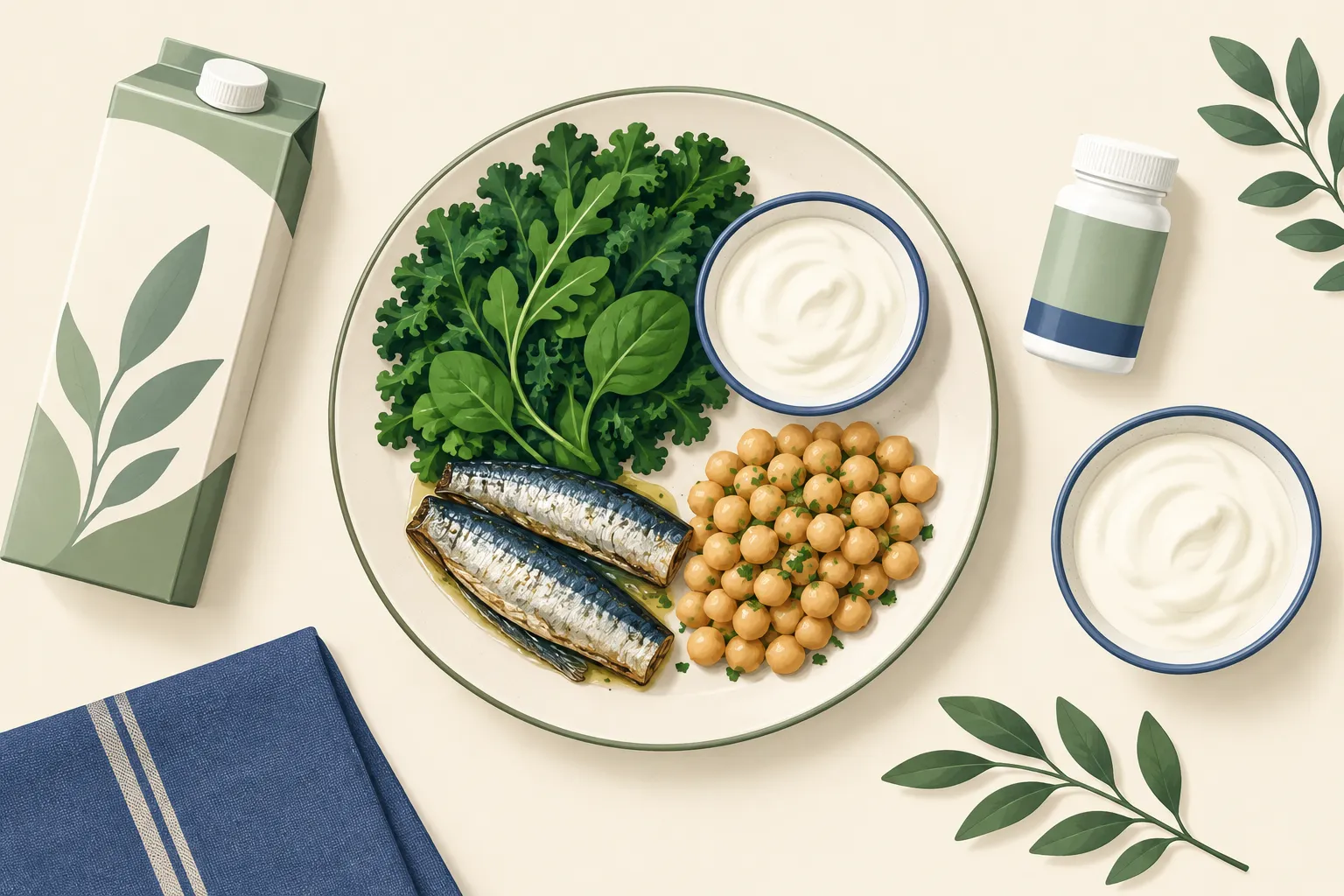
The NHS figure for calcium is 700 mg a day for adults aged 19 and over. Turning 50 does not change it. Milk and yoghurt are familiar sources; fortified plant drinks, calcium-set tofu and fish with edible bones can help too. If you avoid dairy, look for calcium on the plant drink’s nutrition label. It is not in every oat or almond drink.
|
Food pattern |
An easy calcium opportunity |
|---|---|
|
Dairy in your diet |
Milk or yoghurt alongside a regular meal |
|
Dairy-free diet |
A plant drink that lists calcium on its nutrition panel |
|
Eating soy foods |
Tofu made with calcium salts, if the label confirms them |
|
Eating fish |
Sardines with edible bones |
Look at several ordinary days of meals. If calcium-rich foods seldom appear, add them to your routine first. A supplement may help if food cannot meet your needs or you have a condition affecting bone health; ask a clinician what amount suits you. Most of your calcium plan should still come from food.
Vitamin D helps your body use calcium. Weight-bearing and strengthening activity also support bone health. Changes in bone density after menopause do not by themselves call for calcium tablets. If you have osteoporosis, a fracture history or another bone condition, a clinician can assess your food intake alongside your treatment plan.
Iron after menopause: periods matter more than the age on the box
The NHS lists 14.8 mg of iron a day for women aged 19 to 49 and 8.7 mg for women aged 50 and over. Those are daily dietary reference amounts, not instructions to buy tablets containing those doses.
“Women having periods after the age of 50 may need the same amount of iron as women aged 19 to 49.” – NHS
Beans, chickpeas, nuts and fortified cereals contribute iron, as does meat if you eat it. Heavy periods increase the risk of iron deficiency anaemia. If your bleeding is heavy or you have symptoms that may indicate anaemia, a GP can investigate the cause and arrange tests. Iron deficiency after menopause also warrants medical assessment.
An iron-free multivitamin may make more sense after periods stop, unless you have a specific reason for iron. High-dose iron can cause constipation, nausea and stomach pain, and it is especially important to keep iron supplements away from children.
Low energy levels alone cannot tell you whether you need iron. Menopause, poor sleep and other conditions may affect how you feel. A clinician can use your bleeding history and blood test results to decide whether you need iron and investigate the cause.
What about B12, omega-3, magnesium and menopause blends?
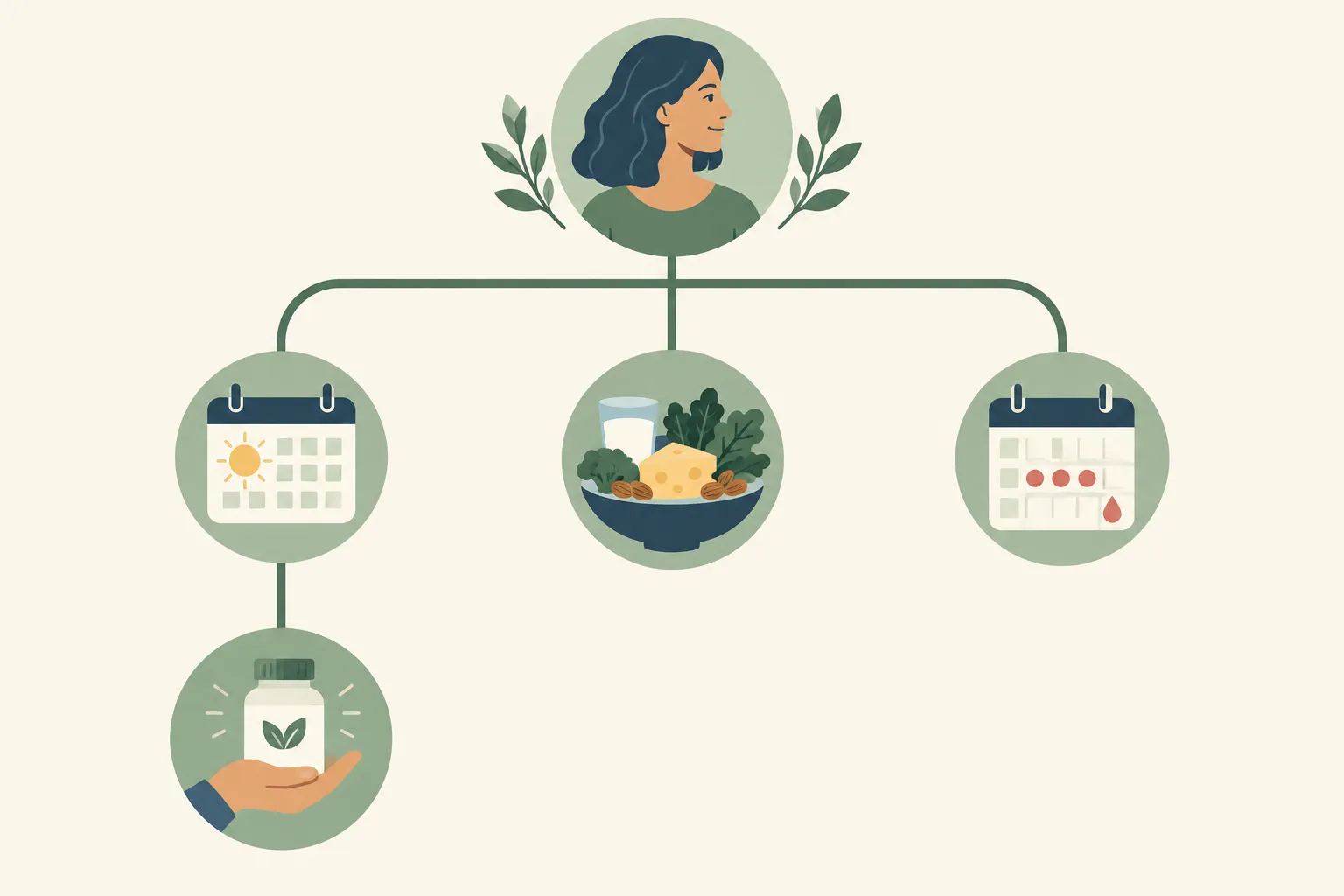
Your diet and symptoms determine whether any of these deserve a closer look.
-
Vitamin B12: If you follow a vegan diet, plan a reliable source through fortified foods or a supplement, as outlined in the NHS vegan diet advice. If you have persistent tiredness, tingling or other concerning symptoms, ask a clinician about assessment rather than assuming a B12 product will solve them.
-
Omega-3: Start with oily fish if you eat it. If you do not, a fish or algae oil may be an option, but neither is a universal treatment for midlife brain fog or heart health.
-
Magnesium: Nuts, seeds, beans and wholegrains are useful dietary sources. Do not assume disrupted sleep calls for magnesium: symptoms can have several causes.
-
Herbal menopause blends: A menopause label does not establish that a product treats hot flushes. The NHS menopause treatment guidance says evidence for remedies including red clover and black cohosh is limited, and some may interact with medicines.
Omega-3 fatty acids and B vitamins have roles in normal cognitive function. Still, a claim about brain health cannot tell you whether a supplement will help with memory worries. If you eat vegan, secure a dependable B12 source. If you suspect B12 deficiency, seek assessment rather than trying an “energy” blend.
Persistent or disruptive menopause symptoms deserve a conversation with a GP about appropriate care. Supplements are not a replacement for that discussion.
If fatigue is the reason you are considering several products, start with what to check before choosing vitamins for tiredness.
Does every woman over 50 need a daily multivitamin?
No. With a varied diet, you may need little beyond a separate decision on vitamin D. A modest multivitamin can help cover gaps if you consistently miss several foods or food groups. If you need vitamin D alone or have a documented deficiency, a targeted product makes the dose easier to understand.
Compare the formula with what you eat. A blend may repeat nutrients your diet already supplies. If missed meals or restricted food groups leave several dietary gaps, a multi may be convenient; it cannot take the place of meals or a treatment plan for a diagnosed deficiency. Avoid unnecessary high-dose combinations if a smaller, targeted supplement meets the need.
The useful vitamins and minerals are those your diet and circumstances call for. Before buying a multivitamin, compare its vitamin D, iron and B6 with any separate products you take. Read amounts per daily serving: a bottle may call for several capsules.
For help reading nutrient amounts and label language, see InfiniVit’s Best Multivitamin for Women: A UK Label Checklist. First decide whether you need a multivitamin at all.
Check overlapping doses and medicine interactions
Set out the supplements you use alongside your prescribed and over-the-counter medicines. Include powders, drinks and fortified products with added vitamins. Record the details in one place:
|
Check |
What to record |
Why it matters |
|---|---|---|
|
Daily serving |
Number of tablets or scoops actually used |
The front label may show an amount for a different serving |
|
Repeated ingredients |
Vitamin D, iron and B6 across every product |
Separate products can duplicate the same nutrient |
|
Medicines |
Name and usual time taken |
Minerals and herbs can interfere with some treatments |
Suppose your multivitamin contains 5 micrograms of vitamin D and a separate tablet contains 10 micrograms. Together they provide 15 micrograms of supplemental vitamin D daily. Use the same units when adding doses: 10 micrograms equals 400 IU. Keep any prescribed dose as directed by your clinician.
The NHS B-vitamin guidance advises against more than 10 mg of vitamin B6 a day from supplements unless a doctor recommends it: excess B6 can harm nerves. Calcium and iron supplements may interfere with levothyroxine; a pharmacist can help you arrange the timing. If you take warfarin or another anticoagulant, speak to your anticoagulant team or pharmacist before adding a supplement. Vitamin K is a particular concern with warfarin. Keep taking your medicines as prescribed.
A practical next step
-
Note a few normal days of meals and identify whether you have dependable calcium-rich foods, iron sources and, for a vegan diet, B12 sources.
-
Make the separate vitamin D decision using the season and your sun exposure. Count what you already get from any multivitamin.
-
If you still have heavy periods, unexplained fatigue or a known bone condition, bring those details to a GP rather than buying a high-strength combination.
-
Choose only the nutrients that address a plausible gap, then compare your total doses and medicines before adding another bottle.
Consider how different two routines can be. A woman with regular dairy or fortified alternatives, no periods and varied meals may find her calcium intake already adequate and need only to make the seasonal vitamin D decision. Someone with heavy periods and fatigue needs a conversation about the bleeding and possible tests, even if her meals seem balanced. A woman avoiding animal foods may need to plan B12 alongside her vitamin D decision. The best vitamins for any of them depend on where food and circumstances fall short, not which bottle promises “hormonal balance”.
When reading a vitamin D3 label, treat D3 as the form of vitamin D rather than an extra nutrient to add to the total. If the bottle also contains calcium or iron, include those amounts in your tally. A pharmacist can help if a supplement must fit around a medicine; the answer may be different for someone taking levothyroxine or warfarin.
The bottom line
For women over 50 in the UK, the sensible starting points are autumn-and-winter vitamin D, calcium-rich food and an iron decision shaped by periods and medical history. A multivitamin is a choice for a specific dietary gap, not a menopause treatment.
If you have identified a gap, explore InfiniVit’s targeted women’s health options and multi-ingredient products. Their ingredient information lets you weigh a daily serving against your food and medicines without committing to a whole midlife stack.