
 English
 Arabic
 Polish
 Russian
Natural Supplements for Gut Health
If you are looking for natural supplements for gut health, chances are you do not want an overcomplicated, synthetic-sounding formula with vague promises. You want something simpler and more trustworthy: support that fits alongside real food, daily routines and sensible wellness habits.
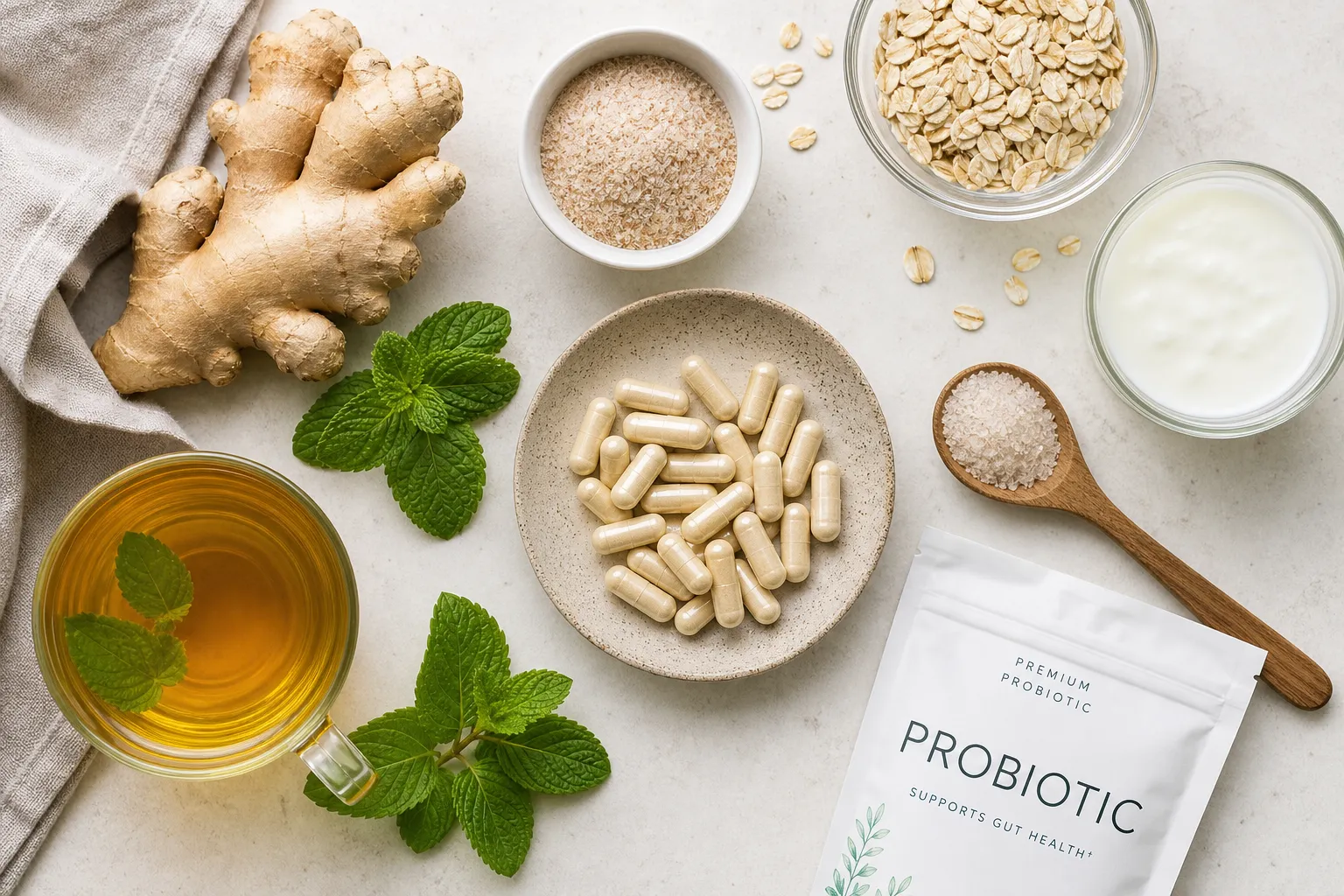
That is exactly where natural gut health supplements can be useful. Depending on your needs, that might mean probiotics for gut health, a fibre supplement for gut health, digestive enzymes, or herbal supplements for digestive health such as ginger or peppermint. Just as importantly, sometimes the best answer is not a supplement at all, but a food-first approach with more fibre, fermented foods and consistency.
In this UK-focused guide, we will break down the main types of natural supplements for digestion, explain how they differ, and help you choose based on symptoms, format and dietary preferences. We will also cover where many competitor guides fall short: when to avoid buying “everything gut health”, how to think about evidence, and why quality standards matter just as much as ingredient lists.
What the top-ranking articles get right – and what they often miss
Most high-ranking guides on gut supplements in the UK tend to agree on a few core points:
-
the gut microbiome matters
-
probiotics and fibre are popular starting points
-
digestive enzymes can be useful in specific situations
-
lifestyle still matters alongside supplements
That is a good foundation. But many articles gloss over several things readers actually need help with:
|
Common weakness in competitor content |
Why it matters |
|---|---|
|
They blur together probiotics, fibre, enzymes and herbs |
These categories work differently and suit different goals |
|
They push supplements too quickly |
For many people, food-first changes may be the better starting point |
|
They rarely explain format choice |
Capsules, powders, gummies and liquids suit different people |
|
They speak vaguely about “gut support” |
Readers need realistic, compliant guidance, not miracle language |
|
They underplay quality standards |
In supplements, formulation quality and manufacturing standards matter enormously |
A more useful approach is to think of natural digestive support in layers: food first, then targeted supplementation where appropriate, then professional advice if symptoms persist.
Why people choose natural gut health supplements
Many people searching for gut health natural supplements are not necessarily looking for the strongest product on the shelf. They are looking for products that feel more aligned with everyday wellbeing:
-
ingredients they recognise
-
fewer unnecessary additives
-
plant-based or food-derived options where possible
-
formulations that fit vegan, vegetarian, halal or kosher preferences
-
brands with transparent quality standards
That does not mean “natural” automatically means better. It does mean readers often want a cleaner, more thoughtful way to support digestion without turning wellness into guesswork.
For that reason, it helps to combine natural intent with supplement literacy. A product can sound earthy and wholesome, but still be poorly dosed, unstable or unsuitable for your needs. If you want a framework for assessing standards, our guide on how to judge supplement quality in the UK is a useful companion read.
Start with food first before you buy a supplement
Before choosing among the many supplements for gut health UK shoppers see online, it is worth asking a simple question:
Could food and routine fix part of the problem first?
In many cases, yes.
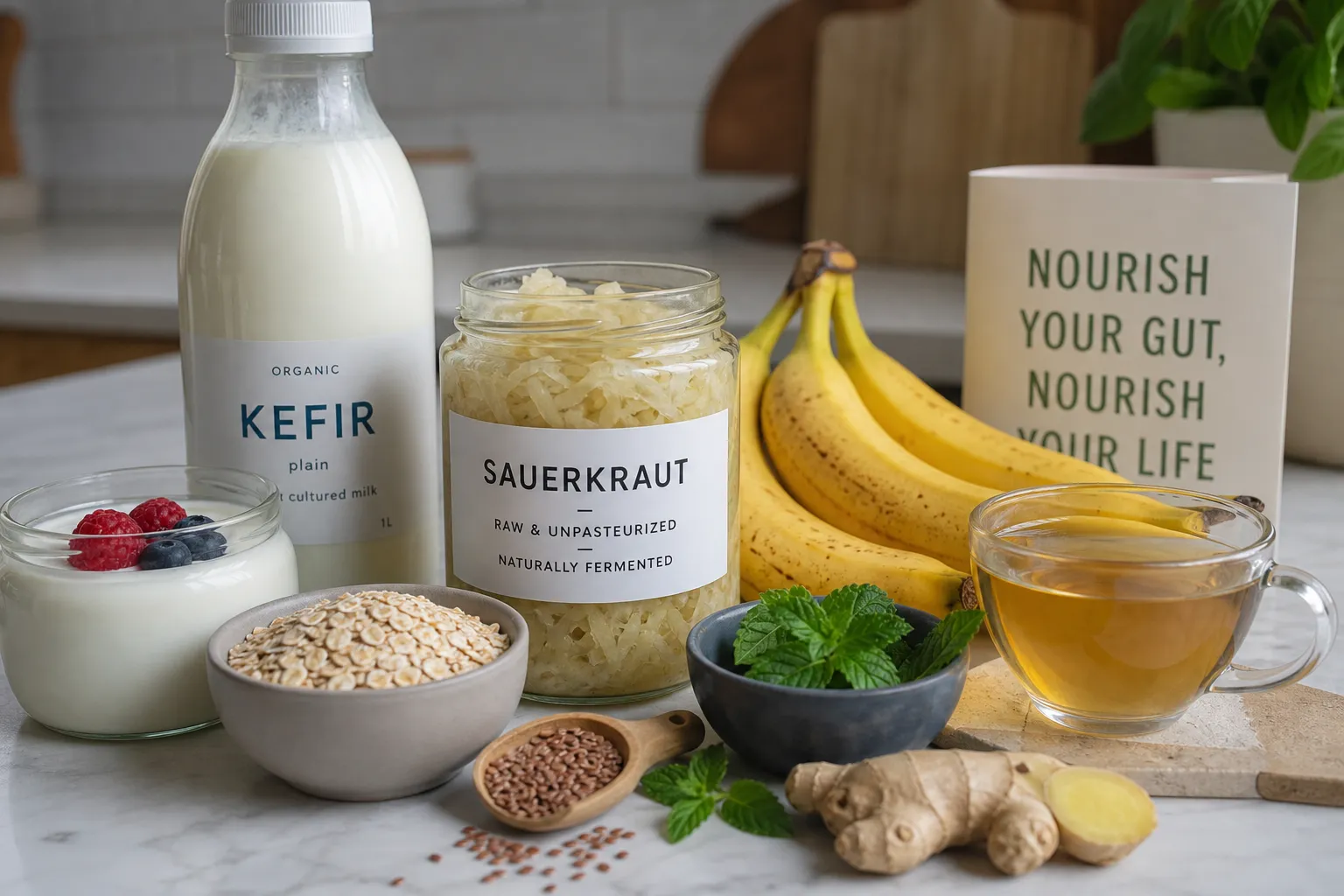
A more consistent intake of fibre, fluids and fermented foods can make a meaningful difference over time. Examples include:
-
live yoghurt or kefir
-
oats
-
flaxseed
-
lentils and beans
-
bananas
-
onions and leeks
-
sauerkraut or kimchi
-
ginger tea
-
peppermint tea
When food-first may be enough
A food-first approach may be the better fit if:
-
your diet is currently low in plant foods
-
you often skip meals or eat irregularly
-
you want gentle everyday support rather than a targeted supplement
-
you are not experiencing persistent or worsening digestive symptoms
When supplements may help complement food
Supplements may be worth considering when:
-
your diet is improving but still inconsistent
-
you struggle to get enough fibre from food alone
-
you want something convenient for travel or busy workdays
-
you want a targeted category such as probiotics, fibre, enzymes or herbal digestive support
This “food first, supplements second” view is especially important because it keeps expectations realistic. Supplements can complement healthy habits; they should not replace them.
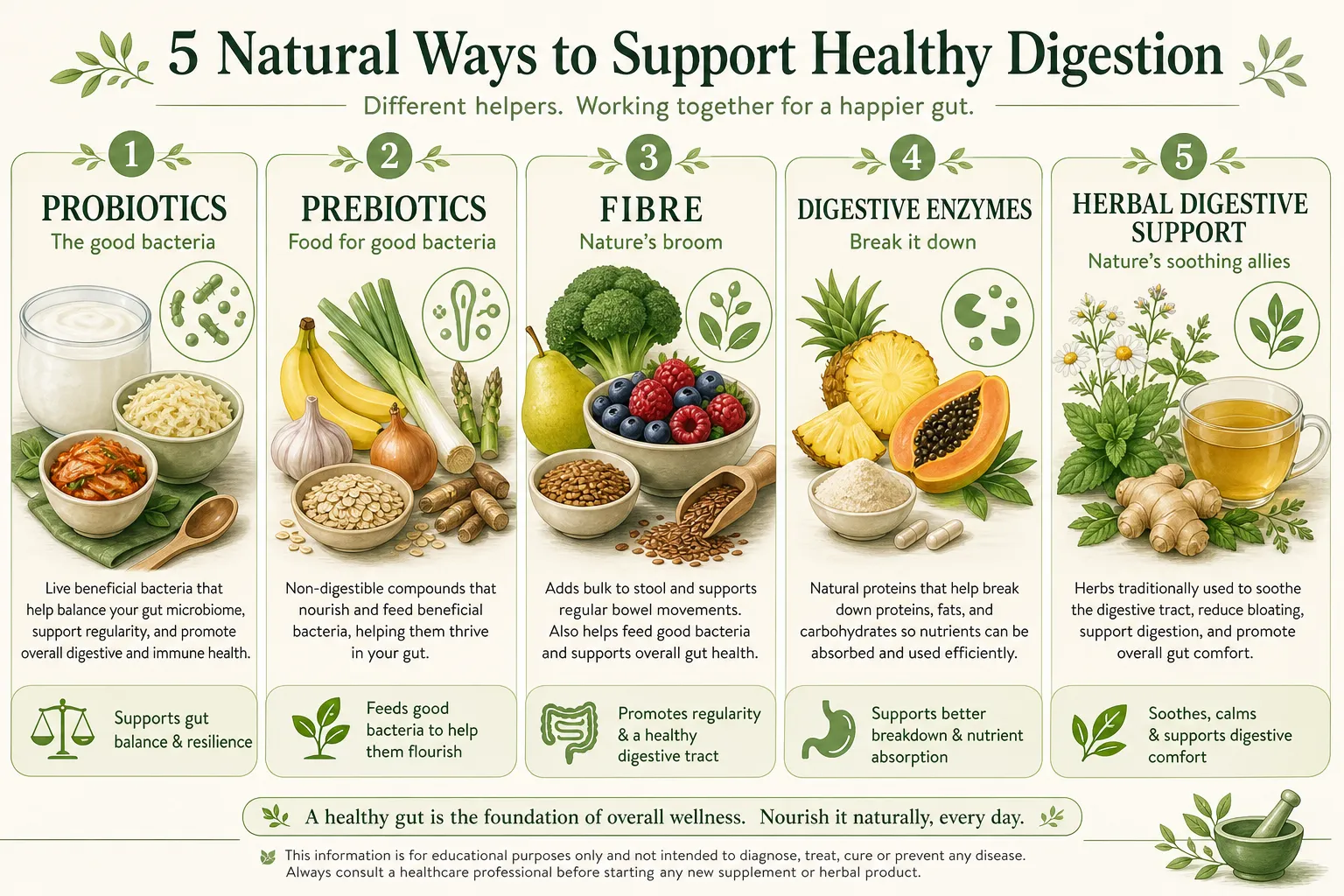
The five main categories of natural supplements for gut health
One of the biggest mistakes readers make is choosing by packaging claims instead of supplement type. Here is the simple breakdown.
|
Category |
What it is |
Often chosen by people who want |
Typical formats |
|---|---|---|---|
|
Probiotics |
Live microorganisms |
Everyday microbiome support |
Capsules, powders, liquids |
|
Prebiotics |
Non-digestible fibres that feed beneficial bacteria |
A food-like route to microbiome support |
Powders, fibres, blends |
|
Fibre supplements |
Soluble, insoluble or mixed fibres |
Help topping up low dietary fibre intake |
Powders, capsules, sachets |
|
Digestive enzymes |
Enzymes involved in food breakdown |
Support around heavier meals or specific food patterns |
Capsules, tablets |
|
Herbal/botanical digestive support |
Plant ingredients such as ginger or peppermint |
A natural, botanical-led approach |
Teas, capsules, tinctures |
Probiotics: the most searched, but not always the first answer
Probiotics are often the first thing people think of when they search for gut supplements UK. They are popular because they feel intuitive: add beneficial bacteria, support the gut.
That is part of the picture, but it is not the whole picture.
What probiotics are
Probiotics are live bacteria or yeasts used in foods and supplements. Different strains may have different characteristics, which is why one product is not automatically interchangeable with another.
What to look for in a probiotic
A better probiotic checklist includes:
-
clearly named strains, not just a vague “friendly bacteria” claim
-
sensible storage guidance
-
viable dose at the point of consumption
-
a format you will actually take consistently
-
clean labelling and reputable manufacturing
At InfiniVit, multi-strain options such as InfiniBio Maintenance can make sense for people looking for an everyday probiotic category product rather than an overhyped “mega-dose” approach.
For a deeper look at this category, see our guide to probiotics benefits.
When probiotics may not be the whole answer
If your diet is low in fibre, relying on probiotics alone may be too narrow an approach. Many people also need to look at what they are feeding their gut bacteria, not just whether they are taking live cultures.
Prebiotics and fibre: the most underrated natural digestive support
If probiotics get the attention, fibre often does the real heavy lifting in everyday routines.
Why fibre matters
Fibre helps support a healthy diet overall and can be one of the most practical natural tools for digestive wellbeing. Yet many UK adults still fall short of recommended intake.
A reader looking for natural supplements for digestive health may actually benefit more from a well-chosen fibre product than from an expensive probiotic alone.
Common fibre types in supplements
-
Psyllium husk – a classic soluble fibre
-
Inulin/chicory root fibre – often used as a prebiotic fibre
-
Flax-based blends – more food-like and often easy to add to breakfast
-
Mixed fibre formulas – combine multiple sources for convenience
If you want to understand the differences, our articles on the ultimate fibre supplement and understanding psyllium husk and its benefits go into more detail.
Best for natural-minded shoppers
Fibre is often a good fit if you prefer support that feels closer to food than to a specialist supplement. For example, Digest Fibre Plus or Multi Fibre Complex may suit readers specifically looking for fibre supplements for gut health as part of a broader food-first plan.
Important tip
Start low and go slow. Increasing fibre too quickly can feel uncomfortable, especially if fluid intake is poor.
Digestive enzymes: useful, but more situational
Digestive enzymes are often misunderstood. They are not a universal “fix”, but they can be a sensible category for some people.
What they are
Digestive enzymes help break down components of food such as protein, fat and carbohydrates. People often explore them around richer meals, irregular eating habits or specific food patterns.
Who may prefer enzyme support
Digestive enzymes may appeal if you:
-
eat on the go
-
tend to have larger meals rather than smaller balanced ones
-
want mealtime support rather than an everyday probiotic routine
-
prefer a targeted option over a broad gut blend
A product such as Digestive Enzymes Plus fits naturally into this category discussion because it is clearly an enzyme formula, rather than being framed as an herbal remedy.
The limitation
If your actual issue is low fibre intake, poor meal structure or chronic stress, enzymes may not be the main lever to focus on.
Herbal supplements for gut health: where natural intent is strongest
For many readers, this is the category they are really searching for when they type herbal supplements for gut health or herbal supplements for digestive health.
Common botanical options
Ginger
Often chosen by people who prefer warming, traditional plant-based digestive support.
Peppermint
Popular in teas, oils and capsules, especially among readers who like a familiar herbal route.
Fennel
A long-standing ingredient in digestive teas and botanical blends.
Artichoke
Used in some digestive formulations for a more plant-led profile.
Slippery elm
Sometimes included in traditional digestive supplement ranges.
Herbal support vs probiotic support
Herbal digestive products are usually chosen because they feel:
-
more traditional
-
more recognisable
-
easier to pair with a natural lifestyle
-
more aligned with tea, tincture or botanical capsule routines
If you want a botanical-led capsule rather than a general “gut” product, a formulation such as HEALTHY GUT Complex is the kind of option that fits this discussion most naturally. Likewise, Healthy Colon Formula may appeal to readers specifically looking for a gentler herbal-based regularity category rather than a harsh or stimulant-led product.
A note on peppermint and ginger teas
Do not overlook simple tea-based habits. A supplement is not automatically better than a well-used herbal food or drink routine. For some people, a daily ginger or peppermint tea is the most realistic place to begin.
Food-derived support: where apple cider vinegar fits
Apple cider vinegar has become a staple in natural wellness conversations, largely because it feels closer to pantry-based support than to a conventional supplement.
Is it a gut supplement?
Not in the same way probiotics or fibre are. It belongs more naturally in a food-derived everyday digestive support conversation than in a microbiome-specific one.
If you like this style of product, Apple Cider Vinegar Plus fits best as a food-inspired daily wellness option, not as a substitute for fibre, probiotics or a balanced diet.
How to choose the right natural gut supplement for your needs
Many articles list ingredients but do not help readers decide. Here is a simpler way to choose.
If you want a natural everyday baseline
Start with:
-
more fibre in food
-
fermented foods
-
hydration
-
consistent meals
Then consider:
-
a probiotic or mixed fibre product
If your diet is low in plant foods
Start with:
-
fibre-rich meals
-
seeds, oats, pulses and vegetables
Then consider:
-
a fibre or prebiotic-led supplement
If you prefer botanical support
Start with:
-
ginger tea
-
peppermint tea
-
herbal routines you will genuinely keep up
Then consider:
-
a herbal digestive capsule or botanical blend
If you want support around meals
Start with:
-
slowing down meals
-
eating more regularly
Then consider:
-
digestive enzymes
Choosing by format: capsules, powders, liquids or teas?
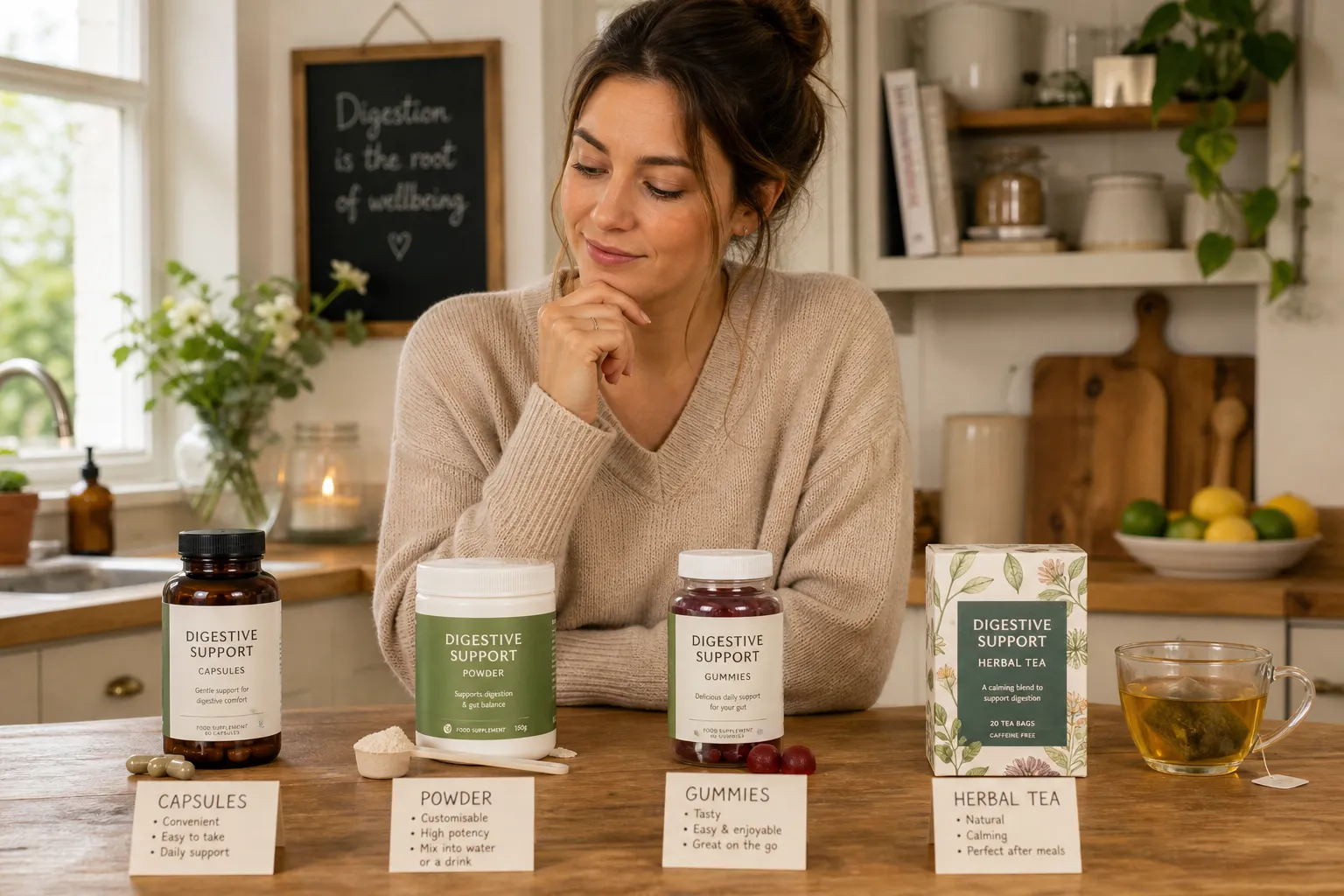
Format matters more than many brands admit. The best supplement is often the one you can use consistently.
|
Format |
Best for |
Watch-outs |
|---|---|---|
|
Capsules |
Convenience, portability, precise servings |
Not ideal if you dislike swallowing tablets |
|
Powders |
Flexible dosing, easy in smoothies or yoghurt |
Taste and texture matter |
|
Liquids |
Useful for people who dislike capsules |
Storage and taste can vary |
|
Teas |
Gentle, ritual-based support |
Usually less targeted than dedicated supplements |
|
Gummies |
Easy to take |
Check sugars, fillers and actual active content |
For readers who prioritise lifestyle fit, powders and teas often feel the most “natural”, while capsules usually win on convenience and dosing clarity.
Natural does not mean low quality standards
This is where premium brands can genuinely make a difference.
Natural gut health support should still be held to high standards of:
-
ingredient sourcing
-
manufacturing consistency
-
stability
-
clear labelling
-
regulatory discipline
At InfiniVit, that quality mindset matters because advanced formulations are manufactured in the UK to recognised standards including GMP and ISO9001, with broad dietary options across the wider range such as vegan, vegetarian, halal, kosher and organic selections where applicable. For shoppers trying to move beyond generic high-street products, those details are not marketing extras; they are part of what makes a supplement worth trusting.
What the evidence says – and why expectations should stay realistic
One of the most useful things the NHS highlights is that supplements in this area should be approached with balance, not hype.
“There’s some evidence that probiotics may be helpful in some cases, such as helping to ease some symptoms of irritable bowel syndrome (IBS). But there’s little evidence to support many health claims made about them.” – NHS Probiotics
That is exactly why it makes sense to think in categories rather than miracle claims. Different products do different jobs, and not every gut-related product deserves the same expectation.
Boots takes a similarly practical approach, reminding readers that supplements should complement lifestyle habits rather than replace them, especially where digestive symptoms are regular or persistent.
A sensible decision framework for UK shoppers
When comparing supplements for gut health UK retailers offer, use this checklist:
Ask these questions before you buy
-
What am I actually trying to support?
General digestive wellness, fibre intake, mealtime support, or a botanical routine? -
Is food-first enough for now?
If yes, start there. -
Does the format suit me?
A perfect formula is useless if you never take it. -
Does the brand explain the product clearly?
Avoid vague, overblown language. -
Is the formulation quality likely to justify the price?
Look for transparency, not just trend-led branding.
When to speak to a pharmacist or GP
A wellness article should never pretend that every gut concern belongs in the supplement aisle.
Seek professional advice if you have:
-
persistent abdominal pain
-
unexplained weight loss
-
blood in the stool
-
ongoing changes in bowel habits
-
significant digestive symptoms that are getting worse
-
concerns during pregnancy or while taking medicines
Supplements are best used as part of a sensible, informed routine, not as a substitute for clinical advice.
Final thoughts: the best natural supplement is the one that fits your real life
The best natural supplements for gut health are not necessarily the trendiest or the strongest-sounding. They are the ones that make sense for your actual habits, preferences and goals.
For one person, that may be a probiotic. For another, it may be a fibre supplement, digestive enzyme or herbal routine built around ginger and peppermint. And for many people, the smartest first move is simply eating more fibre-rich foods and being more consistent with meals.
If you want premium, science-led options to explore without the noise of generic high-street marketing, InfiniVit offers a more thoughtful route: UK-manufactured formulations, strong quality standards, targeted wellness categories and educational guidance designed to help you choose well. If fibre is where you want to start, you may also find our guide on best supplements for gut health and bloating helpful as a next step.
FAQ
What is the best supplement to improve gut health?
There is no single best supplement for everyone. The right choice depends on whether you are looking for probiotic support, extra fibre, digestive enzymes or a more herbal digestive support approach. In many cases, improving food quality and fibre intake should come first.
Will probiotics help encopresis?
Encopresis should be discussed with a GP or qualified healthcare professional, especially in children. Probiotics are not a guaranteed answer, and it is important to understand the underlying cause rather than relying on self-selected supplements alone.
What can I take naturally for gut health?
You could start with a food-first approach such as live yoghurt, kefir, oats, flaxseed, ginger tea or peppermint tea. If you want extra support, natural options often include probiotics, fibre supplements, digestive enzymes or botanical blends depending on your needs.
What are the 6 signs your gut is in trouble?
Possible signs can include ongoing discomfort, persistent bloating, constipation, diarrhoea, changes in bowel habits and feeling unusually unsettled after meals. If symptoms are persistent, severe or worsening, it is best to seek medical advice rather than self-diagnosing.
How do I reset my gut naturally?
There is no instant gut reset, but you can support digestive wellbeing naturally by eating more fibre-rich foods, staying hydrated, including fermented foods, moving regularly and managing stress. Supplements can complement those habits, but they should not replace a varied, balanced diet.