 English
 Arabic
 Polish
 Russian
For many UK adults, the best vitamin E supplement is none: a varied diet can supply enough. Plant oils, nuts, seeds and wheatgerm all contain vitamin E. If you are considering a capsule, compare its dose with your multivitamin and read the full ingredients. The headline number alone cannot tell you whether you need it.
The video introduces vitamin E and its food sources. For UK dose decisions, use the NHS figures below.
Do you need extra vitamin E?
The NHS vitamin E guidance gives a daily amount of 4 mg for men and 3 mg for women. It says a varied diet should supply enough, and your body stores what it does not use straight away. These are dietary amounts, not targets for a standalone capsule.
Think about what you eat across a week. The NHS lists rapeseed, sunflower and olive oil as sources, alongside nuts, seeds and wheatgerm. A meal cooked with plant oil or some nuts and seeds can contribute vitamin E. There is no need to compensate with a capsule for a day without them.
How do I know if I need vitamin E? Begin with your usual food and the vitamin E listed in any multivitamin or blend you take. If you eat a restricted diet or have a condition that affects fat absorption, ask a clinician about your needs. Symptoms alone are no basis for choosing a high-dose capsule; vitamin E is fat-soluble, so absorption matters.
|
Starting point |
What to compare |
Sensible next step |
|---|---|---|
|
Varied diet with plant oils, nuts or seeds |
Your usual food pattern |
Food first; an extra capsule is not automatically necessary |
|
Already taking a multivitamin |
Vitamin E in mg per daily serving |
Count the multivitamin before adding another product |
|
Limited food choices or possible absorption issue |
Diet, medical history and existing supplements |
Discuss the need and dose with a healthcare professional |
How to choose the best vitamin E supplement in the UK
1. Read the daily serving, not just the front of the bottle
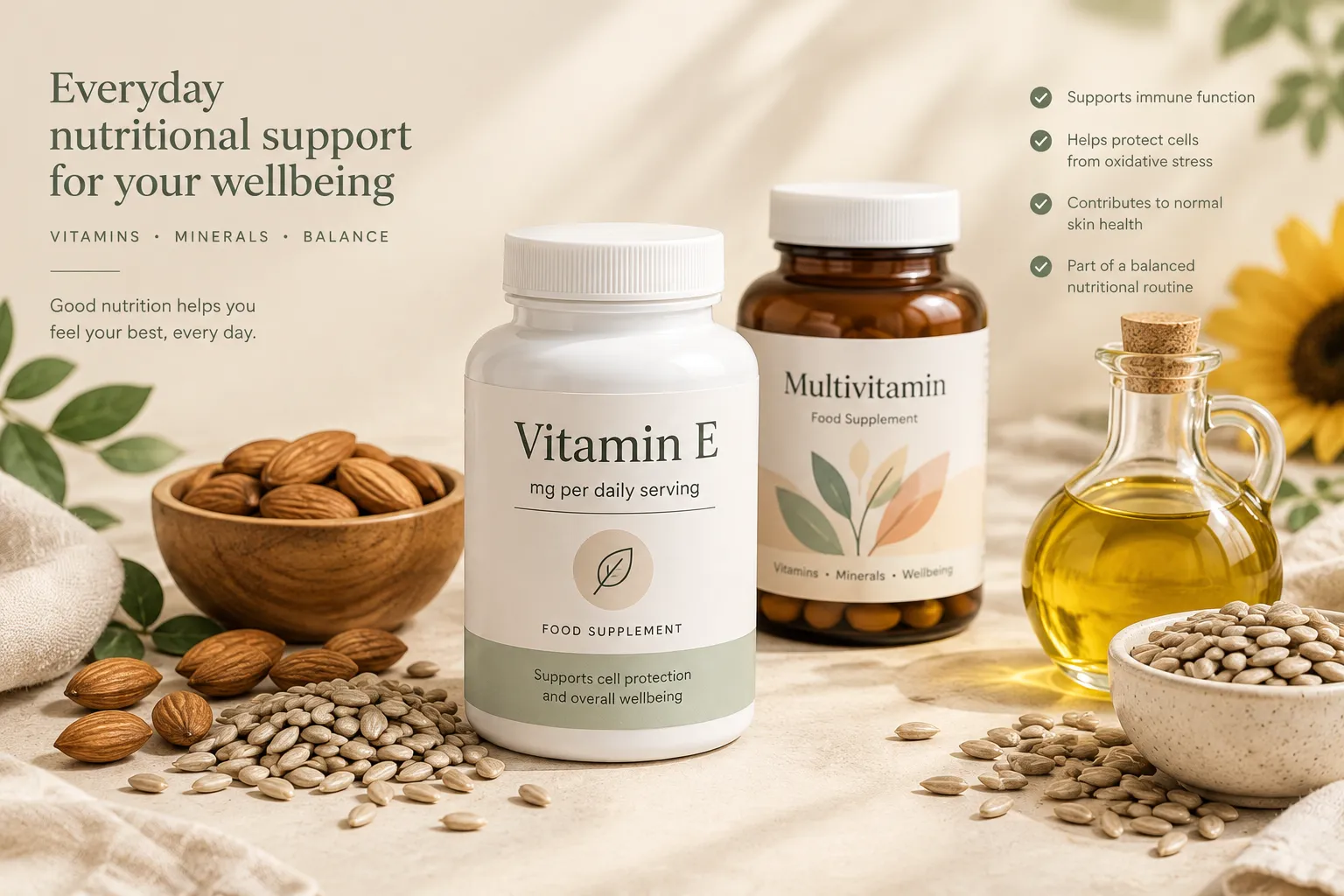
Find the vitamin E per recommended daily serving in milligrams, then note how many capsules make up a serving. A pack may also show IU. Use the printed mg amounts to compare products and total your supplements; the largest IU number is no quality score.
If you already take a multivitamin or a skin blend, write down the vitamin E in each daily serving and add those amounts to the proposed capsule. If the labels make that total difficult to calculate, a clearer product will be easier to use safely. For more on choosing a daily multi, read the multivitamin versus B-complex comparison.
The NHS says 540 mg (800 IU) or less a day from vitamin E supplements is unlikely to cause harm. It also warns against taking too much: there is insufficient evidence about the effects of high daily doses. The 540 mg figure is a safety statement, not a recommended dose. Compare it with the much smaller dietary amounts above.
2. Identify the form without assuming that “more forms” means better
Vitamin E has eight forms: four tocopherols (alpha, beta, gamma and delta) and four tocotrienols (alpha, beta, gamma and delta). Supplements contain different selections. One label may list alpha-tocopherol alongside gamma-tocopherol and delta-tocopherol; another may include alpha-tocotrienol, beta-tocotrienol, gamma-tocotrienol or delta-tocotrienol. D-alpha-tocopherol denotes a natural form, while dl-alpha-tocopherol is synthetic. These names describe the ingredients, not a proven extra benefit from taking a mixture.
Even with an “eight-form complex”, start with the amount per serving and your reason for taking it. A costly blend will not help if you do not need extra vitamin E. Read the entire ingredients list if you have dietary requirements: plant-sourced vitamin E in a gelatin softgel is not vegan. See how to check halal certification on UK supplements for another example of checking the specific pack.
3. Look at the complete formula and its practical fit
The ingredient list should let you assess the vitamin E, carrier oil, capsule shell and allergens together. Compare a blend with your other supplements and find its daily serving and manufacturer details. For vegan, vegetarian or other certifications, rely on the particular product label rather than a claim about the retailer’s whole range.
|
Label detail |
Useful question |
Red flag |
|---|---|---|
|
Vitamin E in mg per daily serving |
What will I take alongside my multivitamin? |
Only a large front-of-pack IU headline catches your eye |
|
Named form or source |
Can I tell what the ingredient is? |
“Natural” substitutes for a clear ingredient list |
|
Full ingredients and suitability |
Does the shell or carrier fit my diet and allergies? |
A plant-sourced vitamin in an unsuitable capsule |
|
Stated claims |
What does the claim actually say? |
Promises to treat disease or reverse skin changes |
4. Read the antioxidant claim narrowly
The authorised UK claim says:
“Vitamin E contributes to the protection of cells from oxidative stress.” – UK legislation, Regulation 432/2012
That is a claim about vitamin E’s nutrient function. It provides no evidence that an extra capsule prevents disease, grows hair, fades scars or makes healthy skin look younger. It also says nothing about your own intake. The distinction matters whenever you read UK supplement claims.
When to ask before taking a vitamin E supplement
Ask a pharmacist or clinician before adding vitamin E if you take anticoagulant or antiplatelet medicines, or have a condition that affects fat absorption. The NIH vitamin E fact sheet notes that large doses with these medicines can increase bleeding risk. The NHS advises people taking anticoagulants to ask before taking supplements. Bring the label and a list of your medicines and supplements; do not stop prescribed treatment to start a vitamin.
An impressive IU figure is no reason to aim for the NHS safety figure. Your food and current supplements are more useful starting points. If you came to vitamin E because of a skin, hair or other health concern, seek advice about the concern itself instead of relying on an antioxidant claim.
The sensible choice
For most adults, food is the first choice. If your diet or clinical advice gives you reason to supplement, choose a clear mg-per-serving label and a dose that accounts for your multivitamin. Suitable ingredients and modest claims matter more than a striking IU figure.
InfiniVit offers carefully balanced formulas and clear supplement communication. Its immunity, antioxidants and superfoods range is worth browsing if you have identified a reason to supplement and can account for what you already take. Start with food, avoid doubling up, and ask a healthcare professional when medicines or absorption issues complicate the choice. Premium ingredients cannot settle the question of whether you need extra vitamin E.
FAQ
What is the healthiest vitamin E?
For most adults, vitamin E from a varied diet is the sensible starting point. The NHS lists plant oils, nuts, seeds and wheatgerm as sources; a capsule with the most forms or the highest IU figure is not automatically healthier.
Does vitamin E help hair growth?
An antioxidant claim does not establish that a vitamin E supplement grows hair. If you are concerned about hair loss, seek advice about possible causes rather than choosing a high-dose capsule on that promise.
Are vitamin E supplements safe to take?
The NHS says 540 mg (800 IU) or less a day from vitamin E supplements is unlikely to cause harm, but that is not a recommended dose. Count vitamin E in your other supplements and speak to a pharmacist or clinician if you take medicines that affect bleeding or have an absorption condition.