
 English
 Arabic
 Polish
 Russian

The best vitamins for tiredness and fatigue depend on whether you are short of a nutrient in the first place. If you already eat a varied diet, another capsule may not change how you feel. Speak to your GP about persistent, severe or unexplained tiredness before trying to treat it yourself. Do not self-prescribe iron.
When tiredness needs a GP assessment
The NHS advises seeing a GP if you have been tired for a few weeks without knowing why, it affects daily life, or you have other symptoms. Tell your GP about breathlessness, palpitations, pins and needles, heavy periods, unexpected weight loss, or changes in mood or sleep. They can ask about your diet, medicines and medical history, and decide whether blood tests, including an anaemia test, would help.
If you have chest pain, faint or become severely breathless, seek urgent medical help. Do not wait to see whether a supplement helps.
Which nutrients can matter for tiredness?
Your diet gives you clues about possible shortfalls. The same symptoms can have several causes, though, so they cannot identify a deficiency on their own.
Vitamin B12 and folate
Vitamin B12 and folate help your body make healthy red blood cells. A deficiency can cause anaemia and pronounced tiredness. Pins and needles can also accompany B12 deficiency, so seek an assessment rather than waiting for those symptoms to pass. If you eat a vegan diet, you need a dependable B12 source from fortified foods or a supplement. Leafy greens, beans and fortified foods provide folate.
Once you know you have a deficiency, its cause determines the treatment. Some people with B12 deficiency need prescribed treatment rather than a standard multivitamin. If you are considering high-dose folic acid for unexplained tiredness, discuss B12 with a clinician first.
Iron: important, but not a vitamin
Iron deficiency anaemia can cause tiredness, breathlessness and palpitations. Tell your GP if you have heavy periods or eat few iron-rich foods. Neither clue proves a deficiency. Meat, beans, lentils and fortified cereals provide iron. A blood test can help your GP work out whether you lack iron and why. Do not self-prescribe iron for fatigue: you could delay a diagnosis by treating the wrong cause.
Vitamin D, B vitamins and magnesium
Vitamin D helps maintain normal bones and muscle function. The NHS advises everyone to consider 10 micrograms daily in autumn and winter, regardless of whether they feel tired. Vitamin B12 and magnesium have authorised claims concerning tiredness and fatigue; taking extra when your intake is adequate does not follow from those claims. Wholegrains, pulses, nuts and seeds supply various B vitamins and magnesium. For general intake decisions, read Who Actually Needs Supplements in the UK?.
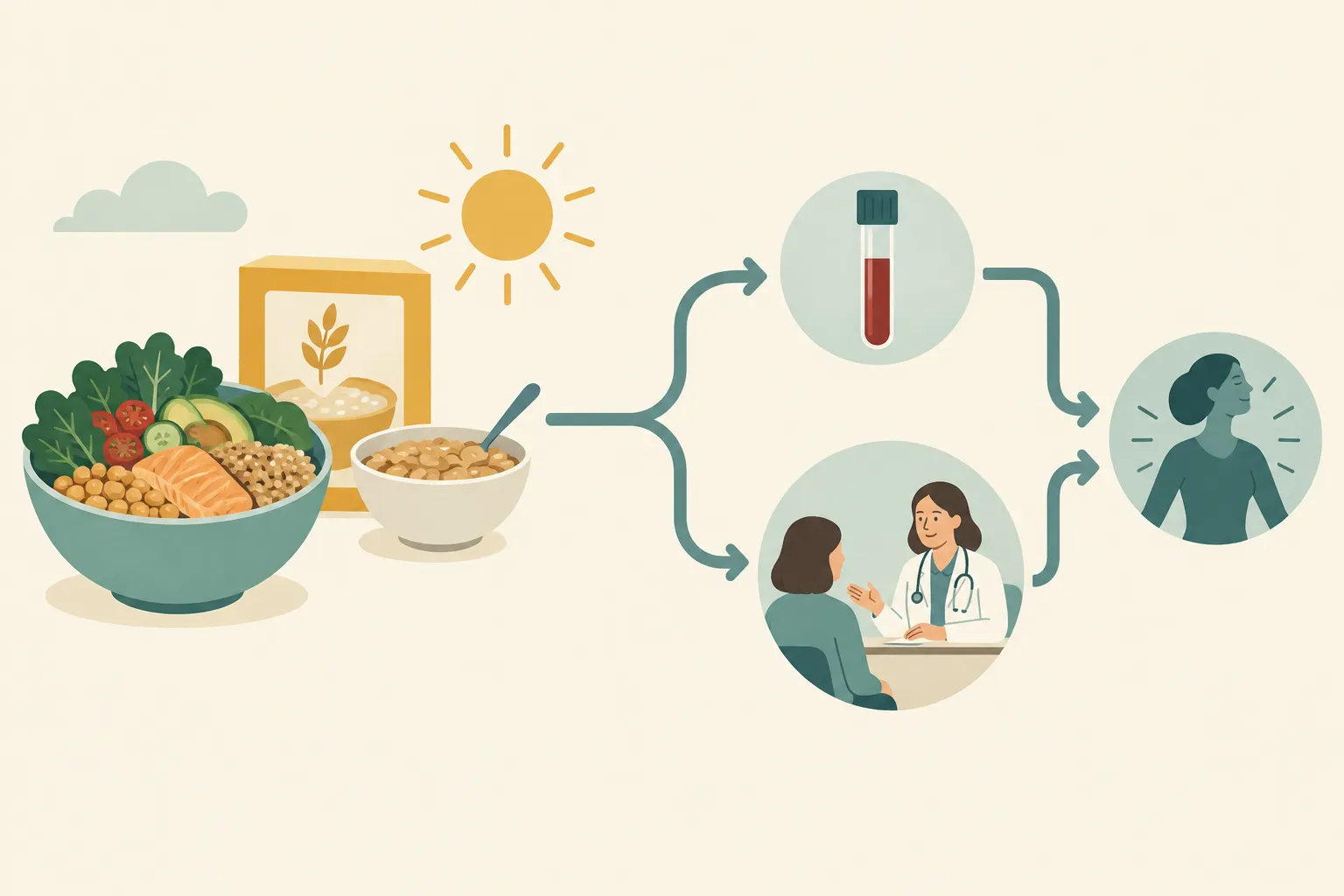
A food-and-symptom framework before you buy
Use your diet and symptoms to start the conversation, not to diagnose yourself:
|
What you notice |
Possible nutrition question |
Sensible next step |
|---|---|---|
|
Persistent fatigue with breathlessness or palpitations |
Could anaemia be involved? |
See your GP; do not start iron on your own. |
|
Vegan diet, fatigue or pins and needles |
Is your B12 intake reliable, and do symptoms need assessment? |
Arrange a GP review if symptomatic; ensure a dependable B12 source. |
|
A restricted diet or frequently missed meals |
Are you getting enough food and varied nutrients? |
Review regular meals and consider individual advice if restriction continues. |
|
Tiredness despite a varied diet |
Could sleep, medication or an underlying condition explain it? |
Speak to your GP rather than adding multiple supplements. |
Think through what you ate over the past week. If meals were irregular, a more consistent pattern with protein foods, vegetables or fruit, and wholegrains is a sensible place to start. If you exclude a food group, consider which nutrients it would otherwise provide. Ongoing fatigue still calls for an assessment.
What does “reduces tiredness and fatigue” mean on a label?
The Great Britain nutrition and health claims register sets out which claims are authorised. To use one, a product must meet its conditions of use. One permitted statement is:
“Vitamin B12 contributes to the reduction of tiredness and fatigue.” – UK legislation, permitted health claims
Iron has an authorised reduction-of-tiredness claim too. The wording describes a nutrient’s role in normal function. It does not promise to treat ongoing fatigue, and it cannot tell you whether you lack that nutrient. You can read more about what UK supplement claims really mean.
Read the amounts on the label as well as the front-of-pack claim. One ingredient with an authorised claim does not give every ingredient in the blend the same claim. Choose according to the nutrient you need.
When might a supplement help?
A supplement makes sense for an intake gap, a life-stage recommendation or a deficiency being treated with clinical advice. Still exhausted despite a varied diet? Tell your GP. Taking a larger dose will not show you why you feel tired.
The autumn and winter vitamin D recommendation is separate from investigating fatigue. A multivitamin may be convenient if your diet is limited, but it cannot replace meals or a diagnosis. If you avoid animal foods, use a vegan supplement label checklist to assess suitability once you know what you need.
Compare the amounts, serving instructions and dietary suitability before buying. InfiniVit offers targeted energy, stress, sleep and brain supplements alongside multi-ingredient options, with nutrient claims you can read against the label. Those products are for nutritional support; see your GP if you cannot explain your tiredness.
What if nutrients are not the cause?
Sleep problems, stress, medicines and medical conditions can leave you tired. Before your appointment, note when the fatigue started, what your sleep and meals are like, and any medicines you take. Your GP can use that context to decide what to investigate.
The bottom line
If tiredness persists, becomes severe or has no clear cause, see your GP, and leave iron treatment to a clinician’s advice. Once you know which nutrient you need, InfiniVit’s clear label claims can help you choose appropriate nutritional support.
FAQ
How can I boost my fatigue?
If you mean how to feel less fatigued, pay attention to your sleep and meals, and make a note of new symptoms. See your GP if tiredness persists, is severe or has no clear cause. A supplement may help if it addresses inadequate intake or a diagnosed deficiency.
Is there a pill for chronic fatigue?
There is no single vitamin pill for persistent fatigue. Your GP can investigate possible causes and recommend treatment if they find a deficiency or another condition. Do not take iron without an appropriate assessment and advice.