
 English
 Arabic
 Polish
 Russian
Best Brain Supplements for Memory and Focus
If you are comparing the best brain health supplements for memory and focus, the first thing to know is this: most products are marketed far more confidently than the evidence justifies. For healthy adults, no over-the-counter supplement can honestly promise sharper thinking, prevent dementia, or transform concentration overnight.
That does not mean every option is pointless. Some brain health vitamins and nutrients may be worth considering in the right context, especially if your diet is lacking, you have a known deficiency, or you want targeted nutritional support as part of a wider brain-friendly routine. The real skill is knowing what may be useful, what is overhyped, and how to choose safely.
At InfiniVit, we believe premium supplementation should feel clear, not confusing: quality ingredients, science-led formulations, transparent claims, and sensible expectations. This UK-focused guide breaks down the main categories adults commonly consider for memory and focus, including omega-3s, B vitamins, vitamin D, magnesium, and evidence-led herbal options.
What the top-ranking advice gets right – and what it often misses
Across leading health publishers, a few themes come up again and again:
- many brain supplements are weak on proof
- diet and lifestyle matter more than pills
- ingredients like omega-3s, ginkgo, B vitamins, and vitamin E are commonly discussed
- benefits are often more plausible in deficiency, poor diet, or specific clinical settings than in healthy adults
That is a good starting point, but there are still important gaps.
Common content gaps we are closing here
Most competitor guides do not explain clearly:
- the difference between correcting a deficiency and “boosting” a healthy brain
- which options may support focus indirectly through sleep, stress, or energy metabolism
- how to compare single nutrients versus blended formulas
- why product quality, standardisation, and realistic dosing matter
- how UK adults can choose more safely without falling for exaggerated marketing
That is where a more premium, practical, science-led approach matters.
The golden rule: supplements support foundations, they do not replace them
Before looking at any capsule or complex, remember that brain function depends on far more than one nutrient. Sleep quality, physical activity, diet quality, stress load, social connection, alcohol intake, and underlying health all shape memory and concentration.
If you want to improve the basics first, our guide to brain-supportive foods and daily habits is a smart companion read.
For many adults, the best “brain stack” is still:
- regular exercise
- a plant-rich, Mediterranean-style diet
- enough protein
- consistent sleep
- managing stress
- correcting any nutrient deficiencies
A simple way to think about brain supplements
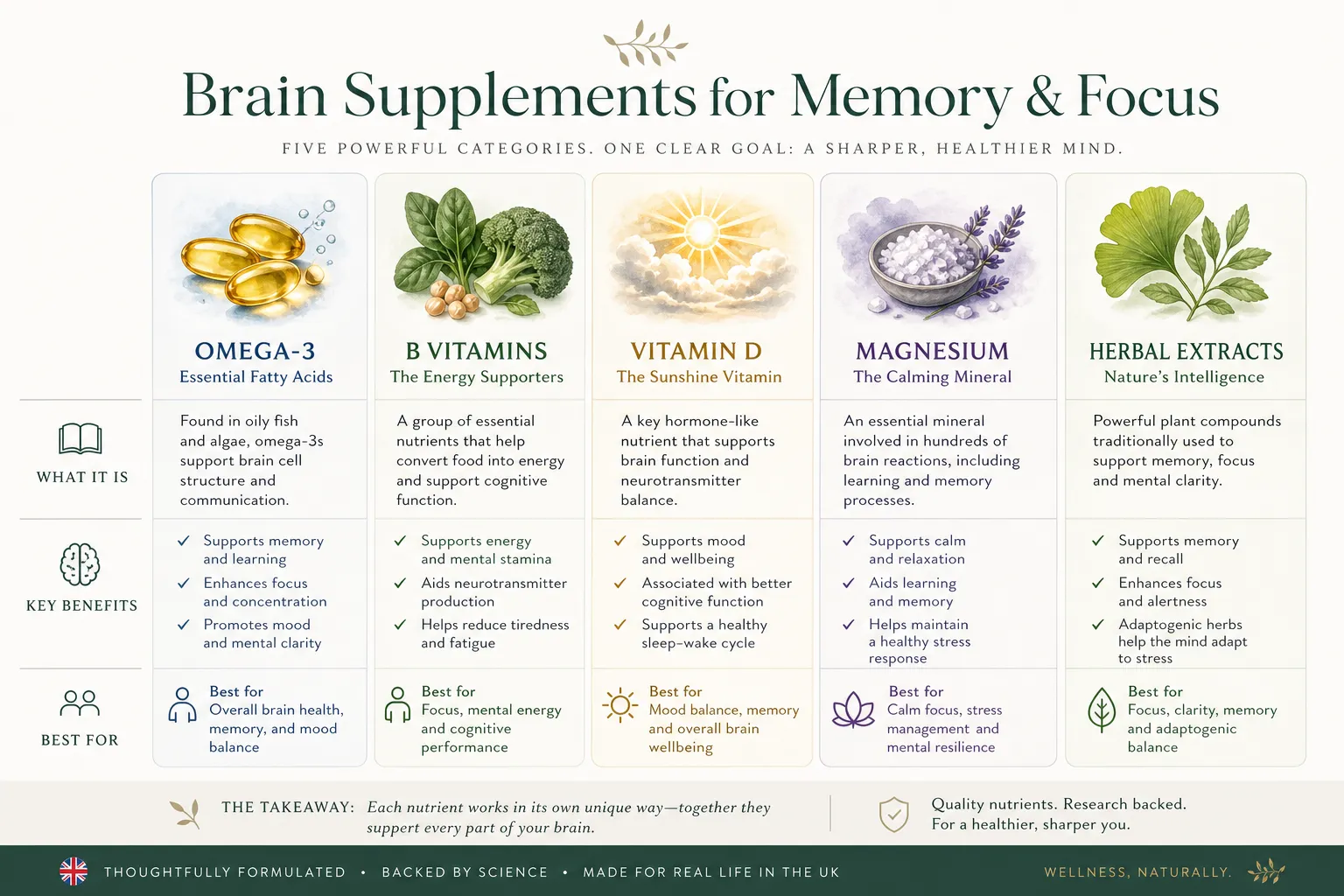
A helpful framework is to group options into five categories:
| Category | Main role | May suit | Key caution |
|---|---|---|---|
| Omega-3s | Structural and nutritional support | Those who eat little oily fish | Evidence for memory enhancement in healthy adults is limited |
| B vitamins | Energy metabolism and nervous system support | Those with low intake, restricted diets, or deficiency risk | More is not automatically better |
| Vitamin D | General health and nervous system support | Those with low sun exposure or known low levels | Best used to correct insufficiency, not as a “brain booster” |
| Magnesium | Supports normal nervous system function | Those with poor intake, stress, poor sleep, or muscle tension | Can upset digestion depending on form and dose |
| Herbal/nootropic options | Varies by ingredient | Adults seeking targeted support with realistic expectations | Evidence quality is mixed and product quality varies |
Omega-3s: sensible nutritional support, but not a magic fix
Omega-3 fatty acids, especially DHA and EPA, are among the most discussed brain healthy vitamins and nutrients, even though technically they are fats rather than vitamins. DHA is a major structural component of the brain, which is why omega-3s are such a common starting point in conversations about cognition.
What omega-3s may help with
Omega-3s may be worth considering if you:
- rarely eat oily fish
- follow a diet low in marine fats
- want broad nutritional support for brain, heart, and eye health
- prefer a foundational approach rather than a stimulant-style product
Where evidence is limited
This is where marketing often runs ahead of science. Diets rich in fish are associated with better long-term brain health, but fish oil supplements have not consistently shown the same clear cognitive benefits in healthy adults.
In other words, eating salmon, sardines, mackerel, trout, walnuts, seeds, and a varied diet may matter more than simply swallowing fish oil.
Best practice
If you choose omega-3, think of it as foundational nutrition, not a fast-acting memory enhancer. High-quality sourcing, freshness, and sensible dosing matter more than flashy claims.
For a broader guide to these fats, see our article on omega 3, 6 and 9 benefits.
B vitamins: most useful when there is a real need
B vitamins are essential for energy metabolism, nerve function, and normal psychological function. That is why they appear so often in brain health supplements.
The most discussed are:
- vitamin B6
- folate
- vitamin B12
Who B vitamins may suit
B vitamins may be especially relevant if you:
- eat little or no animal food
- are older and concerned about B12 intake or absorption
- have dietary gaps
- feel fatigued and want to review your overall nutritional status with a clinician
Where evidence is stronger
If someone is low in B12 or folate, correcting that deficiency matters. Brain fog, tiredness, and poor concentration can sometimes overlap with poor nutritional status.
Where evidence is weaker
In healthy adults with adequate intake, taking extra B vitamins does not reliably translate into better memory or laser-sharp focus. More nutrients do not necessarily create more performance.
That makes B vitamins valuable in the right context, but not universally transformative.
Vitamin D: important for overall wellbeing, but not a direct cognitive shortcut
Vitamin D is one of the most common nutrients UK adults are advised to monitor, particularly during autumn and winter when sunlight exposure is limited.
Why it belongs in this conversation
Low vitamin D can overlap with low mood, fatigue, and reduced wellbeing, all of which can affect how mentally sharp you feel. So while vitamin D is not best framed as a direct memory supplement, it can still be relevant to how well you function day to day.
Who it may suit
Vitamin D may be worth prioritising if you:
- spend little time outdoors
- cover your skin regularly
- have darker skin
- live in the UK with minimal winter sun
- have previously been told your levels are low
The practical takeaway
Think of vitamin D as a health essential rather than a nootropic. It is often more about correcting insufficiency than boosting cognition beyond normal.
If you want to understand this nutrient in more detail, read our guide to the role of vitamin D in everyday health.
Magnesium: one of the most practical options for modern lifestyles
Magnesium deserves more attention in evidence-led conversations about focus. Not because it is a miracle brain enhancer, but because it may support several upstream factors that influence mental performance.
Why adults consider magnesium
Magnesium contributes to normal psychological function and the normal functioning of the nervous system. It is also often used by adults who are dealing with:
- stress
- poor sleep
- muscle tension
- a busy, overextended lifestyle
- lower dietary intake from whole foods
Why it may help indirectly
If your focus problems are partly driven by poor sleep, tension, or stress, magnesium may feel more useful than a flashy “brain” formula. It may not improve cognition directly in the way marketing suggests, but it can support conditions that help you think more clearly.
Form matters
Not all magnesium products are equal. Different forms vary in tolerability and absorption, and some cheaper products are more likely to upset digestion.
This is where premium formulation matters: thoughtful combinations, appropriate forms, and no unnecessary megadosing.
Herbal and nootropic options: where promise meets caution
This category gets the most attention and the most hype. Some herbs and specialised compounds are genuinely interesting, but evidence varies considerably.
Below is a practical look at the most commonly considered options.
Ginkgo biloba
Ginkgo is widely marketed for memory and circulation. It remains one of the best-known herbal ingredients for cognitive support.
Who it may suit
Adults who want a traditional herbal option and understand that benefits, if any, may be modest.
What to know
Large, well-designed research has not shown convincing evidence that ginkgo prevents dementia or reliably improves cognition in healthy adults. It is often tolerated, but it can interact with medicines, especially blood thinners.
Curcumin and turmeric extracts
Curcumin is the active compound in turmeric and is often discussed because of its antioxidant and anti-inflammatory potential.
Who it may suit
Adults interested in broader wellness support, especially in premium formulas that focus on absorption.
What to know
Early research is interesting, but evidence for memory and focus remains limited and inconsistent. It is better viewed as part of a wider wellbeing strategy than a guaranteed cognitive aid.
If this ingredient interests you, you can learn more from our guide to curcumin and turmeric benefits.
Ashwagandha
Ashwagandha is more often associated with stress resilience than memory itself, but that can still be relevant for concentration.
Who it may suit
Adults whose focus dips when stress runs high or sleep suffers.
What to know
The best-case use for ashwagandha is often stress support with possible knock-on benefits for calm and concentration, not direct cognitive enhancement.
Lion’s mane mushroom
Lion’s mane has become popular in modern wellness, often appearing in nootropic blends.
Who it may suit
Adults looking for a botanical or mushroom-led approach and comfortable with emerging rather than definitive evidence.
What to know
Research is promising but still early. It should be approached with curiosity, not certainty.
A balanced verdict on blended formulas
Multi-ingredient products are common in the premium supplement space. When they are well formulated, they can be more useful than random single-ingredient stacking.
What makes a blend better
A better blend usually has:
- sensible doses rather than “label dust”
- complementary ingredients with a clear rationale
- transparent labelling
- no overblown disease claims
- quality manufacturing and testing standards
What makes a blend worse
A weaker product often relies on:
- long ingredient lists with tiny doses
- stimulant-heavy positioning
- vague “proprietary blends”
- poor transparency
- dramatic promises unsupported by evidence
At InfiniVit, our approach is to focus on quality, synergy, and compliance: premium ingredients, UK manufacturing, strict GMP and ISO9001 standards, and claims aligned with authorised EFSA statements where applicable. That is especially important in a category where trust is often the missing ingredient.
One example of a blend built around these principles is InfiniVit’s Brain Power, winner of the Nourish Awards 2025. It combines its ingredients at researched doses rather than trace amounts, with a clearly labelled formula and no exaggerated claims — the kind of transparency worth looking for in any blended product.
The strongest evidence still points back to diet and lifestyle
One major weakness in many articles about best brain health supplements is that they spend too little time on the essentials that consistently matter most.
Food patterns beat isolated pills
Mediterranean-style and MIND-style eating patterns are often linked with better long-term cognitive ageing. That usually means more:
- leafy greens
- berries
- pulses
- olive oil
- nuts and seeds
- whole grains
- oily fish
and less:
- ultra-processed food
- excess sugar
- heavy alcohol intake
Exercise is not optional for brain health
Regular movement supports blood flow, cardiometabolic health, mood, and resilience – all deeply connected to cognition. If you want one of the highest-value brain habits available, it is exercise.
Our guide to the benefits of exercise for overall health explores why this foundation matters so much.
How to choose safely in the UK
Safety matters as much as ingredient selection. A premium supplement should feel reassuring from label to formulation.
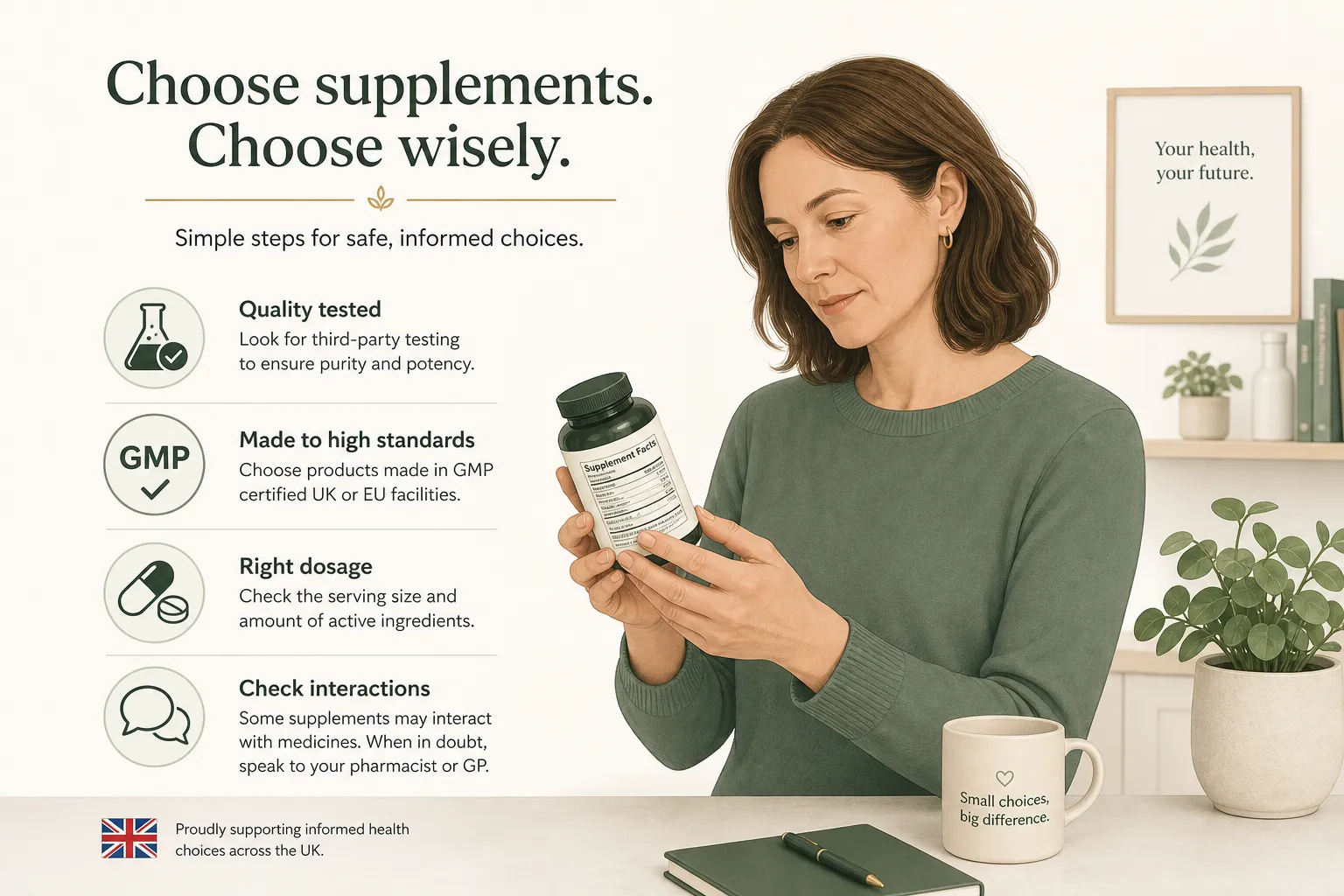
Use this checklist before buying
| What to check | Why it matters |
|---|---|
| Clear ingredient amounts | Helps you judge whether doses are meaningful |
| Standardised extracts | Improves consistency for herbal ingredients |
| UK manufacturing standards | Supports quality assurance and traceability |
| GMP and ISO-aligned production | Indicates stronger manufacturing discipline |
| Allergen and dietary suitability | Important for vegan, vegetarian, halal, kosher, or organic preferences |
| Medicine interactions | Crucial for herbs like ginkgo |
| Realistic claims | A sign the brand respects evidence |
When to speak to a clinician first
Get personalised advice before using a brain supplement if you:
- take blood thinners or multiple medicines
- are pregnant or breastfeeding
- have a medical condition
- have significant memory concerns
- suspect a nutritional deficiency
- are combining several supplements already
What the evidence suggests, in plain English
To keep expectations grounded, here is the shortest honest summary:
- Omega-3s: worthwhile if your diet is low in oily fish, but not a guaranteed focus supplement
- B vitamins: useful when intake or status is low; less compelling as a “boost” if you are already sufficient
- Vitamin D: important for general health and worth correcting if low, especially in the UK
- Magnesium: often practical for indirect support through stress, sleep, and nervous system function
- Herbal options: potentially useful for some adults, but evidence is mixed and quality matters enormously
How InfiniVit approaches smarter supplementation
At InfiniVit, we do not believe premium wellness should rely on hype. We believe in:
- high-grade ingredients selected with purpose
- science-led formulations designed for effectiveness
- synergistic blends rather than generic copycat formulas
- transparent, trustworthy communication
- UK manufacturing with strict GMP and ISO9001 quality standards
- broad support across wellness goals, from brain function and energy to immunity, gut health, sleep, joints, and more
- options suited to vegan, vegetarian, halal, kosher, and organic preferences where available
If you are looking beyond high-street sameness, that is where a more considered supplement brand can make a meaningful difference.
Final verdict
The best supplements for memory and focus are not the ones with the loudest label claims. They are the ones that fit your real needs, respect the limits of the evidence, and support a bigger picture of brain health.
For many UK adults, that means starting with fundamentals: nutrient sufficiency, diet quality, exercise, sleep, and stress management. From there, certain brain health supplements may have a role, especially omega-3s, B vitamins, vitamin D, magnesium, or carefully chosen herbal formulas – but only with realistic expectations.
If you want premium support you can trust, explore InfiniVit’s range of science-led formulations designed with quality, purity, and practical wellbeing in mind. Better choices start with better information – and better standards.
FAQ
Do brain and memory supplements actually work?
Some can be helpful in the right context, especially if they correct a nutrient gap or support factors like stress, sleep, or general wellbeing. But for healthy adults, most do not reliably produce dramatic memory or focus improvements, and none should be seen as a substitute for diet, exercise, and good sleep.
What is the #1 brain supplement?
There is no single #1 brain supplement that works best for everyone. The right choice depends on your diet, lifestyle, possible deficiencies, and whether you need foundational nutritional support such as omega-3s, B vitamins, vitamin D, or magnesium.
Which vitamins are good for brain focus and memory?
B vitamins, especially B6, folate, and B12, are relevant for nervous system function and energy metabolism, while vitamin D may matter if levels are low. Magnesium is not a vitamin, but it is also commonly considered because it supports normal psychological and nervous system function.
What is the strongest cognitive enhancer?
For over-the-counter wellness products, there is no honest basis for calling one supplement the strongest cognitive enhancer. Ingredients like ginkgo, curcumin, lion’s mane, and ashwagandha may have potential in some cases, but evidence is mixed and effects are usually modest rather than dramatic.
What is the best brain supplement that actually works?
The best option is usually the one that addresses a real need, such as low omega-3 intake, poor vitamin D status, inadequate B12, or stress-related sleep disruption where magnesium or certain botanicals may help indirectly. Quality, dose, safety, and realistic expectations matter more than trend-driven marketing.
What foods do neurologists recommend for brain health?
Brain-friendly eating patterns typically emphasise leafy greens, berries, nuts, seeds, pulses, whole grains, olive oil, and oily fish. These foods are commonly associated with Mediterranean-style and MIND-style diets, which have stronger long-term support than most standalone supplements.