
 English
 Arabic
 Polish
 Russian
The best multivitamin for women depends on your diet, life stage and the dose you would take each day. “Women’s” on the pack tells you little about what is inside. Read the per-serving label first: you may find that a single nutrient fits your needs better than a general formula, or that you do not need a supplement.
Start with the reason you’re buying
Decide which gap you want to address before choosing a bottle. A varied diet may provide the essential nutrients you need. A multivitamin can help fill nutrient gaps, but it cannot diagnose a deficiency or make up for an unbalanced diet. For the wider evidence, read Multivitamin Benefits: What They Can and Can’t Do. If you are unsure whether to take any supplement, start with who actually needs supplements in the UK.
|
Your situation |
First label decision |
Better next step if the label does not fit |
|---|---|---|
|
You want everyday nutritional cover |
Look at the whole daily serving, not the front-of-pack promise |
Consider whether a single nutrient addresses the actual gap |
|
You eat a vegetarian or vegan diet |
Check vitamin B12, vitamin D and whether the capsule and vitamin D source suit your diet |
Use fortified foods or a suitable targeted supplement if the multi leaves a gap |
|
You have periods and are considering iron |
Check whether iron is present and how much the daily serving provides |
Seek medical advice if you suspect iron deficiency rather than guessing a dose |
|
You are planning pregnancy or pregnant |
Use pregnancy-specific guidance, especially for folic acid and vitamin A |
Speak to a midwife, GP or pharmacist about the appropriate supplement |
|
You are peri- or postmenopausal |
Reassess iron and look at your diet and vitamin D intake |
Do not assume a high-iron formula is appropriate because it is labelled for women |
How to choose a multivitamin for women from the label
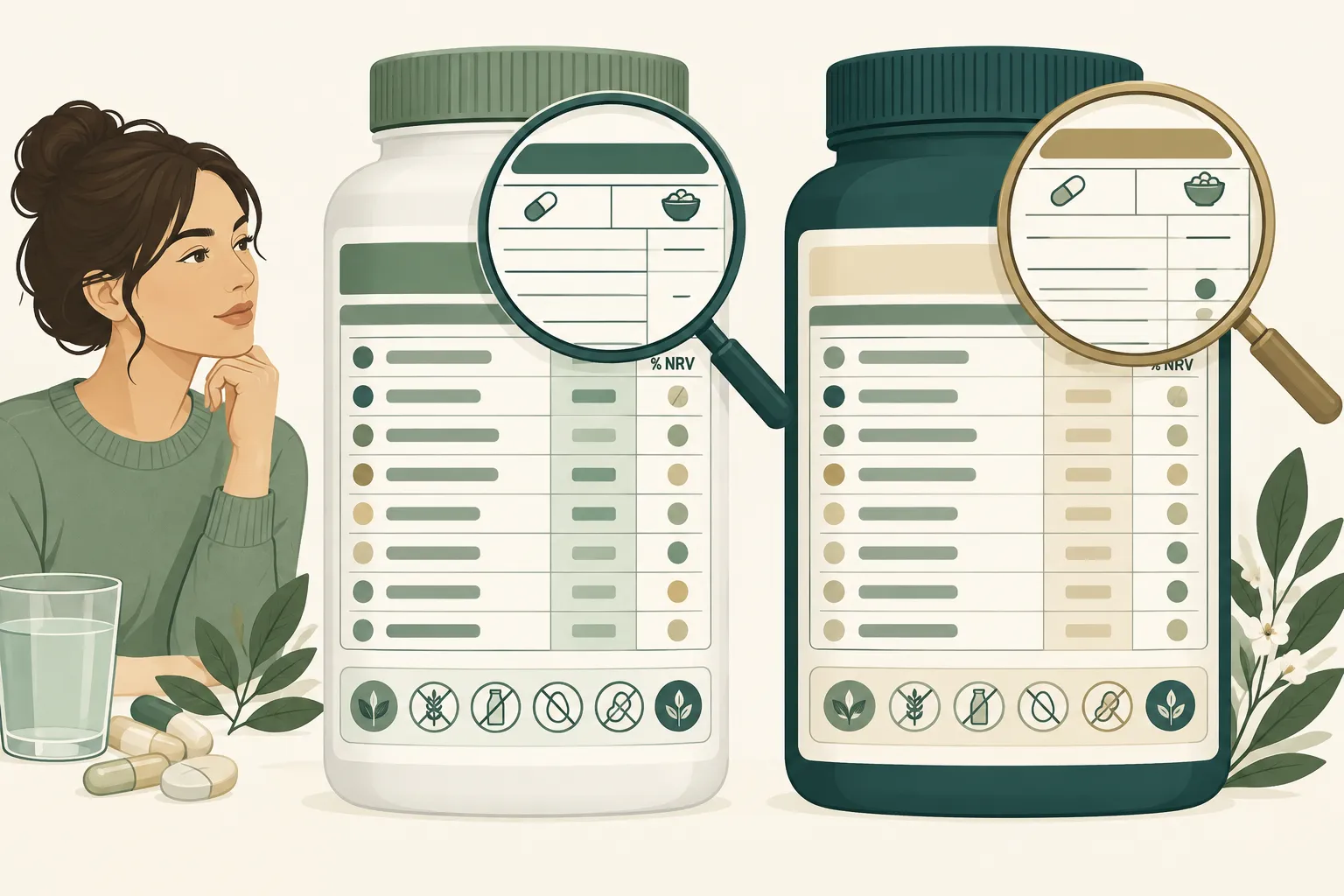
1. Read the daily serving, then the dose
A bottle may show amounts per tablet even though its directions tell you to take more than one. Work out the total daily amount. Read the quantity in mg or µg alongside % NRV (nutrient reference value). NRV is a labelling reference, not a dose tailored to you; a higher percentage offers no automatic advantage.
Check whether a “multivitamin pack” means several tablets or capsules per day and whether each contains overlapping nutrients. Multivitamin gummies count too: compare the suggested number of gummies per day and the nutrients in that serving, not one gummy against one tablet.
2. Check the nutrient form, not the marketing adjective
Read the ingredients list for the named forms: vitamin D2 or D3, an iron compound, B12 and folate. Descriptions such as “active” or “premium” do not tell you whether the full formula suits you. Dose, tolerability and dietary source matter more.
3. Look for overlap and dietary fit
Add up nutrients you get from other supplements, including vitamin D, and consider fortified drinks too. For a vegetarian multivitamin for women, read the capsule ingredients and vitamin D source; “plant-based” on the front does not settle every ingredient question. If you eat vegan, account for reliable B12 sources in food and supplements.
Read claims as carefully as the nutrition panel. An authorised nutrient function claim differs from a promise to prevent or treat illness. Clear ingredients and directions help you more than vague wellness language; see what UK supplement claims mean.
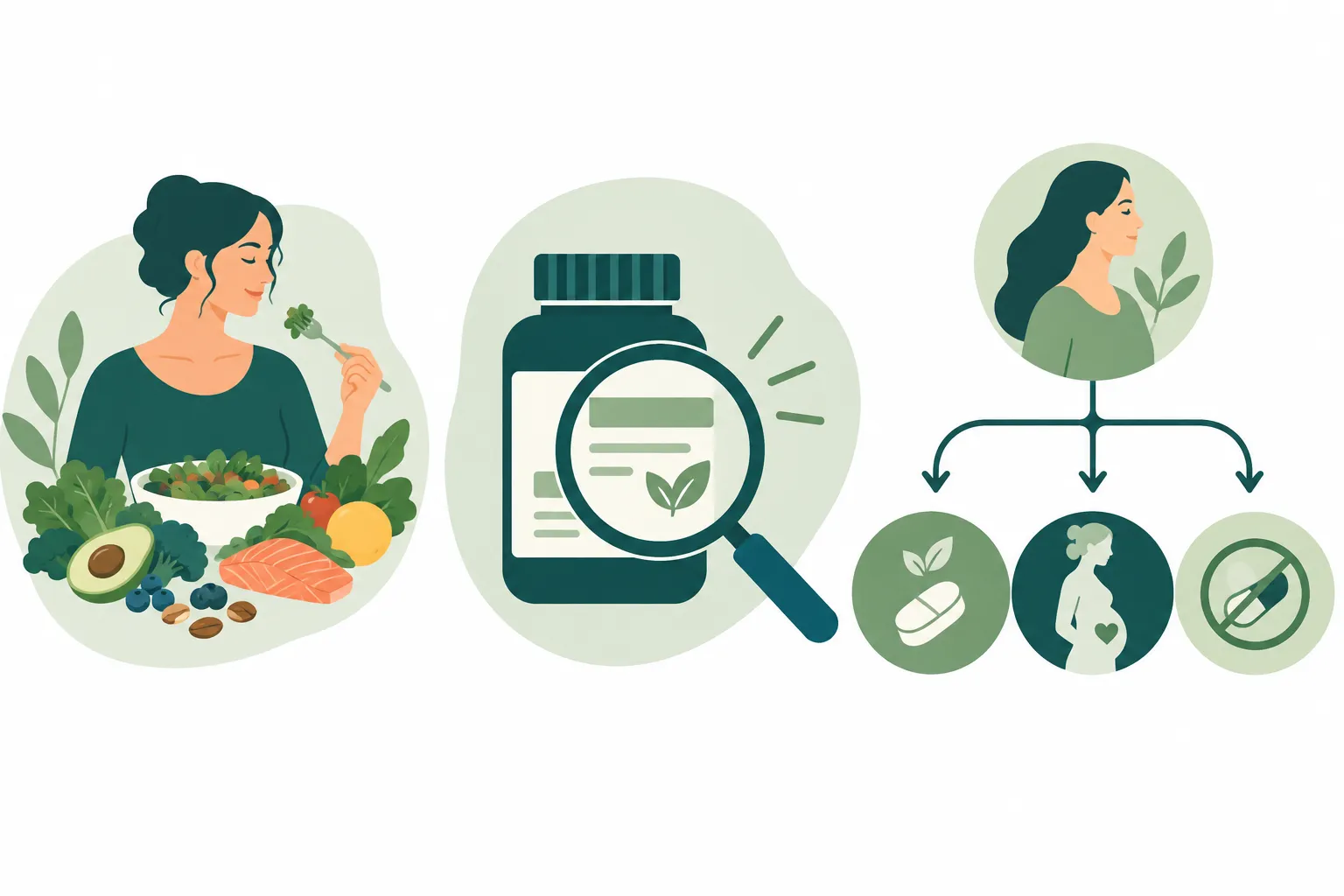
Compare the nutrients that matter to you
|
Nutrient |
What to inspect on the label |
When to pause |
|---|---|---|
|
Vitamin D |
Amount in µg per daily serving, and whether other supplements supply it |
A general multi may not match your planned vitamin D intake |
|
Folic acid |
Amount and whether the product is specifically suitable for pregnancy |
A general women’s formula is not automatically a pregnancy supplement |
|
Iron |
Presence, amount and form |
Not every woman needs added iron; suspected deficiency needs medical assessment |
|
Vitamin B12 |
Amount and suitability for your dietary pattern |
A vegan diet may need a dependable source rather than an incidental small amount |
|
Calcium |
Amount in the full serving |
A small amount in a multi is not a replacement for reviewing dietary intake |
|
Iodine |
Amount and other iodine-containing supplements |
Pregnancy or a medical condition warrants individual advice |
|
Vitamin A |
Whether the label lists retinol or preformed vitamin A |
Avoid supplements containing vitamin A (retinol) in pregnancy |
For adults not at risk of vitamin D deficiency, NHS guidance says to consider 10 µg of vitamin D daily during autumn and winter. If vitamin D is your only concern, you can take it separately rather than buy a multivitamin. Use this vitamin D supplement checklist to compare options.
Should a women’s multivitamin contain iron?
If a clinician has advised iron, a multivitamin with iron for women might fit, depending on the dose. Your periods, diet and symptoms all affect that choice. If you suspect deficiency, seek medical advice instead of choosing the highest-iron product. The NHS explains when iron is prescribed in pregnancy; a multivitamin does not replace treatment for a confirmed deficiency.
When a standard daily formula is not the right fit
Planning pregnancy or already pregnant
The NHS recommends400 µg of folic acid every day when trying for a baby and during the first 12 weeks of pregnancy. Some people need a different dose on medical advice. The NHS also advises avoiding supplements and multivitamins containing vitamin A (retinol) during pregnancy:
“You should avoid supplements and multivitamins containing vitamin A (retinol), as too much of it can harm your baby’s development.” – NHS
Use those two checks rather than trusting a generic “women’s health” label. If you are pregnant, planning pregnancy or taking medicines, ask a GP, midwife or pharmacist about your supplement and any interactions.
Vegetarian and vegan diets
For a vegetarian formula, compare B12 and vitamin D amounts before you look at the dietary label. Then read the capsule and ingredient sources. For vegans, NHS guidance notes that B12 sources are limited and a supplement may be needed. Someone who eats dairy or eggs may have different dietary gaps from someone who eats vegan.
Perimenopause and later life
As periods become less frequent or stop, reconsider an iron-containing formula you have been taking by habit. Menopause does not establish a deficiency. Look at vitamin D and food sources of calcium in the context of your diet. A “50+” product may omit iron or use different amounts, so read its panel. Low energy levels alone cannot identify a nutrient deficiency.
A five-minute comparison before buying
With two products side by side, start by writing down the full daily serving for each. One capsule may be only part of the suggested dose.
-
Write down the nutrients you want and each product’s daily amount.
-
Circle iron and vitamin A, especially if pregnancy is possible; note their forms.
-
Add up nutrients that appear in other supplements you take.
-
Read the capsule ingredients and dietary information. Could you follow the directions each day?
-
Choose the option that fits, even if that is a standalone nutrient or no supplement.
An ingredient list packed with extras need not sway the choice. Between similar formulas, you can more readily compare the one that explains its ingredients and directions clearly.
The best daily multivitamin for women fits your diet and stage of life. Read the daily amounts and ingredient forms, follow pregnancy guidance where relevant, and give iron a separate decision. If your only gap is vitamin D or B12, a targeted supplement may make more sense.
InfiniVit sells supplements, and we favour clear labels and formulas chosen for a purpose over a blanket recommendation to take a multi. If you have identified a specific need, browse InfiniVit’s women’s health range and put the directions and ingredients through this checklist. Choose a targeted product when its label matches what you need.
FAQ
What’s a good multivitamin for women to take?
A good option provides amounts that suit your diet and life stage at its full daily serving, with clearly stated ingredients and directions. If you only need one nutrient, a targeted supplement may be more appropriate than a multivitamin.
What supplements should not be taken after 50?
There is no universal ban at 50. Do not take iron simply because it appears in a women’s formula; consider your diet, health and any clinical advice before choosing it. Review the whole label if you take medicines or other supplements.
What vitamins should a perimenopausal woman take?
There is no single perimenopause multivitamin everyone needs. Consider diet and vitamin D intake, and reassess whether iron is appropriate as periods change. Discuss persistent symptoms or suspected deficiency with a clinician rather than treating them with a generic blend.
Is it a good idea to take a multivitamin daily?
It can be a convenient way to cover a specific dietary gap, but a daily multivitamin is not necessary for everyone. Compare the full serving with your food and other supplements, and follow pregnancy-specific advice if relevant.
What are signs I need a multivitamin?
There is no symptom that tells you a multivitamin is the right answer. If you are tired or worried about a restricted diet, a health professional can help identify the cause and whether a specific nutrient needs attention. A multivitamin should not delay assessment of persistent symptoms.